Loading...
John Hawkwood vs Zu Dashou
John Hawkwood leads by 10.9 pts · 2 figures compared
…
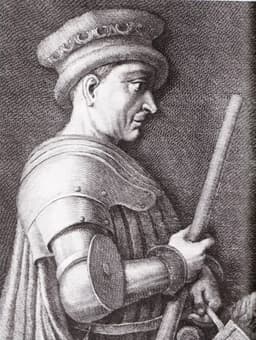
John Hawkwood
General · Medieval
52.9Total

Zu Dashou
General · Medieval
42.0Total
Basic Information
Born
1323
1568
Died
1394
1656
Era
Medieval
Medieval
Nationality
Italy
China
Occupation
General
General
Civilization
Western
Eastern
Score Comparison
Military (10%)
60.0
40.0
Political (20%)
42.3
29.3
Influence (20%)
53.3
44.0
Legacy (20%)
45.0
36.7
Leadership (15%)
68.0
54.2
Strategy (15%)
58.0
52.5
TOTAL
52.9
42.0
John Hawkwood — Complete Timeline
1363 AD
Commanded the White CompanyPolitical Action◆ Major
Hawkwood took command of the White Company, a mercenary band of English and German soldiers. He led them into Italy, where they became a major military force, selling their services to various Italian city-states.
MercenaryItalyMilitary
Impact: regional
1377 AD
Sack of CesenaWar◆ Major
Hawkwood, in the service of Cardinal Robert of Geneva, participated in the massacre of thousands of civilians in Cesena. The city was sacked after its surrender, an event that tarnished his reputation.
MassacreWar CrimeItaly
destructive
1387 AD
Battle of CastagnaroWar◆ Major
Hawkwood led the Paduan army to victory against Verona. Using a feigned retreat, he broke the Veronese lines, capturing many prisoners. This battle is considered a masterpiece of medieval tactical deception.
BattleCondottieroItaly
Impact: regional
1390 AD
Appointed Captain-General of FlorencePolitical Action◆ Major
The Republic of Florence appointed Hawkwood as its Captain-General, granting him command of its armies. This position made him the highest-ranking military officer in Florence, a role he held until his death.
AppointmentFlorenceMilitary
Impact: regionalconstructive
Zu Dashou — Complete Timeline
1631 AD
Defended Jinzhou from Manchu SiegeWar◆ Major
Zu Dashou commanded the Ming defense of Jinzhou during the Manchu siege. He held the city for months, repelling multiple assaults by the Later Jin forces under Hong Taiji, demonstrating his skill as a defensive commander.
JinzhouSiegeMing Defense
Impact: regional
1642 AD
Surrendered to the QingWar
After a prolonged siege and with no hope of relief, Zu Dashou surrendered Jinzhou to the Qing (Manchu) forces. His surrender was a major blow to Ming defenses in Liaodong and provided the Qing with a key strategic city.
SurrenderQingJinzhou
Impact: nationaltragic
Served as Qing GeneralWar
After surrendering, Zu Dashou was incorporated into the Qing military hierarchy. He served as a general under the Qing, participating in campaigns against the Ming, which tarnished his reputation among Ming loyalists.
Qing ServiceMing LoyalistDefection
Impact: national
Expert Analysis
Origins
John Hawkwood (c. 1323–1394) was born in Sible Hedingham, Essex, England, to a family of minor gentry. He began his military career as an archer in the Hundred Years' War under Edward III. After the Treaty of Brétigny in 1360, many unemployed English soldiers formed mercenary bands; Hawkwood joined one and crossed into Italy. Zu Dashou (c. 1600–1656) was born in Liaoning, China, into a military family serving the Ming dynasty. He rose through the ranks in the Liaodong command, gaining experience fighting the Jurchen (Later Jin) forces. His early life was shaped by the defense of the northeastern frontier.
Rise to Power
Hawkwood's rise came through his command of the White Company, a mercenary band of English and German soldiers. In 1364, he led them into Italy, where they became a major military force. His reputation grew after the Battle of Castagnaro in 1387, where he led the Paduan army to victory against Verona using a feigned retreat, capturing many prisoners. By 1375, he was appointed Captain-General of Florence, the highest military office in the republic. Zu Dashou's rise occurred during the Ming–Qing conflicts. He distinguished himself in battles against the Later Jin, earning promotions to regional commander. By the 1630s, he was the Ming commander of Jinzhou, a key fortress in the Liaodong defense line. His loyalty and defensive skill made him a critical figure in the Ming resistance.
Leadership & Governance
Hawkwood's leadership style was pragmatic and profit-driven. He commanded the White Company with strict discipline, ensuring loyalty through regular pay and plunder. His governance of his condotta (mercenary company) emphasized contractual obligations; he switched sides when it served his interests. In contrast, Zu Dashou was a Ming loyalist who adhered to Confucian ideals of duty. He governed Jinzhou with a focus on defense and supply management, maintaining morale during long sieges. However, his governance was constrained by the Ming bureaucracy and lack of resources. Hawkwood scored 68.0 in leadership, while Zu Dashou scored 54.2, reflecting Hawkwood's more effective command of his forces.
Triumph & Tragedy
Hawkwood's greatest triumph was the Battle of Castagnaro (1387), where his tactical genius—using a feigned retreat—crushed the Veronese army. His tragedy was the Sack of Cesena in 1377, where he participated in the massacre of thousands of civilians under Cardinal Robert of Geneva. This act stained his reputation. Zu Dashou's triumph was his defense of Jinzhou during the 1631–1632 siege, holding out for months against the Later Jin and repelling assaults. His tragedy was his surrender in 1642 after a prolonged siege, believing no relief would come. This surrender was a major blow to Ming morale and contributed to the dynasty's fall.
Character & Destiny
Hawkwood was a mercenary captain driven by profit and survival, but he also displayed tactical innovation and loyalty to his employers when paid. His destiny was shaped by the volatile Italian political landscape, where he rose to become a leading condottiero. Zu Dashou was a loyal Ming general caught in a dying dynasty. His character—stubborn but pragmatic—led him to hold out until hope was lost, then surrender to preserve his troops' lives. His decision to serve the Qing after surrender has been criticized as betrayal, but it reflects his desire to survive. Historical assessments note that Hawkwood's strategic score (58.0) was higher than Zu Dashou's (52.5), indicating greater tactical flexibility.
Legacy
Hawkwood's legacy is that of a model condottiero—his military methods influenced Italian warfare, and his tomb in Florence's Duomo commemorates him. He is remembered for his battlefield innovations. Zu Dashou is remembered as a tragic figure of the Ming collapse; his surrender marks a turning point in the Qing conquest. He is often compared to other Ming turncoats. His legacy includes his defense of Jinzhou, but his surrender overshadows it. Hawkwood's total score of 52.9 is 10.9 points higher than Zu Dashou's 42.0, reflecting greater overall impact.
Conclusion
John Hawkwood had a greater impact on history than Zu Dashou. While Zu Dashou's defense of Jinzhou was significant, his surrender and subsequent service to the Qing diminished his legacy. Hawkwood's military innovations and role in shaping Italian warfare, combined with his higher scores in military (60.0 vs 40.0) and leadership (68.0 vs 54.2), make him the more consequential figure. Hawkwood's influence on mercenary warfare and his tactical feats like Castagnaro overshadow Zu Dashou's defensive stand. Therefore, John Hawkwood is the superior historical figure.
Rankings
🥇
John HawkwoodLeader
Mil: 60.0Pol: 42.3Inf: 53.3
52.9
🥈
Zu Dashou
Mil: 40.0Pol: 29.3Inf: 44.0
42.0
+10.9 behind
How This Comparison Works
Algorithm
Each figure is scored on 6 dimensions (0—100 scale) based on structured historical data: Military (10%), Political (20%), Influence (20%), Legacy (20%), Leadership (15%), Strategy (15%). The weighted total produces the final ranking.
Data Sources
Scores are computed from structured sub-indicators in the database. Scale factors adjust for era (Ancient ×0.85, Modern ×1.0) and civilization size (Eastern ×1.05, Other ×0.80) to account for differences in population and military scale.
Maximum 3 Figures
Comparisons are limited to 2—3 figures to ensure readability and statistical meaningfulness.
Error Margins
±5 points per dimension — Sub-scores are derived from historical records with inherent uncertainty. Two figures within 5 points on a dimension should be considered roughly equivalent in that area.
Total Score Accuracy
±3 points overall — The weighted combination of 6 dimensions produces a total score with approximately ±3 points of uncertainty. Differences of less than 3 points are not statistically significant— the figures are effectively tied.
Known Limitations
- Historical records are incomplete and uneven across civilizations
- Figures from oral-tradition societies may be underrepresented
- Occupation labels can misclassify multi-role figures
- Scores measure capability and impact, not moral character
- Quantitative scoring is a comparison tool, not absolute truth
Capability Radar
Military (10%) — Battles & Warfare
Battles
65
55
Win Rate
60
40
Expansion
55
10
Political (20%) — Governance & Reform
Reform
20
10
Diplomacy
70
35
Economy
40
10
Influence (20%) — Cultural & Global Reach
Cultural
45
20
Global
35
10
Legacy (20%) — Historical Impact
Historical
50
30
Longevity
40
20
Leadership (15%) — Power & Stability
Tenure
50
45
Stability
45
30
Strategy (15%) — Tactics & Innovation
Strategy
65
55
Tactics
70
60
Reform
30
10
Similar Comparisons
Comments & Discussion
No comments yet. Be the first to share your thoughts!