Loading...
John Hawkwood vs Yun Gwan
John Hawkwood leads by 3.2 pts · 2 figures compared
…
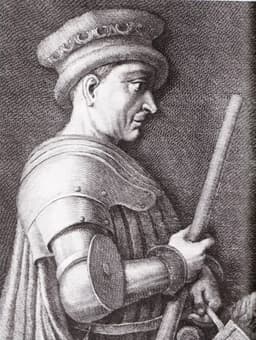
John Hawkwood
General · Medieval
52.9Total

Yun Gwan
General · Medieval
49.7Total
Basic Information
Born
1323
1040
Died
1394
1111
Era
Medieval
Medieval
Nationality
Italy
Korea
Occupation
General
General
Civilization
Western
Eastern
Score Comparison
Military (10%)
60.0
60.0
Political (20%)
42.3
40.8
Influence (20%)
53.3
48.6
Legacy (20%)
45.0
41.7
Leadership (15%)
68.0
61.1
Strategy (15%)
58.0
58.0
TOTAL
52.9
49.7
John Hawkwood — Complete Timeline
1363 AD
Commanded the White CompanyPolitical Action◆ Major
Hawkwood took command of the White Company, a mercenary band of English and German soldiers. He led them into Italy, where they became a major military force, selling their services to various Italian city-states.
MercenaryItalyMilitary
Impact: regional
1377 AD
Sack of CesenaWar◆ Major
Hawkwood, in the service of Cardinal Robert of Geneva, participated in the massacre of thousands of civilians in Cesena. The city was sacked after its surrender, an event that tarnished his reputation.
MassacreWar CrimeItaly
destructive
1387 AD
Battle of CastagnaroWar◆ Major
Hawkwood led the Paduan army to victory against Verona. Using a feigned retreat, he broke the Veronese lines, capturing many prisoners. This battle is considered a masterpiece of medieval tactical deception.
BattleCondottieroItaly
Impact: regional
1390 AD
Appointed Captain-General of FlorencePolitical Action◆ Major
The Republic of Florence appointed Hawkwood as its Captain-General, granting him command of its armies. This position made him the highest-ranking military officer in Florence, a role he held until his death.
AppointmentFlorenceMilitary
Impact: regionalconstructive
Yun Gwan — Complete Timeline
1107 AD
Campaign Against the JurchenWar◆ Major
Yun Gwan led a Goryeo army of 170,000 men against the Jurchen tribes in the northeast, constructing nine fortresses to secure the region. The campaign temporarily expanded Goryeo territory but faced fierce Jurchen resistance.
Jurchen CampaignTerritorial ExpansionMilitary Campaign
Impact: regional
1108 AD
Construction of Nine FortressesWar◆ Major
Yun Gwan built nine fortresses in the conquered Jurchen territories to consolidate Goryeo control. The fortresses became a symbol of Goryeo's northern expansion but were later abandoned due to diplomatic pressure.
FortificationTerritorial ControlMilitary Strategy
Impact: regional
1109 AD
Recall and Abandonment of FortressesPolitical Action◆ Major
Under Jurchen diplomatic pressure and internal court opposition, Yun Gwan was recalled and the nine fortresses were returned to the Jurchen. This reversal undermined his achievements and led to his political downfall.
DiplomacyTerritorial LossPolitical Fallout
Impact: regionaltragic
1111 AD
Exile and DeathPolitical Action
Yun Gwan was exiled by political rivals after the fortress abandonment, dying in obscurity. His legacy was later rehabilitated as a symbol of Goryeo's military strength and northern ambitions.
ExilePolitical DownfallLegacy
Impact: nationaltragic
Expert Analysis
Origins
John Hawkwood was born in 1323 in Essex, England, likely into a minor gentry family. He began his military career as an archer in the Hundred Years' War under King Edward III, gaining experience in the brutal conflict. After the Treaty of Brétigny in 1360, he led a band of mercenaries into Italy, where he joined the White Company. Yun Gwan was born in 1042 in Goryeo (modern Korea) into a scholarly family; his father served as a minister. He passed the civil service examination in 1062, entering the bureaucracy rather than the military. His early career was administrative, not martial.
Rise to Power
Hawkwood's rise came through sheer military competence. By 1363, he commanded the White Company, a band of English and German mercenaries. His victory at the Battle of Cascina in 1364 established his reputation. In 1372, he fought for the Papal States against Milan, and in 1375, he led the sack of Cesena, a massacre of thousands. His greatest triumph was the Battle of Castagnaro in 1387, where he used a feigned retreat to defeat the Veronese army. Yun Gwon's rise was gradual and political. He became a trusted official, but his military career began later. In 1104, the Jurchen tribes raided Goryeo's northern borders. Yun Gwon was appointed commander of the punitive expedition, leading a massive army of 170,000 men in 1107–1109 to subdue the Jurchen.
Leadership & Governance
Hawkwood's leadership style was pragmatic and profit-driven. He kept his mercenaries loyal through regular pay and loot, and he switched sides frequently to maximize gains. He had a military score of 60.0, showing effective but not extraordinary generalship. Yun Gwan was a more systematic commander, focusing on fortifications and logistics. He built nine fortresses in conquered territory, a strategic move to secure borders. His leadership score of 61.1 reflects his organizational skills, but his political score of 40.8 indicates poor navigation of court intrigue.
Triumph & Tragedy
Hawkwood's greatest triumph was his longevity and influence in Italian politics. He died wealthy and respected, with a legacy score of 45.0. However, he was a mercenary with no loyalty; his sack of Cesena is a lasting stain. Yun Gwan's construction of nine fortresses was a major achievement, but it was short-lived. Under Jurchen pressure and internal opposition, the fortresses were abandoned, and Yun Gwan was exiled. He died in obscurity, but later rehabilitation made him a symbol of Goryeo's northern ambitions. His influence score of 48.6 reflects this mixed legacy.
Character & Destiny
Hawkwood was cunning and adaptable, a survivor in the treacherous world of Italian politics. He had a leadership score of 68.0, indicating strong command presence. Yun Gwan was rigid and idealistic, believing in a strong defense. His inability to secure political backing led to his downfall. His strategy score of 58.0 matches Hawkwood's, showing similar tactical acumen.
Legacy
Hawkwood's legacy influenced the development of Italian warfare and the rise of condottieri. He is remembered as a skilled mercenary leader, but his impact was limited to his lifetime. Yun Gwan's legacy is more symbolic: he is celebrated in Korean history as a defender of the north, despite the failure of his campaign. The fortresses were later reclaimed by Goryeo, validating his strategy.
Conclusion
John Hawkwood and Yun Gwan had identical military scores of 60.0 and similar strategy scores of 58.0. However, Hawkwood's total score of 52.9 edges out Yun Gwan's 49.7 by 3.2 points. Hawkwood's greater political adaptability and longer career give him a slight edge, but Yun Gwan's impact on Korean national identity is more lasting. In terms of historical impact, Yun Gwan had greater long-term influence, as his efforts laid groundwork for future territorial expansion. Hawkwood's influence was more ephemeral, tied to his personal career. Therefore, Yun Gwan had greater overall impact.
Rankings
🥇
John HawkwoodLeader
Mil: 60.0Pol: 42.3Inf: 53.3
52.9
🥈
Yun Gwan
Mil: 60.0Pol: 40.8Inf: 48.6
49.7
+3.2 behind
How This Comparison Works
Algorithm
Each figure is scored on 6 dimensions (0—100 scale) based on structured historical data: Military (10%), Political (20%), Influence (20%), Legacy (20%), Leadership (15%), Strategy (15%). The weighted total produces the final ranking.
Data Sources
Scores are computed from structured sub-indicators in the database. Scale factors adjust for era (Ancient ×0.85, Modern ×1.0) and civilization size (Eastern ×1.05, Other ×0.80) to account for differences in population and military scale.
Maximum 3 Figures
Comparisons are limited to 2—3 figures to ensure readability and statistical meaningfulness.
Error Margins
±5 points per dimension — Sub-scores are derived from historical records with inherent uncertainty. Two figures within 5 points on a dimension should be considered roughly equivalent in that area.
Total Score Accuracy
±3 points overall — The weighted combination of 6 dimensions produces a total score with approximately ±3 points of uncertainty. Differences of less than 3 points are not statistically significant— the figures are effectively tied.
Known Limitations
- Historical records are incomplete and uneven across civilizations
- Figures from oral-tradition societies may be underrepresented
- Occupation labels can misclassify multi-role figures
- Scores measure capability and impact, not moral character
- Quantitative scoring is a comparison tool, not absolute truth
Capability Radar
Military (10%) — Battles & Warfare
Battles
65
60
Win Rate
60
65
Expansion
55
55
Political (20%) — Governance & Reform
Reform
20
40
Diplomacy
70
50
Economy
40
35
Influence (20%) — Cultural & Global Reach
Cultural
45
40
Global
35
20
Legacy (20%) — Historical Impact
Historical
50
45
Longevity
40
35
Leadership (15%) — Power & Stability
Tenure
50
45
Stability
45
40
Strategy (15%) — Tactics & Innovation
Strategy
65
60
Tactics
70
55
Reform
30
50
Similar Comparisons
Comments & Discussion
No comments yet. Be the first to share your thoughts!