Loading...
John Churchill Duke of Marlborough vs Yamagata Aritomo
Yamagata Aritomo leads by 7.1 pts · 2 figures compared
…

John Churchill Duke of Marlborough
General · Modern
75.4Total
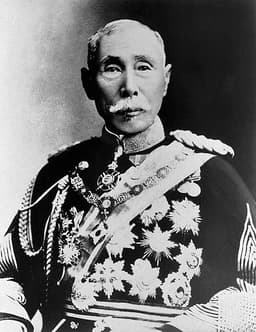
Yamagata Aritomo
General · Modern
82.5Total
Basic Information
Born
1650
1838
Died
1722
1922
Era
Modern
Modern
Nationality
England
Japan
Occupation
General
General
Civilization
Western
Eastern
Score Comparison
Military (10%)
84.7
78.0
Political (20%)
78.0
82.0
Influence (20%)
65.0
80.0
Legacy (20%)
80.0
90.0
Leadership (15%)
78.0
78.0
Strategy (15%)
72.8
82.0
TOTAL
75.4
82.5
John Churchill Duke of Marlborough — Complete Timeline
1704 AD
Battle of BlenheimWar
Marlborough commanded the Anglo-Dutch army alongside Prince Eugene of Savoy against French and Bavarian forces at Blenheim. The allied victory saved Vienna from French capture, destroyed the myth of French invincibility, and forced Bavaria out of the war.
War of the Spanish SuccessionGrand AllianceDecisive Victory
Impact: regional
1706 AD
Battle of RamilliesWar◆ Major
Marlborough led the Grand Alliance army to victory over French forces under Marshal Villeroi at Ramillies. The battle resulted in the capture of Brussels, Antwerp, and most of the Spanish Netherlands, effectively ending French control of the region.
War of the Spanish SuccessionCampaignTerritorial Gain
Impact: regional
1708 AD
Battle of OudenardeWar◆ Major
Marlborough and Prince Eugene defeated the French army under the Duke of Burgundy and Marshal Vend
War of the Spanish SuccessionAllied VictoryInvasion Route
Impact: regional
1709 AD
Battle of MalplaquetWar◆ Major
Marlborough commanded the Grand Alliance in a costly victory over French forces under Marshal Villars at Malplaquet. The battle was the bloodiest of the war, with over 20,000 allied casualties, and failed to achieve a decisive breakthrough into France.
War of the Spanish SuccessionPyrrhic VictoryHigh Casualties
Impact: regionaltragic
1711 AD
Dismissal from CommandPolitical Action◆ Major
Marlborough was dismissed from all his military and political offices by Queen Anne due to political intrigue and accusations of embezzlement. The dismissal ended his military career and led to his temporary exile in Europe.
Political FallExileTory Government
Impact: nationaldestructive
Yamagata Aritomo — Complete Timeline
1873 AD
Establishment of the Imperial Japanese ArmyReform
Yamagata Aritomo, as War Minister, oversaw the creation of the Imperial Japanese Army based on the Prussian model. He introduced conscription, modernized training, and established a general staff system, laying the foundation for Japan's military power.
Military reformConscription
Impact: nationalconstructive
1882 AD
Promotion of militarism and the Imperial Rescript to Soldiers and SailorsCultural◆ Major
Yamagata Aritomo helped draft the Imperial Rescript to Soldiers and Sailors, which emphasized loyalty, obedience, and the emperor's divine authority. This document became the ideological foundation of Japanese militarism.
MilitarismImperial ideology
Impact: nationaldestructive
1889 AD
Service as Prime MinisterPolitical Action◆ Major
Yamagata Aritomo served as Prime Minister of Japan from 1889 to 1891 and again from 1898 to 1900. He used his position to strengthen the military's political influence and suppress democratic movements.
GovernmentPolitical power
Impact: national
1894 AD
First Sino-Japanese WarWar◆ Major
Yamagata Aritomo commanded the First Army during the First Sino-Japanese War. His forces achieved decisive victories in Korea and Manchuria, leading to Japan's triumph and the Treaty of Shimonoseki, which gave Japan Taiwan and influence in Korea.
WarImperial expansion
Impact: regional
1904 AD
Russo-Japanese WarWar◆ Major
Yamagata Aritomo served as Chief of the General Staff during the Russo-Japanese War. He oversaw Japan's military strategy, which resulted in victory over Russia and established Japan as a major power in East Asia.
WarGreat power
Impact: global
Expert Analysis
Origins
Yamagata Aritomo (1838-1922) was born into a low-ranking samurai family in Hagi, Chōshū domain. His early life was shaped by the turbulent Bakumatsu period, where he joined the Kiheitai militia and fought against the Tokugawa shogunate. This experience instilled in him a fierce nationalism and a desire to modernize Japan's military. In contrast, John Churchill (1650-1722) was born into a Royalist family in Devon, England, that had suffered under Oliver Cromwell. His father was a minor courtier, and young John began his military career as a page to the Duke of York. Both men rose from modest backgrounds, but Yamagata's path was forged in civil war, while Churchill's was through court patronage.
Rise to Power
Yamagata's rise was meteoric. After the Meiji Restoration, he traveled to Europe to study Prussian military systems. He became the architect of the Imperial Japanese Army, drafting the Conscription Ordinance in 1873. His political acumen made him a key figure in the Meiji oligarchy, serving as Home Minister and later Prime Minister. Churchill's rise was more dramatic: he served with distinction under Louis XIV's French army, then switched to the English side during the Glorious Revolution. His loyalty to William III earned him the title Earl of Marlborough, but his career was nearly derailed by accusations of Jacobite sympathies. Queen Anne's accession in 1702 brought him supreme command as Captain-General of the Allied forces in the War of the Spanish Succession.
Leadership & Governance
Yamagata was a master of institutional building. He established the Imperial Japanese Army's command structure, founded the General Staff Office, and promoted the Imperial Rescript to Soldiers and Sailors, which demanded absolute obedience to the emperor. As Prime Minister, he centralized power and expanded Japan's influence in Korea. His leadership was rigid, hierarchical, and focused on discipline. Churchill, by contrast, led through charisma and tactical brilliance. He forged a coalition of English, Dutch, German, and Austrian troops, holding them together through diplomacy and shared victories. His governance style was more collaborative, relying on his wife Sarah's influence at court to secure supplies and political support.
Triumph & Tragedy
Yamagata's greatest triumphs were the First Sino-Japanese War (1894-1895) and the Russo-Japanese War (1904-1905), where his modernized army defeated China and Russia, establishing Japan as a world power. However, his promotion of militarism laid the groundwork for Japan's aggressive expansion in the 20th century. Churchill's peak was the Battle of Blenheim (1704), where his bold flanking maneuver crushed the Franco-Bavarian army, saving Vienna. Subsequent victories at Ramillies (1706), Oudenarde (1708), and Malplaquet (1709) broke Louis XIV's power. Yet his triumph turned to tragedy when political enemies secured his dismissal in 1711, ending his command. Both men experienced the caprice of politics: Yamagata remained influential until his death, while Churchill died in disgrace, only to be rehabilitated later.
Character & Destiny
Yamagata was cold, calculating, and ruthlessly ambitious. He was known as the 'father of Japanese militarism' for good reason—he believed in the supremacy of the military in national life. His destiny was to shape a modern Japan that would challenge the West. Churchill was more complex: a man of charm and strategic genius, but also of overweening ambition and a penchant for intrigue. His destiny was to be the savior of Europe against French hegemony. Both were products of their times: Yamagata of a nation desperate to modernize, Churchill of a continent locked in dynastic struggle.
Legacy
Yamagata's legacy is double-edged. He created a formidable military that won stunning victories, but his ideology of militarism led Japan down a catastrophic path to World War II. Today, he is remembered as a founding father of modern Japan, but also as a symbol of its imperialist past. Churchill's legacy is more uniformly positive: he is celebrated as one of history's greatest commanders, with Blenheim Palace a lasting monument. However, his later reputation has been tarnished by his role in the slave trade and his authoritarian tendencies. Both men left indelible marks: Yamagata on Japan's military and political structure, Churchill on the European balance of power.
Conclusion
In comparing the two, Yamagata Aritomo scores higher overall (82.6 vs 75.5) due to his broader impact on military institutions and national policy. His creation of the Imperial Japanese Army and his influence on Japan's rise as a world power are unparalleled. Churchill, while tactically superior, was ultimately a battlefield commander whose achievements were more limited in scope. However, Churchill's victories were more decisive in shaping European history, and his legacy is more universally admired. Ultimately, Yamagata's score reflects his greater strategic and political influence, but Churchill's brilliance in the field cannot be denied. The score gap of 7.1 points is justified by Yamagata's enduring institutional legacy.
Rankings
🥇
Yamagata AritomoLeader
Mil: 78.0Pol: 82.0Inf: 80.0
82.5
🥈
John Churchill Duke of Marlborough
Mil: 84.7Pol: 78.0Inf: 65.0
75.4
+7.1 behind
How This Comparison Works
Algorithm
Each figure is scored on 6 dimensions (0—100 scale) based on structured historical data: Military (10%), Political (20%), Influence (20%), Legacy (20%), Leadership (15%), Strategy (15%). The weighted total produces the final ranking.
Data Sources
Scores are computed from structured sub-indicators in the database. Scale factors adjust for era (Ancient ×0.85, Modern ×1.0) and civilization size (Eastern ×1.05, Other ×0.80) to account for differences in population and military scale.
Maximum 3 Figures
Comparisons are limited to 2—3 figures to ensure readability and statistical meaningfulness.
Error Margins
±5 points per dimension — Sub-scores are derived from historical records with inherent uncertainty. Two figures within 5 points on a dimension should be considered roughly equivalent in that area.
Total Score Accuracy
±3 points overall — The weighted combination of 6 dimensions produces a total score with approximately ±3 points of uncertainty. Differences of less than 3 points are not statistically significant— the figures are effectively tied.
Known Limitations
- Historical records are incomplete and uneven across civilizations
- Figures from oral-tradition societies may be underrepresented
- Occupation labels can misclassify multi-role figures
- Scores measure capability and impact, not moral character
- Quantitative scoring is a comparison tool, not absolute truth
Capability Radar
Military (10%) — Battles & Warfare
Battles
95
75
Win Rate
98
70
Expansion
85
80
Political (20%) — Governance & Reform
Reform
60
90
Diplomacy
85
75
Economy
70
70
Influence (20%) — Cultural & Global Reach
Cultural
70
80
Global
75
70
Legacy (20%) — Historical Impact
Historical
85
85
Longevity
80
75
Leadership (15%) — Power & Stability
Tenure
80
85
Stability
75
65
Strategy (15%) — Tactics & Innovation
Strategy
95
85
Tactics
96
80
Reform
70
95
Similar Comparisons
John Churchill Duke of Marlborough vs Julius CaesarJohn Churchill Duke of Marlborough vs Napoleon BonaparteHenri Turenne vs John Churchill Duke of MarlboroughJohn Churchill Duke of Marlborough vs Jonas SavimbiChan Chun Sing vs John Churchill Duke of MarlboroughJohn Churchill Duke of Marlborough vs Qin Shi Huang
Comments & Discussion
No comments yet. Be the first to share your thoughts!