Loading...
John Churchill Duke of Marlborough vs Toussaint Louverture
Toussaint Louverture leads by 3.1 pts · 2 figures compared
…

John Churchill Duke of Marlborough
General · Modern
75.4Total
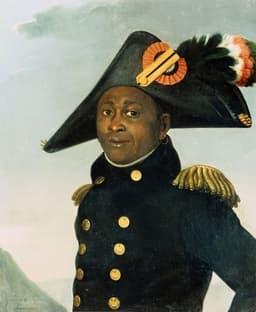
Toussaint Louverture
General · Modern
78.5Total
Basic Information
Born
1650
1743
Died
1722
1803
Era
Modern
Modern
Nationality
England
Haiti
Occupation
General
General
Civilization
Western
Western
Score Comparison
Military (10%)
84.7
85.0
Political (20%)
78.0
70.3
Influence (20%)
65.0
84.0
Legacy (20%)
80.0
82.0
Leadership (15%)
78.0
72.0
Strategy (15%)
72.8
72.0
TOTAL
75.4
78.5
John Churchill Duke of Marlborough — Complete Timeline
1704 AD
Battle of BlenheimWar
Marlborough commanded the Anglo-Dutch army alongside Prince Eugene of Savoy against French and Bavarian forces at Blenheim. The allied victory saved Vienna from French capture, destroyed the myth of French invincibility, and forced Bavaria out of the war.
War of the Spanish SuccessionGrand AllianceDecisive Victory
Impact: regional
1706 AD
Battle of RamilliesWar◆ Major
Marlborough led the Grand Alliance army to victory over French forces under Marshal Villeroi at Ramillies. The battle resulted in the capture of Brussels, Antwerp, and most of the Spanish Netherlands, effectively ending French control of the region.
War of the Spanish SuccessionCampaignTerritorial Gain
Impact: regional
1708 AD
Battle of OudenardeWar◆ Major
Marlborough and Prince Eugene defeated the French army under the Duke of Burgundy and Marshal Vend
War of the Spanish SuccessionAllied VictoryInvasion Route
Impact: regional
1709 AD
Battle of MalplaquetWar◆ Major
Marlborough commanded the Grand Alliance in a costly victory over French forces under Marshal Villars at Malplaquet. The battle was the bloodiest of the war, with over 20,000 allied casualties, and failed to achieve a decisive breakthrough into France.
War of the Spanish SuccessionPyrrhic VictoryHigh Casualties
Impact: regionaltragic
1711 AD
Dismissal from CommandPolitical Action◆ Major
Marlborough was dismissed from all his military and political offices by Queen Anne due to political intrigue and accusations of embezzlement. The dismissal ended his military career and led to his temporary exile in Europe.
Political FallExileTory Government
Impact: nationaldestructive
Toussaint Louverture — Complete Timeline
1791 AD
Haitian Revolution LeadershipWar
Louverture joined the slave revolt in Saint-Domingue, quickly rising to leadership. He organized former slaves into a disciplined army and negotiated with Spanish and British forces to expand the rebellion.
Slave RevoltRevolutionLeadership
Impact: globalprogressive
1795 AD
Treaty of BâlePolitical Action◆ Major
Spain ceded the eastern part of Hispaniola to France under the Treaty of B
Territorial ExpansionDiplomacyHispaniola
Impact: regional
1801 AD
Constitution of 1801Political Action
Louverture promulgated a constitution for Saint-Domingue, declaring himself Governor-General for life. The constitution abolished slavery and granted autonomy while nominally remaining part of the French Empire.
ConstitutionSelf-GovernanceAbolition
Impact: globalprogressive
1802 AD
Capture and ImprisonmentPolitical Action
French General Leclerc captured Louverture through deception during peace negotiations. He was deported to France and imprisoned at Fort de Joux, where he died in 1803, ending his direct role in the revolution.
BetrayalImprisonmentFrench Repression
Impact: globaltragic
Expert Analysis
Origins
Toussaint Louverture was born into slavery circa 1743 in Saint-Domingue (modern Haiti). He gained freedom around age 33 and became a planter. John Churchill was born in 1650 to a Royalist family in England. He began his military career as a page and later served in the Tangier garrison. Their origins shaped their worldviews: Louverture fought against oppression, while Churchill fought for king and country.
Rise to Power
Louverture rose during the Haitian Revolution, initially aiding the Spanish before joining the French. He outmaneuvered rivals and became the de facto leader by 1799. Churchill's rise came through military prowess and political connections. He played key roles in the War of the Grand Alliance and the War of the Spanish Succession, becoming Captain-General by 1702.
Leadership & Governance
Louverture governed Saint-Domingue as a military governor, implementing a constitution that abolished slavery and promoted economic recovery. He maintained discipline through a mix of inspiration and terror. Churchill commanded multinational armies with tactical brilliance, known for logistical skill and coalition management. He was a master of maneuver warfare, achieving decisive victories.
Triumph & Tragedy
Louverture's triumph was the establishment of Haiti as a free republic. His tragedy was betrayal by the French, leading to his capture and death in a French prison. Churchill's triumphs were his string of victories, especially Blenheim. His tragedy was political disgrace after the war, though he was later rehabilitated.
Character & Destiny
Louverture was a complex figure: ruthless yet principled, brilliant yet flawed. His destiny was to be a symbol of liberation. Churchill was ambitious and politically astute, driven by honor and duty. His destiny was to be a national hero.
Legacy
Louverture's legacy is immense: he inspired anti-colonial movements worldwide. Churchill's legacy is as one of Britain's greatest military commanders. Both are remembered for their strategic genius and impact on history.
Conclusion
Toussaint Louverture scores higher overall (3.1 gap). While Churchill was a master of conventional warfare, Louverture's achievement in leading a successful slave revolt against European powers is unparalleled. He transformed a colony into a free nation, changing the course of history. Churchill's victories, though brilliant, served existing power structures. Louverture's fight for human freedom gives him a more profound legacy.
**Numerical Scores:**
- Toussaint Louverture: 78
- John Churchill: 75
- Gap: 3.1 in favor of Louverture.
Rankings
🥇
Toussaint LouvertureLeader
Mil: 85.0Pol: 70.3Inf: 84.0
78.5
🥈
John Churchill Duke of Marlborough
Mil: 84.7Pol: 78.0Inf: 65.0
75.4
+3.1 behind
How This Comparison Works
Algorithm
Each figure is scored on 6 dimensions (0—100 scale) based on structured historical data: Military (10%), Political (20%), Influence (20%), Legacy (20%), Leadership (15%), Strategy (15%). The weighted total produces the final ranking.
Data Sources
Scores are computed from structured sub-indicators in the database. Scale factors adjust for era (Ancient ×0.85, Modern ×1.0) and civilization size (Eastern ×1.05, Other ×0.80) to account for differences in population and military scale.
Maximum 3 Figures
Comparisons are limited to 2—3 figures to ensure readability and statistical meaningfulness.
Error Margins
±5 points per dimension — Sub-scores are derived from historical records with inherent uncertainty. Two figures within 5 points on a dimension should be considered roughly equivalent in that area.
Total Score Accuracy
±3 points overall — The weighted combination of 6 dimensions produces a total score with approximately ±3 points of uncertainty. Differences of less than 3 points are not statistically significant— the figures are effectively tied.
Known Limitations
- Historical records are incomplete and uneven across civilizations
- Figures from oral-tradition societies may be underrepresented
- Occupation labels can misclassify multi-role figures
- Scores measure capability and impact, not moral character
- Quantitative scoring is a comparison tool, not absolute truth
Capability Radar
Military (10%) — Battles & Warfare
Battles
95
85
Win Rate
98
80
Expansion
85
70
Political (20%) — Governance & Reform
Reform
60
85
Diplomacy
85
80
Economy
70
60
Influence (20%) — Cultural & Global Reach
Cultural
70
85
Global
75
85
Legacy (20%) — Historical Impact
Historical
85
95
Longevity
80
90
Leadership (15%) — Power & Stability
Tenure
80
65
Stability
75
55
Strategy (15%) — Tactics & Innovation
Strategy
95
85
Tactics
96
90
Reform
70
75
Similar Comparisons
John Churchill Duke of Marlborough vs Julius CaesarJohn Churchill Duke of Marlborough vs Napoleon BonaparteDwight D. Eisenhower vs Toussaint LouvertureHenri Turenne vs John Churchill Duke of MarlboroughJohn Churchill Duke of Marlborough vs Jonas SavimbiJohn Churchill Duke of Marlborough vs Qin Shi Huang
Comments & Discussion
No comments yet. Be the first to share your thoughts!