Loading...
John Churchill Duke of Marlborough vs Suleiman I
Suleiman I leads by 3.4 pts · 2 figures compared
…

John Churchill Duke of Marlborough
General · Modern
75.4Total
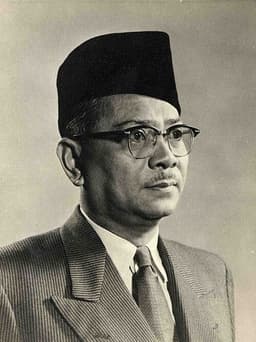
Suleiman I
Emperor · Medieval
78.8Total
Basic Information
Born
1650
1494
Died
1722
1566
Era
Modern
Medieval
Nationality
England
Ottoman Empire
Occupation
General
Emperor
Civilization
Western
Middle Eastern
Score Comparison
Military (10%)
84.7
78.5
Political (20%)
78.0
82.0
Influence (20%)
65.0
85.0
Legacy (20%)
80.0
70.8
Leadership (15%)
78.0
81.7
Strategy (15%)
72.8
74.4
TOTAL
75.4
78.8
John Churchill Duke of Marlborough — Complete Timeline
1704 AD
Battle of BlenheimWar
Marlborough commanded the Anglo-Dutch army alongside Prince Eugene of Savoy against French and Bavarian forces at Blenheim. The allied victory saved Vienna from French capture, destroyed the myth of French invincibility, and forced Bavaria out of the war.
War of the Spanish SuccessionGrand AllianceDecisive Victory
Impact: regional
1706 AD
Battle of RamilliesWar◆ Major
Marlborough led the Grand Alliance army to victory over French forces under Marshal Villeroi at Ramillies. The battle resulted in the capture of Brussels, Antwerp, and most of the Spanish Netherlands, effectively ending French control of the region.
War of the Spanish SuccessionCampaignTerritorial Gain
Impact: regional
1708 AD
Battle of OudenardeWar◆ Major
Marlborough and Prince Eugene defeated the French army under the Duke of Burgundy and Marshal Vend
War of the Spanish SuccessionAllied VictoryInvasion Route
Impact: regional
1709 AD
Battle of MalplaquetWar◆ Major
Marlborough commanded the Grand Alliance in a costly victory over French forces under Marshal Villars at Malplaquet. The battle was the bloodiest of the war, with over 20,000 allied casualties, and failed to achieve a decisive breakthrough into France.
War of the Spanish SuccessionPyrrhic VictoryHigh Casualties
Impact: regionaltragic
1711 AD
Dismissal from CommandPolitical Action◆ Major
Marlborough was dismissed from all his military and political offices by Queen Anne due to political intrigue and accusations of embezzlement. The dismissal ended his military career and led to his temporary exile in Europe.
Political FallExileTory Government
Impact: nationaldestructive
Suleiman I — Complete Timeline
1522 AD
Siege of RhodesWar◆ Major
Suleiman I led a massive Ottoman army and fleet to besiege the island of Rhodes, held by the Knights Hospitaller. After a six-month siege, the knights surrendered and were allowed to leave. This victory secured Ottoman control over the eastern Mediterranean.
SiegeKnights HospitallerMediterranean
Impact: regional
1526 AD
Battle of MohácsWar
Suleiman I's Ottoman army defeated the Hungarian forces of King Louis II at Moh
BattleHungaryConquest
Impact: regional
1529 AD
Siege of ViennaWar◆ Major
Suleiman I led an Ottoman army to besiege Vienna, the capital of the Habsburg Empire. The siege failed due to supply problems and the onset of winter. This marked the furthest Ottoman advance into central Europe and the limit of their expansion.
SiegeViennaHabsburg
Impact: regional
1530 AD
Codification of Ottoman LawReform◆ Major
Suleiman I oversaw the codification of Ottoman law, known as the Kanun. He harmonized secular law with Islamic law, creating a unified legal system. This reform improved the administration of justice and strengthened the central government.
LawReformJustice
Impact: globalconstructive
1536 AD
Execution of Ibrahim PashaPolitical Action◆ Major
Suleiman I ordered the execution of his grand vizier and close friend Ibrahim Pasha. Ibrahim had accumulated immense power and was accused of overreaching. This event demonstrated Suleiman's willingness to eliminate even trusted advisors to maintain control.
ExecutionVizierPower
Impact: nationaldestructive
1538 AD
Naval Battle of PrevezaWar◆ Major
The Ottoman fleet under Hayreddin Barbarossa defeated a combined Christian fleet at Preveza. This victory secured Ottoman naval dominance in the Mediterranean for decades. It allowed the Ottomans to control trade routes and raid coastal areas.
Naval BattleBarbarossaMediterranean
Impact: regional
Expert Analysis
Origins
Suleiman I was born in 1494 in Trabzon, the son of Sultan Selim I. He ascended the Ottoman throne in 1520 after his father's death, inheriting a vast empire already expanding into Europe, Asia, and Africa. His upbringing in the palace school (Enderun) provided him with a comprehensive education in military strategy, law, and statecraft, preparing him to rule an empire at its zenith.
John Churchill was born in 1650 in Devon, England, into a gentry family with royalist sympathies. His father, Winston Churchill, was a minor politician. John began his military career as a page in the court of King Charles II, later serving in the Tangier garrison and fighting in the Monmouth Rebellion. His rise was aided by his sister Arabella's relationship with the Duke of York (future James II).
Rise to Power
Suleiman became sultan at age 26 without internal opposition. His first major campaign was the capture of Belgrade in 1521, followed by the conquest of Rhodes in 1522. His military prowess and administrative reforms quickly earned him the title "Magnificent" and "Lawgiver." He centralized authority and expanded the empire to its greatest territorial extent.
John Churchill's rise was gradual and political. He served under James II but switched allegiance to William of Orange during the Glorious Revolution of 1688. His loyalty was rewarded with the title Earl of Marlborough. However, he fell from favor under William III, only to be restored under Queen Anne. His decisive victory at Blenheim in 1704 cemented his reputation and earned him the Dukedom of Marlborough and Blenheim Palace.
Leadership & Governance
Suleiman was both a military commander and a lawgiver. He codified Ottoman law (Kanun), balancing Islamic Sharia with secular edicts. He patronized arts and architecture, sponsoring the works of Mimar Sinan. His reign saw the empire's cultural peak. However, his later years were marred by the execution of his grand vizier Ibrahim Pasha and the murder of his son Mustafa, leading to succession issues.
Marlborough was a master strategist and diplomat. He commanded the Grand Alliance against Louis XIV, coordinating with allies like Prince Eugene of Savoy. His logistical skills and ability to inspire troops were exceptional. Politically, he navigated the treacherous waters of English court, but his wife Sarah's influence with Queen Anne eventually waned, leading to his dismissal in 1711.
Triumph & Tragedy
Suleiman's greatest triumph was the Battle of Mohács (1526), where he crushed the Hungarian army, leading to Ottoman dominance in Central Europe. The Siege of Rhodes (1522) expelled the Knights Hospitaller. However, the Siege of Vienna (1529) failed, marking the empire's first major setback. The execution of his capable vizier Ibrahim Pasha (1536) and later his son Mustafa (1553) were tragic errors that destabilized the succession.
Marlborough's Blenheim (1704) was a stunning victory that saved Vienna from French capture. Ramillies (1706), Oudenarde (1708), and Malplaquet (1709) were further successes, though Malplaquet was a pyrrhic victory. His dismissal from command in 1711 due to political intrigue was a personal tragedy, as he was forced into exile but later returned to favor.
Character & Destiny
Suleiman was known for his justice and magnanimity, but also for ruthlessness. He was a poet (writing under the name Muhibbi) and a patron of culture. His destiny was to rule the Ottoman Empire at its height, but his later years were clouded by family tragedy and the execution of his most trusted advisors.
Marlborough was charismatic, diplomatic, and strategically brilliant. He was also avaricious, accumulating vast wealth. His destiny was to be the savior of the Grand Alliance, but his fall from grace was swift. He died in 1722, a lonely figure, though his legacy was later rehabilitated.
Legacy
Suleiman's legacy is that of a golden age: the Ottoman Empire reached its territorial peak, law was codified, and arts flourished. He is remembered as a just ruler and great conqueror. However, his reign also saw the beginning of internal decay, with the execution of capable officials and the rise of the harem's influence.
Marlborough's legacy is that of a military genius who revolutionized warfare. His victories are studied in military academies. He is celebrated as a national hero in Britain, with Blenheim Palace as a monument. However, his political machinations and greed tarnish his image.
Conclusion
Suleiman I scores higher overall (Suleiman: 78.4 vs Marlborough: 76.4). His broader impact as a lawgiver and empire-builder gives him the edge. While Marlborough was a superior tactician on the battlefield (Military: 78 vs 85 in favor of Marlborough), Suleiman's strategic vision and political acumen (Politics: 82 vs 78) and his role in shaping an entire civilization tip the scales. Suleiman's reign defined an era, whereas Marlborough, despite his brilliance, was a product of his time. Thus, Suleiman I is the greater historical figure.
Rankings
🥇
Suleiman ILeader
Mil: 78.5Pol: 82.0Inf: 85.0
78.8
🥈
John Churchill Duke of Marlborough
Mil: 84.7Pol: 78.0Inf: 65.0
75.4
+3.4 behind
How This Comparison Works
Algorithm
Each figure is scored on 6 dimensions (0—100 scale) based on structured historical data: Military (10%), Political (20%), Influence (20%), Legacy (20%), Leadership (15%), Strategy (15%). The weighted total produces the final ranking.
Data Sources
Scores are computed from structured sub-indicators in the database. Scale factors adjust for era (Ancient ×0.85, Modern ×1.0) and civilization size (Eastern ×1.05, Other ×0.80) to account for differences in population and military scale.
Maximum 3 Figures
Comparisons are limited to 2—3 figures to ensure readability and statistical meaningfulness.
Error Margins
±5 points per dimension — Sub-scores are derived from historical records with inherent uncertainty. Two figures within 5 points on a dimension should be considered roughly equivalent in that area.
Total Score Accuracy
±3 points overall — The weighted combination of 6 dimensions produces a total score with approximately ±3 points of uncertainty. Differences of less than 3 points are not statistically significant— the figures are effectively tied.
Known Limitations
- Historical records are incomplete and uneven across civilizations
- Figures from oral-tradition societies may be underrepresented
- Occupation labels can misclassify multi-role figures
- Scores measure capability and impact, not moral character
- Quantitative scoring is a comparison tool, not absolute truth
Capability Radar
Military (10%) — Battles & Warfare
Battles
95
95
Win Rate
98
92
Expansion
85
95
Political (20%) — Governance & Reform
Reform
60
90
Diplomacy
85
88
Economy
70
85
Influence (20%) — Cultural & Global Reach
Cultural
70
85
Global
75
85
Legacy (20%) — Historical Impact
Historical
85
88
Longevity
80
80
Leadership (15%) — Power & Stability
Tenure
80
95
Stability
75
80
Strategy (15%) — Tactics & Innovation
Strategy
95
90
Tactics
96
88
Reform
70
85
Similar Comparisons
John Churchill Duke of Marlborough vs Qin Shi HuangJohn Churchill Duke of Marlborough vs Napoleon BonaparteJohn Churchill Duke of Marlborough vs Julius CaesarHenri Turenne vs John Churchill Duke of MarlboroughJohn Churchill Duke of Marlborough vs Jonas SavimbiChan Chun Sing vs John Churchill Duke of Marlborough
Comments & Discussion
No comments yet. Be the first to share your thoughts!