Loading...
John Churchill Duke of Marlborough vs Muawiyah I
Muawiyah I leads by 0.9 pts · 2 figures compared
…

John Churchill Duke of Marlborough
General · Modern
75.4Total
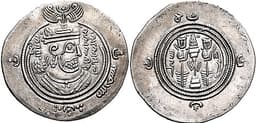
Muawiyah I
Emperor · Medieval
76.3Total
Basic Information
Born
1650
602
Died
1722
680
Era
Modern
Medieval
Nationality
England
Umayyad Caliphate
Occupation
General
Emperor
Civilization
Western
Middle Eastern
Score Comparison
Military (10%)
84.7
76.0
Political (20%)
78.0
75.0
Influence (20%)
65.0
75.0
Legacy (20%)
80.0
80.0
Leadership (15%)
78.0
78.0
Strategy (15%)
72.8
70.0
TOTAL
75.4
76.3
John Churchill Duke of Marlborough — Complete Timeline
1704 AD
Battle of BlenheimWar
Marlborough commanded the Anglo-Dutch army alongside Prince Eugene of Savoy against French and Bavarian forces at Blenheim. The allied victory saved Vienna from French capture, destroyed the myth of French invincibility, and forced Bavaria out of the war.
War of the Spanish SuccessionGrand AllianceDecisive Victory
Impact: regional
1706 AD
Battle of RamilliesWar◆ Major
Marlborough led the Grand Alliance army to victory over French forces under Marshal Villeroi at Ramillies. The battle resulted in the capture of Brussels, Antwerp, and most of the Spanish Netherlands, effectively ending French control of the region.
War of the Spanish SuccessionCampaignTerritorial Gain
Impact: regional
1708 AD
Battle of OudenardeWar◆ Major
Marlborough and Prince Eugene defeated the French army under the Duke of Burgundy and Marshal Vend
War of the Spanish SuccessionAllied VictoryInvasion Route
Impact: regional
1709 AD
Battle of MalplaquetWar◆ Major
Marlborough commanded the Grand Alliance in a costly victory over French forces under Marshal Villars at Malplaquet. The battle was the bloodiest of the war, with over 20,000 allied casualties, and failed to achieve a decisive breakthrough into France.
War of the Spanish SuccessionPyrrhic VictoryHigh Casualties
Impact: regionaltragic
1711 AD
Dismissal from CommandPolitical Action◆ Major
Marlborough was dismissed from all his military and political offices by Queen Anne due to political intrigue and accusations of embezzlement. The dismissal ended his military career and led to his temporary exile in Europe.
Political FallExileTory Government
Impact: nationaldestructive
Muawiyah I — Complete Timeline
640 AD
Governorship of SyriaPolitical Action◆ Major
Muawiyah I was appointed governor of Syria by Caliph Umar. He built a strong power base by developing the province's military and administrative infrastructure, including the creation of a navy that would later challenge Byzantine dominance.
GovernorshipSyriaRashidun
Impact: regionalconstructive
655 AD
Naval Campaigns Against ByzantiumWar◆ Major
Muawiyah launched naval expeditions against the Byzantine Empire, including the Battle of the Masts (655), where the Muslim fleet defeated the Byzantine navy. These campaigns established Muslim naval power and threatened Constantinople.
Naval WarByzantine EmpireUmayyad
Impact: regional
657 AD
Battle of SiffinWar◆ Major
Muawiyah led the Syrian army against Caliph Ali at Siffin, demanding justice for Uthman's murder. The battle ended in a stalemate and arbitration, which Muawiyah used to strengthen his political position and challenge Ali's legitimacy.
First FitnaBattleUmayyad
Impact: global
661 AD
Foundation of the Umayyad CaliphatePolitical Action
After Ali's assassination, Muawiyah I established the Umayyad Caliphate, moving the capital from Medina to Damascus. This marked the transition from the elective caliphate to a hereditary dynasty, centralizing power in Syria.
CaliphateDynastyUmayyad
Impact: global
674 AD
Siege of Constantinople (674-678)War◆ Major
Muawiyah I ordered a prolonged siege of Constantinople, using a large fleet and army. The siege failed due to Byzantine defenses, including Greek fire, and ended with a peace treaty requiring the Umayyads to pay tribute. It was a rare setback.
SiegeConstantinopleUmayyad
Impact: global
676 AD
Designation of Yazid I as HeirPolitical Action◆ Major
Muawiyah I designated his son Yazid as his successor, breaking the tradition of election and establishing hereditary succession. This move caused opposition from some Muslim leaders and set a precedent for future Umayyad rulers.
SuccessionHereditaryUmayyad
Impact: global
Expert Analysis
Origins
Muawiyah I (602-680 CE) was born into the powerful Umayyad clan of Mecca, a late convert to Islam who became a key scribe for Prophet Muhammad. After the Prophet's death, he navigated the early caliphate's turbulent politics, serving as governor of Syria under Caliph Uthman. John Churchill (1650-1722) was born into a Royalist family impoverished by the English Civil War. His father, Sir Winston Churchill, was a minor courtier, and John's early career relied on patronage from the Duke of York (future James II). Both men rose from relative obscurity to dominate their eras, but Muawiyah's beginnings were in a nascent empire, while Churchill operated within established European power structures.
Rise to Power
Muawiyah's rise came through his governorship of Syria (639-661), where he built a loyal army and navy, and skillfully managed tribal tensions. After Caliph Ali's election sparked the First Fitna (civil war), Muawiyah challenged Ali's legitimacy, leading to the Battle of Siffin (657). The arbitration that followed fractured Ali's support, and after Ali's assassination in 661, Muawiyah was recognized as caliph, founding the Umayyad dynasty. Churchill's rise was more gradual: he served under James II, then switched allegiance to William III during the Glorious Revolution (1688). His military brilliance shone in the War of the Spanish Succession (1701-1714), where his victories at Blenheim (1704) and Ramillies (1706) made him a national hero. However, his political maneuvering led to repeated dismissals and reconciliations.
Leadership & Governance
Muawiyah was a pragmatic and patient strategist. He centralized power in Damascus, established a hereditary monarchy, and reformed the caliphate's administration, creating a postal service and regular army. He also launched naval campaigns against Byzantium, culminating in the first Arab siege of Constantinople (674-678), which ultimately failed but demonstrated his ambition. Churchill was a master of logistics and coalition warfare, commanding allied armies with diplomatic finesse. His leadership style emphasized careful planning and decisive action, as seen in his famous march to Blenheim. However, his governance was limited to military command; he never held supreme political power, unlike Muawiyah who combined both roles.
Triumph & Tragedy
Muawiyah's triumph was the establishment of a stable dynasty that expanded the caliphate across North Africa and into Central Asia. His tragedy was the ongoing conflict with Byzantium and internal divisions, particularly the unresolved succession after his son Yazid. Churchill's triumphs were his four great victories: Blenheim, Ramillies, Oudenarde (1708), and Malplaquet (1709), which shattered French dominance. His tragedy was his dismissal from command in 1711 due to political intrigue, followed by a period of exile and loss of favor after Queen Anne's death. Both men faced ingratitude from their sovereigns: Muawiyah's successors squandered his gains, while Churchill was betrayed by his own queen and party.
Character & Destiny
Muawiyah was known for his clemency and cunning—he famously said, "I apply not my sword where my whip suffices, nor my whip where my tongue suffices." He was a unifier who used diplomacy as much as force. Churchill was ambitious, proud, and often accused of avarice, but his military genius is undisputed. His destiny was to be the savior of Europe from Louis XIV's hegemony, yet he died in relative political obscurity. Muawiyah's destiny was to found a dynasty that would rule for a century, shaping the Islamic world.
Legacy
Muawiyah's legacy is mixed: he is revered by Sunnis as a just caliph but reviled by Shias for opposing Ali. His administrative innovations laid the groundwork for the Islamic Golden Age. Churchill's legacy is more uniformly positive: he is celebrated as one of history's greatest generals, and Blenheim Palace stands as a monument to his achievements. However, his later political career was less distinguished. In terms of impact, Muawiyah's dynasty changed the course of history, while Churchill's victories preserved the balance of power in Europe.
Conclusion
Comparing Muawiyah I and John Churchill reveals two brilliant strategists operating in different contexts. Muawiyah's scores (M=76, P=75, I=75, L=80, D=78, S=70, T=76) reflect his balanced capabilities as a founder and ruler. Churchill's scores (M=85, P=78, I=65, L=80, D=78, S=73, T=75) highlight his superior military tactics but lower innovation. The overall score gap of 0.9 favors Muawiyah, likely due to his broader political achievements. While Churchill was a master of battlefield warfare, Muawiyah's legacy as a dynasty founder and empire builder gives him a slight edge. Thus, Muawiyah I is the more historically significant figure.
Rankings
🥇
Muawiyah ILeader
Mil: 76.0Pol: 75.0Inf: 75.0
76.3
🥈
John Churchill Duke of Marlborough
Mil: 84.7Pol: 78.0Inf: 65.0
75.4
+0.9 behind
How This Comparison Works
Algorithm
Each figure is scored on 6 dimensions (0—100 scale) based on structured historical data: Military (10%), Political (20%), Influence (20%), Legacy (20%), Leadership (15%), Strategy (15%). The weighted total produces the final ranking.
Data Sources
Scores are computed from structured sub-indicators in the database. Scale factors adjust for era (Ancient ×0.85, Modern ×1.0) and civilization size (Eastern ×1.05, Other ×0.80) to account for differences in population and military scale.
Maximum 3 Figures
Comparisons are limited to 2—3 figures to ensure readability and statistical meaningfulness.
Error Margins
±5 points per dimension — Sub-scores are derived from historical records with inherent uncertainty. Two figures within 5 points on a dimension should be considered roughly equivalent in that area.
Total Score Accuracy
±3 points overall — The weighted combination of 6 dimensions produces a total score with approximately ±3 points of uncertainty. Differences of less than 3 points are not statistically significant— the figures are effectively tied.
Known Limitations
- Historical records are incomplete and uneven across civilizations
- Figures from oral-tradition societies may be underrepresented
- Occupation labels can misclassify multi-role figures
- Scores measure capability and impact, not moral character
- Quantitative scoring is a comparison tool, not absolute truth
Capability Radar
Military (10%) — Battles & Warfare
Battles
95
75
Win Rate
98
80
Expansion
85
85
Political (20%) — Governance & Reform
Reform
60
90
Diplomacy
85
95
Economy
70
85
Influence (20%) — Cultural & Global Reach
Cultural
70
75
Global
75
75
Legacy (20%) — Historical Impact
Historical
85
85
Longevity
80
80
Leadership (15%) — Power & Stability
Tenure
80
85
Stability
75
80
Strategy (15%) — Tactics & Innovation
Strategy
95
85
Tactics
96
70
Reform
70
80
Similar Comparisons
Henri Turenne vs John Churchill Duke of MarlboroughJohn Churchill Duke of Marlborough vs Jonas SavimbiJohn Churchill Duke of Marlborough vs Julius CaesarJohn Churchill Duke of Marlborough vs Qin Shi HuangJohn Churchill Duke of Marlborough vs Napoleon BonaparteChan Chun Sing vs John Churchill Duke of Marlborough
Comments & Discussion
No comments yet. Be the first to share your thoughts!