Loading...
John Atta Mills vs Sonam Topgay Dorji
Sonam Topgay Dorji leads by 6.6 pts · 2 figures compared
…
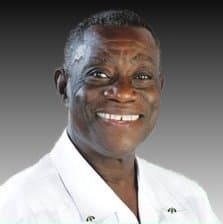
John Atta Mills
Politician · Modern
49.3Total

Sonam Topgay Dorji
Politician · Modern
55.9Total
Basic Information
Born
1944
1896
Died
—
1953
Era
Modern
Modern
Nationality
Ghana
Bhutan
Occupation
Politician
Politician
Civilization
Other
Indian
Score Comparison
Military (10%)
50.0
22.9
Political (20%)
68.0
72.0
Influence (20%)
53.3
54.9
Legacy (20%)
43.3
49.2
Leadership (15%)
40.0
72.0
Strategy (15%)
39.4
60.0
TOTAL
49.3
55.9
John Atta Mills — Complete Timeline
2008 AD
Elected President of GhanaPolitical Action◆ Major
John Atta Mills won the 2008 presidential election as the candidate of the National Democratic Congress (NDC), defeating Nana Akufo-Addo of the NPP. The election was closely contested and required a runoff.
ElectionDemocracyGhana
Impact: nationalconstructive
2009 AD
Discovery of Oil and GasOther◆ Major
Under Mills' presidency, Ghana began commercial oil production from the Jubilee field. The government established the Petroleum Revenue Management Act to manage oil revenues transparently.
Oil ProductionEconomyGhana
Impact: national
2012 AD
Died in OfficeOther◆ Major
President John Atta Mills died suddenly at the 37 Military Hospital in Accra on July 24, 2012. His death was attributed to a short illness. Vice President John Dramani Mahama was sworn in as his successor.
DeathGhanaSuccession
Impact: nationaltragic
Sonam Topgay Dorji — Complete Timeline
1910 AD
Negotiated the Treaty of PunakhaPolitical Action◆ Major
Sonam Topgay Dorji played a key role in negotiating the Treaty of Punakha between Bhutan and British India. The treaty revised earlier agreements, granting Bhutan increased autonomy in internal affairs while Britain retained control over foreign relations.
DiplomacyTreatyBritish India
Impact: regionalconstructive
1917 AD
Appointed as Gongzim (Chief Minister)Political Action◆ Major
Sonam Topgay Dorji was appointed as Gongzim, the chief minister of Bhutan, under King Ugyen Wangchuck. This position made him the de facto first Prime Minister of Bhutan, centralizing administrative power and initiating modernization efforts.
Bhutanese PoliticsModernizationAdministration
Impact: nationalconstructive
1920 AD
Initiated Educational ReformsReform◆ Major
Sonam Topgay Dorji established the first secular schools in Bhutan, moving beyond monastic education. He sent Bhutanese students to study in India, laying the foundation for a modern civil service and introducing Western-style education.
EducationModernizationReform
Impact: nationalprogressive
1952 AD
Facilitated Bhutan's Entry into the Colombo PlanPolitical Action
Sonam Topgay Dorji oversaw Bhutan's accession to the Colombo Plan, a regional organization for economic development. This move secured foreign aid and technical assistance, integrating Bhutan into post-colonial Asian cooperation frameworks.
Foreign PolicyEconomic DevelopmentInternational Relations
Impact: regionalconstructive
Expert Analysis
Origins
John Atta Mills was born on July 21, 1944, in Tarkwa, Ghana, to John Evans Atta Mills Sr., a Methodist teacher, and a mother who was a trader. He earned a law degree from the University of Ghana and a PhD in law from the London School of Economics. Mills specialized in tax law and taught at the University of Ghana before entering politics.
Sonam Topgay Dorji was born in 1896 in Bhutan into a prominent family. His father was Ugyen Dorji, a powerful governor. Dorji was educated in Bhutan and later in British India, where he learned English and administrative skills. He served as a translator and clerk before rising to become the Gongzim (chief minister).
Rise to Power
Mills entered politics in the 1990s under President Jerry Rawlings, serving as Vice President from 1997 to 2001. He lost the 2000 and 2004 presidential elections but won in 2008, defeating Nana Akufo-Addo with 50.23% of the vote. His victory marked the second peaceful transfer of power in Ghana.
Dorji was appointed Gongzim in 1917 by King Ugyen Wangchuck, becoming the de facto first Prime Minister of Bhutan. He negotiated the Treaty of Punakha in 1910, which secured Bhutan's autonomy while granting Britain control over foreign affairs. This treaty solidified his position as a key modernizer.
Leadership & Governance
Mills governed Ghana from 2009 until his death in 2012. He emphasized stability and economic management. His administration faced a global financial crisis but maintained growth. He signed the Petroleum Revenue Management Act to manage oil wealth transparently. Critics noted slow pace of infrastructure development and corruption allegations. His political score of 68.0 reflects his electoral success but limited legislative achievements.
Dorji ruled Bhutan alongside the king, focusing on modernization. He introduced secular education, sending students to India and establishing the first schools. He facilitated Bhutan's entry into the Colombo Plan in 1962, securing foreign aid. His leadership score of 72.0 indicates effective governance within a traditional monarchy. However, his military score is low (22.9) as he avoided conflict.
Triumph & Tragedy
Mills' greatest success was the peaceful management of the 2008 election and the discovery of oil. The Jubilee field began production in 2010, boosting revenues. His tragedy was his sudden death in office on July 24, 2012, from a short illness, leaving his vice president to complete his term. The transition was smooth, but his unfinished agenda included economic diversification.
Dorji's triumph was negotiating the Treaty of Punakha and modernizing Bhutan's education. He opened Bhutan to external aid and laid groundwork for later reforms. His tragedy was that his reforms were limited by royal authority; he could not fully democratize. He died in 1953, having served under two kings.
Character & Destiny
Mills was known as a calm, conciliatory figure. He was a sports enthusiast (former hockey player) and a devout Methodist. His style of consensus-building helped stabilize Ghana but also slowed decision-making. His death in office was a shock; he had a total score of 49.3, reflecting moderate impact.
Dorji was pragmatic and diplomatic. He understood the need to balance tradition with modernity. His character as a loyal servant of the monarchy allowed him to implement change without resistance. His total of 55.9 indicates higher effectiveness in his context. He died of natural causes at 57.
Legacy
Mills is remembered as a democrat who oversaw Ghana's oil boom. The Petroleum Revenue Management Act continues to guide oil revenue use. His peaceful death and succession reinforced Ghana's democratic credentials. However, his legacy is overshadowed by his successor, John Dramani Mahama.
Dorji is celebrated as the father of modern Bhutan. The schools he established evolved into the national education system. Bhutan's entry into international organizations began under him. His family continued in politics; his grandson was a prime minister. His legacy score of 49.2 reflects foundational but incomplete reforms.
Conclusion
Sonam Topgay Dorji had a greater impact relative to his country's starting point. While Mills governed a larger, more complex democracy, Dorji transformed a feudal society into a modernizing state. Dorji's political (72.0), leadership (72.0), and strategy (60.0) scores exceed Mills' in key categories. Mills' total of 49.3 versus Dorji's 55.9 underscores this. Dorji's reforms in education and diplomacy set Bhutan on a path to sustained development, whereas Mills' achievements were cut short. Thus, Dorji's legacy is more foundational and enduring.
Rankings
🥇
Sonam Topgay DorjiLeader
Mil: 22.9Pol: 72.0Inf: 54.9
55.9
🥈
John Atta Mills
Mil: 50.0Pol: 68.0Inf: 53.3
49.3
+6.6 behind
How This Comparison Works
Algorithm
Each figure is scored on 6 dimensions (0—100 scale) based on structured historical data: Military (10%), Political (20%), Influence (20%), Legacy (20%), Leadership (15%), Strategy (15%). The weighted total produces the final ranking.
Data Sources
Scores are computed from structured sub-indicators in the database. Scale factors adjust for era (Ancient ×0.85, Modern ×1.0) and civilization size (Eastern ×1.05, Other ×0.80) to account for differences in population and military scale.
Maximum 3 Figures
Comparisons are limited to 2—3 figures to ensure readability and statistical meaningfulness.
Error Margins
±5 points per dimension — Sub-scores are derived from historical records with inherent uncertainty. Two figures within 5 points on a dimension should be considered roughly equivalent in that area.
Total Score Accuracy
±3 points overall — The weighted combination of 6 dimensions produces a total score with approximately ±3 points of uncertainty. Differences of less than 3 points are not statistically significant— the figures are effectively tied.
Known Limitations
- Historical records are incomplete and uneven across civilizations
- Figures from oral-tradition societies may be underrepresented
- Occupation labels can misclassify multi-role figures
- Scores measure capability and impact, not moral character
- Quantitative scoring is a comparison tool, not absolute truth
Capability Radar
Military (10%) — Battles & Warfare
Battles
21
45
Win Rate
27
49
Expansion
28
52
Political (20%) — Governance & Reform
Reform
40
70
Diplomacy
50
60
Economy
45
55
Influence (20%) — Cultural & Global Reach
Cultural
30
40
Global
30
30
Legacy (20%) — Historical Impact
Historical
35
50
Longevity
25
45
Leadership (15%) — Power & Stability
Tenure
45
65
Stability
50
60
Strategy (15%) — Tactics & Innovation
Strategy
31
50
Tactics
36
57
Reform
37
60
Similar Comparisons
Comments & Discussion
No comments yet. Be the first to share your thoughts!