Loading...
This comparison has not been analyzed yet.
One-time AI generation (~1 minute). Scores and timeline are already available below.
Johan Ferrier vs Kurmanbek Bakiyev
Johan Ferrier leads by 16.8 pts · 2 figures compared
…
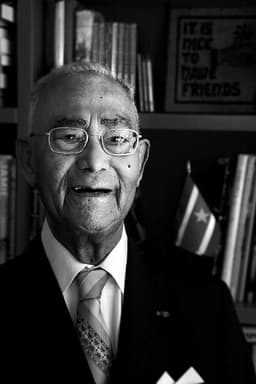
Johan Ferrier
Politician · Modern
50.2Total
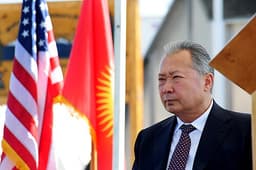
Kurmanbek Bakiyev
Politician · Modern
33.4Total
Basic Information
Born
1910
1949
Died
2010
—
Era
Modern
Modern
Nationality
Suriname
Kyrgyzstan
Occupation
Politician
Politician
Civilization
Other
Eastern
Score Comparison
Military (10%)
35.1
13.9
Political (20%)
68.0
26.4
Influence (20%)
52.5
45.5
Legacy (20%)
44.2
35.8
Leadership (15%)
53.2
34.6
Strategy (15%)
42.9
25.0
TOTAL
50.2
33.4
Johan Ferrier — Complete Timeline
1968 AD
Governor of SurinamePolitical Action◆ Major
Ferrier served as Governor of Suriname, the representative of the Dutch monarch, from 1968 to 1975. He played a key role in negotiations for independence and maintaining stability during the transition period.
GovernorColonial AdministrationIndependence
Impact: nationalconstructive
1975 AD
First President of Independent SurinamePolitical Action
Johan Ferrier became the first President of Suriname upon its independence from the Netherlands on November 25, 1975. He served as a ceremonial head of state, overseeing the transition to sovereignty and the drafting of the constitution.
IndependencePresidencyConstitution
Impact: nationalconstructive
1980 AD
Resignation After the 1980 CoupPolitical Action◆ Major
Ferrier resigned as President in 1980 after a military coup led by Desi Bouterse overthrew the civilian government. His resignation marked the end of democratic rule and the beginning of military dictatorship in Suriname.
CoupResignationMilitary Rule
Impact: nationaltragic
Post-Presidency Exile and ReturnPolitical Action
After the coup, Ferrier went into exile in the Netherlands, where he remained for several years. He later returned to Suriname after the restoration of democracy in the 1990s, but did not re-enter politics.
ExileReturnDemocracy
Impact: national
Kurmanbek Bakiyev — Complete Timeline
2000 AD
Appointed Prime Minister of KyrgyzstanPolitical Action
Bakiyev was appointed Prime Minister of Kyrgyzstan under President Askar Akayev. He served until 2002, overseeing economic reforms. His tenure was marked by political instability and allegations of corruption. He later became a key opposition figure.
Prime MinisterKyrgyzstan
Impact: national
2005 AD
Led Tulip RevolutionPolitical Action
Bakiyev emerged as a leader of the Tulip Revolution, a popular uprising that ousted President Askar Akayev. The revolution was triggered by disputed parliamentary elections. Bakiyev became acting president and then won the subsequent presidential election, promising democratic reforms.
Tulip RevolutionRegime ChangeDemocracy
Impact: national
Elected President of KyrgyzstanPolitical Action◆ Major
Bakiyev was elected President of Kyrgyzstan in a landslide victory, winning 88.9% of the vote. His election followed the Tulip Revolution. He promised to combat corruption and promote democracy, but his rule became increasingly authoritarian.
Presidential ElectionKyrgyzstan
Impact: national
2010 AD
Overthrown in 2010 RevolutionPolitical Action
Bakiyev was overthrown in a popular uprising after his government cracked down on protesters, killing dozens. The revolution was fueled by corruption, nepotism, and rising utility prices. Bakiyev fled to Belarus, where he was granted asylum. His ouster led to a period of political turmoil.
RevolutionOusterKyrgyzstan
Impact: nationaldestructive
2013 AD
Sentenced in Absentia for Abuse of PowerPolitical Action
A Kyrgyz court sentenced Bakiyev in absentia to 24 years in prison for abuse of power and involvement in the deaths of protesters during the 2010 uprising. He remained in exile in Belarus. The sentence was part of efforts to hold former leaders accountable.
TrialCorruptionHuman Rights
Impact: nationaldestructive
This comparison has not been analyzed yet.
One-time AI generation (~1 minute). Scores and timeline are already available below.
Rankings
🥇
Johan FerrierLeader
Mil: 35.1Pol: 68.0Inf: 52.5
50.2
🥈
Kurmanbek Bakiyev
Mil: 13.9Pol: 26.4Inf: 45.5
33.4
+16.8 behind
How This Comparison Works
Algorithm
Each figure is scored on 6 dimensions (0—100 scale) based on structured historical data: Military (10%), Political (20%), Influence (20%), Legacy (20%), Leadership (15%), Strategy (15%). The weighted total produces the final ranking.
Data Sources
Scores are computed from structured sub-indicators in the database. Scale factors adjust for era (Ancient ×0.85, Modern ×1.0) and civilization size (Eastern ×1.05, Other ×0.80) to account for differences in population and military scale.
Maximum 3 Figures
Comparisons are limited to 2—3 figures to ensure readability and statistical meaningfulness.
Error Margins
±5 points per dimension — Sub-scores are derived from historical records with inherent uncertainty. Two figures within 5 points on a dimension should be considered roughly equivalent in that area.
Total Score Accuracy
±3 points overall — The weighted combination of 6 dimensions produces a total score with approximately ±3 points of uncertainty. Differences of less than 3 points are not statistically significant— the figures are effectively tied.
Known Limitations
- Historical records are incomplete and uneven across civilizations
- Figures from oral-tradition societies may be underrepresented
- Occupation labels can misclassify multi-role figures
- Scores measure capability and impact, not moral character
- Quantitative scoring is a comparison tool, not absolute truth
Capability Radar
Military (10%) — Battles & Warfare
Battles
21
15
Win Rate
26
16
Expansion
25
20
Political (20%) — Governance & Reform
Reform
40
10
Diplomacy
60
20
Economy
35
15
Influence (20%) — Cultural & Global Reach
Cultural
30
5
Global
25
5
Legacy (20%) — Historical Impact
Historical
35
10
Longevity
30
5
Leadership (15%) — Power & Stability
Tenure
55
15
Stability
45
5
Strategy (15%) — Tactics & Innovation
Strategy
33
23
Tactics
33
27
Reform
35
30
Similar Comparisons
Comments & Discussion
No comments yet. Be the first to share your thoughts!