Loading...
Johan Ferrier vs Robert Gascoyne-Cecil
Robert Gascoyne-Cecil leads by 12.6 pts · 2 figures compared
…
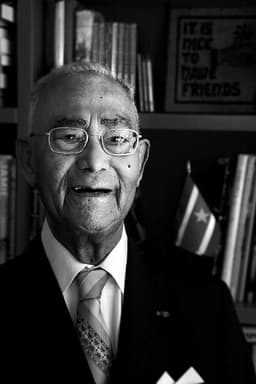
Johan Ferrier
Politician · Modern
50.2Total

Robert Gascoyne-Cecil
Politician · Modern
62.8Total
Basic Information
Born
1910
1830
Died
2010
1903
Era
Modern
Modern
Nationality
Suriname
United Kingdom
Occupation
Politician
Politician
Civilization
Other
Western
Score Comparison
Military (10%)
35.1
49.3
Political (20%)
68.0
70.3
Influence (20%)
52.5
72.0
Legacy (20%)
44.2
52.0
Leadership (15%)
53.2
80.7
Strategy (15%)
42.9
41.8
TOTAL
50.2
62.8
Johan Ferrier — Complete Timeline
1968 AD
Governor of SurinamePolitical Action◆ Major
Ferrier served as Governor of Suriname, the representative of the Dutch monarch, from 1968 to 1975. He played a key role in negotiations for independence and maintaining stability during the transition period.
GovernorColonial AdministrationIndependence
Impact: nationalconstructive
1975 AD
First President of Independent SurinamePolitical Action
Johan Ferrier became the first President of Suriname upon its independence from the Netherlands on November 25, 1975. He served as a ceremonial head of state, overseeing the transition to sovereignty and the drafting of the constitution.
IndependencePresidencyConstitution
Impact: nationalconstructive
1980 AD
Resignation After the 1980 CoupPolitical Action◆ Major
Ferrier resigned as President in 1980 after a military coup led by Desi Bouterse overthrew the civilian government. His resignation marked the end of democratic rule and the beginning of military dictatorship in Suriname.
CoupResignationMilitary Rule
Impact: nationaltragic
Post-Presidency Exile and ReturnPolitical Action
After the coup, Ferrier went into exile in the Netherlands, where he remained for several years. He later returned to Suriname after the restoration of democracy in the 1990s, but did not re-enter politics.
ExileReturnDemocracy
Impact: national
Robert Gascoyne-Cecil — Complete Timeline
1884 AD
Franchise and Redistribution ActsReform◆ Major
Salisbury's government passed the Representation of the People Act 1884 and the Redistribution of Seats Act 1885, which extended the vote to agricultural workers and redistributed parliamentary seats to reflect population changes. This nearly doubled the electorate.
Electoral ReformDemocracyFranchise
Impact: nationalprogressive
1885 AD
Became Prime MinisterPolitical Action
Robert Gascoyne-Cecil, Lord Salisbury, became Prime Minister for the first time on June 23, 1885, after the fall of Gladstone's government. He led a minority Conservative government until January 1886, then returned to power after the Liberal split over Home Rule.
Prime MinisterConservative PartyGovernment
Impact: national
Scramble for AfricaPolitical Action◆ Major
Salisbury's government oversaw British expansion in Africa during the Scramble for Africa. He supported the Berlin Conference (1884-1885) and pursued territorial claims in East and Southern Africa, including the establishment of protectorates in Bechuanaland and Nyasaland.
ColonialismAfricaImperialism
Impact: global
1898 AD
Fashoda IncidentPolitical Action◆ Major
Salisbury's government faced the Fashoda Incident in 1898, a confrontation with France over control of the Upper Nile. British and French forces faced off at Fashoda in Sudan. Salisbury's firm diplomacy forced France to withdraw, securing British dominance in the Nile Valley.
DiplomacyAfricaImperial Rivalry
Impact: global
1899 AD
Second Boer WarWar◆ Major
Salisbury's government led Britain into the Second Boer War (1899-1902) against the South African Republic and Orange Free State. The war was costly and controversial, but resulted in British victory and the annexation of the Boer republics, leading to the Union of South Africa.
Boer WarSouth AfricaImperial War
Impact: global
Expert Analysis
Origins
Johan Ferrier was born on May 12, 1910, in Paramaribo, Suriname, then a Dutch colony. He came from a mixed-race elite family and studied law in the Netherlands, earning a doctorate. His background as a teacher and civil servant shaped his moderate, diplomatic approach.
Robert Gascoyne-Cecil, 3rd Marquess of Salisbury, was born on February 3, 1830, at Hatfield House, England, into an aristocratic family. He studied at Eton and Christ Church, Oxford. His family's political connections and his own intellectual rigor defined his conservative worldview.
Rise to Power
Ferrier entered politics as a member of the Suriname National Party and became Governor in 1968, representing the Dutch crown. He negotiated Suriname's independence from the Netherlands, which was achieved on November 25, 1975. He then became the first President, a ceremonial role. His rise was gradual, based on administrative competence and trust from both Dutch and Surinamese elites.
Salisbury entered Parliament in 1853 as a Conservative. He served as Secretary of State for India and Foreign Secretary before becoming Prime Minister in 1885. His rise was accelerated by his opposition to Benjamin Disraeli's reform bill and his intellectual leadership in the Conservative Party. He skillfully navigated the fall of Gladstone's government.
Leadership & Governance
Ferrier's leadership was that of a constitutional figurehead. He focused on maintaining stability during the transition to independence. His governance style was cautious and procedural. He signed the independence treaty, but had limited executive power. His political score of 68.0 reflects his diplomatic role, but his leadership score of 53.2 indicates his constrained authority.
Salisbury exercised strong executive control. He served three terms as Prime Minister (1885-1886, 1886-1892, 1895-1902). He managed a cabinet of strong personalities and pursued imperial expansion. He passed the Representation of the People Act 1884 and Redistribution of Seats Act 1885, expanding the electorate. His leadership score of 80.7 reflects his dominance. However, his strategy score of 41.8 was lower due to the costly Second Boer War (1899-1902).
Triumph & Tragedy
Ferrier's greatest triumph was overseeing Suriname's peaceful independence in 1975, a rare achievement in decolonization. His tragedy came in 1980 when a military coup led by Desi Bouterse forced his resignation. He went into exile in the Netherlands, his democratic legacy shattered.
Salisbury's triumphs include expanding the British Empire during the Scramble for Africa, notably at the Berlin Conference (1884-1885) and the Fashoda Incident (1898), where he secured British control over the Upper Nile. His tragedy was the Second Boer War (1899-1902), which drained British resources and exposed imperial overreach. The war cost over £200 million and 22,000 British lives.
Character & Destiny
Ferrier was a moderate, diplomatic figure, more comfortable with negotiation than confrontation. His character suited a ceremonial role, but he lacked the political will to prevent the coup. His destiny was to be a transitional figure, his presidency cut short by forces he could not control.
Salisbury was aristocratic, intellectual, and pragmatic. He believed in cautious reform and imperial strength. His character shaped his destiny as a dominant statesman of the Victorian era. However, his reluctance to modernize the military contributed to the Boer War's difficulties.
Legacy
Ferrier's legacy is mixed. He is remembered as the first president, but his resignation and exile diminished his impact. His legacy score of 44.2 reflects his limited enduring influence. Suriname's political instability after 1980 overshadowed his contributions.
Salisbury's legacy is more substantial. He is considered a key architect of the British Empire at its peak. His foreign policy shaped Africa's borders. Domestically, his electoral reforms expanded democracy. His legacy score of 52.0 is moderate, partly because his imperial policies are now criticized. His influence score of 72.0 reflects his impact on global politics.
Conclusion
Robert Gascoyne-Cecil, Lord Salisbury, had greater impact than Johan Ferrier. Salisbury's total score of 62.8 significantly exceeds Ferrier's 50.2. While Ferrier's role in peaceful independence was commendable, his influence was limited to a small nation and ended abruptly. Salisbury shaped the British Empire, influenced global borders, and left a lasting mark on British politics. His leadership score of 80.7 versus Ferrier's 53.2 underscores his superiority. Therefore, Salisbury emerges as the more consequential figure.
Rankings
🥇
Robert Gascoyne-CecilLeader
Mil: 49.3Pol: 70.3Inf: 72.0
62.8
🥈
Johan Ferrier
Mil: 35.1Pol: 68.0Inf: 52.5
50.2
+12.6 behind
How This Comparison Works
Algorithm
Each figure is scored on 6 dimensions (0—100 scale) based on structured historical data: Military (10%), Political (20%), Influence (20%), Legacy (20%), Leadership (15%), Strategy (15%). The weighted total produces the final ranking.
Data Sources
Scores are computed from structured sub-indicators in the database. Scale factors adjust for era (Ancient ×0.85, Modern ×1.0) and civilization size (Eastern ×1.05, Other ×0.80) to account for differences in population and military scale.
Maximum 3 Figures
Comparisons are limited to 2—3 figures to ensure readability and statistical meaningfulness.
Error Margins
±5 points per dimension — Sub-scores are derived from historical records with inherent uncertainty. Two figures within 5 points on a dimension should be considered roughly equivalent in that area.
Total Score Accuracy
±3 points overall — The weighted combination of 6 dimensions produces a total score with approximately ±3 points of uncertainty. Differences of less than 3 points are not statistically significant— the figures are effectively tied.
Known Limitations
- Historical records are incomplete and uneven across civilizations
- Figures from oral-tradition societies may be underrepresented
- Occupation labels can misclassify multi-role figures
- Scores measure capability and impact, not moral character
- Quantitative scoring is a comparison tool, not absolute truth
Capability Radar
Military (10%) — Battles & Warfare
Battles
21
31
Win Rate
26
33
Expansion
25
33
Political (20%) — Governance & Reform
Reform
40
70
Diplomacy
60
80
Economy
35
75
Influence (20%) — Cultural & Global Reach
Cultural
30
60
Global
25
65
Legacy (20%) — Historical Impact
Historical
35
70
Longevity
30
65
Leadership (15%) — Power & Stability
Tenure
55
85
Stability
45
85
Strategy (15%) — Tactics & Innovation
Strategy
33
39
Tactics
33
41
Reform
35
41
Similar Comparisons
Comments & Discussion
No comments yet. Be the first to share your thoughts!