Loading...
Joe Modise vs Julius Caesar
Julius Caesar leads by 30.4 pts · 2 figures compared
…
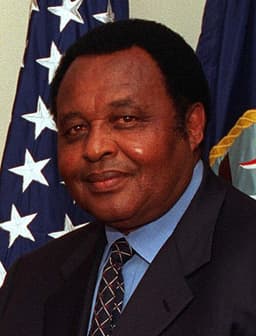
Joe Modise
General · Modern
52.4Total

Julius Caesar
General · Ancient
82.8Total
Basic Information
Born
1929
-100
Died
—
-44
Era
Modern
Ancient
Nationality
South Africa
Roman Republic
Occupation
General
General
Civilization
Other
Western
Score Comparison
Military (10%)
47.5
88.0
Political (20%)
68.0
78.0
Influence (20%)
51.8
85.0
Legacy (20%)
43.3
82.0
Leadership (15%)
68.0
80.0
Strategy (15%)
35.0
85.0
TOTAL
52.4
82.8
Joe Modise — Complete Timeline
1961 AD
Joined Umkhonto we Sizwe (MK)Political Action◆ Major
Modise joined the armed wing of the African National Congress, Umkhonto we Sizwe, after the ANC was banned. He underwent military training abroad and became a key figure in the armed struggle against apartheid.
MKArmed StruggleANC
Impact: national
1965 AD
Became MK CommanderPolitical Action◆ Major
Modise rose to become the commander of Umkhonto we Sizwe, the military wing of the ANC. He oversaw guerrilla operations, including sabotage campaigns and infiltration of fighters into South Africa, from bases in neighboring countries.
MKCommanderGuerrilla Warfare
Impact: national
1994 AD
Oversaw Military IntegrationReform◆ Major
As Defence Minister, Modise oversaw the complex process of integrating MK, the apartheid-era South African Defence Force, and the homelands' armies into a unified force. The process faced challenges but was largely successful.
Military IntegrationReformPost-Apartheid
Impact: nationalconstructive
Appointed South Africa's First Black Defence MinisterPolitical Action
Modise was appointed Minister of Defence in Nelson Mandela's first post-apartheid government. He was responsible for integrating the former apartheid military, MK, and other armed forces into a single South African National Defence Force.
Defence MinisterIntegrationPost-Apartheid
Impact: nationalconstructive
Julius Caesar — Complete Timeline
58 BC
Gallic WarsWar◆ Major
Caesar, as proconsul of Gaul, launched a series of campaigns that conquered all of Gaul (modern France, Belgium, and parts of Switzerland). He fought numerous battles, including against the Helvetii, the Belgae, and the Gallic chieftain Vercingetorix. The wars brought immense wealth and a loyal army to Caesar.
Gallic WarsConquestRoman Expansion
Impact: regional
49 BC
Crossing the RubiconPolitical Action◆ Major
Caesar led Legio XIII across the Rubicon River into Italy, defying the Roman Senate's order to disband his army. This act triggered a civil war against Pompey and the Optimates, ultimately leading to Caesar's dictatorship and the end of the Roman Republic.
Roman Civil WarEnd of RepublicPower Struggle
Impact: global
48 BC
Battle of PharsalusWar◆ Major
Caesar's outnumbered army defeated the larger forces of Pompey the Great at Pharsalus in Greece. Caesar's tactical use of a reserve line to counter Pompey's cavalry charge proved decisive. Pompey fled to Egypt, where he was assassinated, leaving Caesar as the undisputed master of the Roman world.
Roman Civil WarBattleDecisive Victory
Impact: regional
44 BC
Appointment as Dictator for LifePolitical Action◆ Major
The Roman Senate appointed Caesar dictator perpetuo (dictator for life), granting him unprecedented personal power. This move concentrated military, legislative, and judicial authority in one person, effectively ending the Roman Republic's traditional system of checks and balances and alarming many senators.
DictatorshipEnd of RepublicPower Consolidation
Impact: regionaldestructive
Assassination on the Ides of MarchPolitical Action◆ Major
A group of Roman senators, led by Marcus Junius Brutus and Gaius Cassius Longinus, stabbed Caesar to death at a meeting of the Senate in the Theatre of Pompey. The assassination was intended to restore the Republic, but instead triggered another civil war that led to the rise of the Roman Empire.
AssassinationRoman PoliticsEnd of Republic
Impact: globaldestructive
Expert Analysis
joe-modise-vs-julius-caesar
The General and the Guerrilla
On a January morning in 49 BCE, a Roman general stood at the edge of a small river in northern Italy. The Rubicon was little more than a stream, yet crossing it meant civil war, treason, and the end of a republic that had stood for centuries. Julius Caesar did not hesitate. Two thousand years later, in the hills of South Africa, another man made a different kind of crossing. Joe Modise, a young activist turned soldier, slipped across borders into exile, carrying not a legion’s eagle but the hopes of a liberation movement. Both men commanded armed forces. Both reshaped their nations. But one became a name that echoes through millennia, while the other remains a footnote in a single country’s history. Why?
Origins
Caesar was born into the chaos of the late Roman Republic, a world of senatorial intrigue, slave revolts, and provincial wars. His family, the Julii, claimed descent from the goddess Venus, but they were political outsiders in a system dominated by wealth and patronage. Caesar learned early that survival meant mastering alliances, debts, and the art of public performance. He was a product of a civilization that worshipped glory and wrote its history in blood.
Joe Modise was born in 1929 in Soweto, a sprawling township outside Johannesburg, where the South African government had penned black families into cramped, policed neighborhoods. His world was one of pass laws, forced removals, and the quiet humiliation of apartheid. Modise left school early to work, joined the African National Congress in his twenties, and watched as peaceful protests were met with bullets. When the ANC was banned in 1960, the choice was stark: submit or fight. Modise chose fight.
The difference in their origins is not merely one of time or place. Caesar inherited a world of imperial ambition; Modise inherited a world of colonial oppression. One was born to conquer; the other was born to resist.
Rise to Power
Caesar’s ascent was a masterclass in calculated risk. He borrowed fortunes to fund public games, bought allies in the Senate, and spent years in Spain and Gaul building a loyal army. His conquest of Gaul (58–50 BCE) was not just a military campaign; it was a political machine. The spoils, the veterans, the glory—all fed his ambition. When the Senate ordered him to disband his army, he crossed the Rubicon instead. In 46 BCE, he was appointed dictator for ten years; a year later, dictator for life.
Modise’s rise was slower, quieter, and forged in the shadows. In 1961, he joined Umkhonto we Sizwe (MK), the ANC’s newly formed armed wing. By 1965, he was its commander. But MK was not a conquering army; it was a guerrilla force operating from exile in Tanzania, Zambia, and later Angola. Modise’s war was not fought in pitched battles but in sabotage operations, training camps, and diplomatic missions to secure Soviet weapons. His turning point came not on a battlefield but at a negotiating table. In 1994, after decades of struggle, Nelson Mandela appointed Modise South Africa’s first black Minister of Defence.
Caesar seized power by breaking the law. Modise received power through a peace deal.
Leadership & Governance
Caesar governed like a storm. He reformed the calendar, granted citizenship to provincials, initiated public works, and packed the Senate with his supporters. His military genius lay in speed and decisiveness—at Alesia (52 BCE), he besieged a Gallic fortress while simultaneously repelling a relief army, a feat of logistics and nerve. Yet his governance was autocratic. He centralized authority, minted coins with his image, and accepted divine honors. The Republic had become a stage, and Caesar was its only actor.
Modise’s leadership was the opposite: cautious, institutional, and reconciliatory. As Defence Minister, he faced the impossible task of merging MK, the apartheid-era South African Defence Force, and the homelands’ armies into a single, democratic military. He did not command from a chariot; he negotiated with former enemies. His reforms were slow, bureaucratic, and incomplete—but they prevented a civil war. Modise’s military strategy had always been about survival and political pressure, not conquest. His greatest victory was making the army a symbol of unity, not division.
Caesar built an empire. Modise built a peace.
Triumph & Tragedy
Caesar’s triumph was his Gallic conquest, immortalized in his own *Commentaries*, a work of propaganda so effective that it is still read as history. His tragedy was the Ides of March, 44 BCE, when sixty senators stabbed him to death in the Pompey’s Theatre. He fell at the foot of a statue of his rival, Pompey, bleeding out on the marble floor. His last moments—whether he said “Et tu, Brute?” or not—became the archetype of betrayal.
Modise’s triumph was quieter. In 1994, he stood in the Union Buildings in Pretoria, watching the flag change. The apartheid army that had once hunted him now saluted him. His tragedy was that the struggle did not end. MK veterans complained of broken promises, pensions unpaid, and a new South Africa that still bore the scars of inequality. Modise died in 2001, his legacy contested. Some called him a hero; others, a bureaucrat who had sold out the revolution.
Character & Destiny
Caesar was arrogant, brilliant, and reckless. He believed in his own star. “The die is cast,” he said at the Rubicon, and meant it. His personality drove him to take risks that would have destroyed a lesser man, and it ultimately destroyed him. He could not imagine a world in which he was not at the center, and so he never built a system that could survive without him.
Modise was pragmatic, patient, and wary. He had learned in exile that survival meant compromise. He was not a charismatic speaker or a grand strategist; he was a manager of a long, grinding war. His personality suited the transition: steady, unglamorous, and focused on results. He did not seek immortality. He sought a functioning military.
Caesar died because he could not stop. Modise lived because he knew when to stop.
Legacy
Caesar’s legacy is the Roman Empire. His name became a title—Kaiser, Tsar—and his reforms shaped Western law, language, and governance for two thousand years. He is remembered as a genius and a tyrant, a warning and an inspiration.
Modise’s legacy is the South African National Defence Force, a unified institution in a country that was once at war with itself. He is remembered in military circles and ANC histories, but his name does not echo beyond his borders. He did not conquer; he integrated. He did not write history; he made it possible for history to move on.
Conclusion
Standing at the Rubicon, Caesar saw a world to be remade in his image. Standing at the Union Buildings, Modise saw a world that had already been remade by millions of ordinary people. One man changed the course of Western civilization; the other helped his nation survive its own transformation. Both were generals. Both were politicians. But Caesar’s story is about the power of the individual, while Modise’s is about the power of the collective. The difference between them is not just time or place. It is the difference between glory and duty, conquest and reconciliation, the Ides of March and the dawn of a new flag.
Rankings
🥇
Julius CaesarLeader
Mil: 88.0Pol: 78.0Inf: 85.0
82.8
🥈
Joe Modise
Mil: 47.5Pol: 68.0Inf: 51.8
52.4
+30.4 behind
How This Comparison Works
Algorithm
Each figure is scored on 6 dimensions (0—100 scale) based on structured historical data: Military (10%), Political (20%), Influence (20%), Legacy (20%), Leadership (15%), Strategy (15%). The weighted total produces the final ranking.
Data Sources
Scores are computed from structured sub-indicators in the database. Scale factors adjust for era (Ancient ×0.85, Modern ×1.0) and civilization size (Eastern ×1.05, Other ×0.80) to account for differences in population and military scale.
Maximum 3 Figures
Comparisons are limited to 2—3 figures to ensure readability and statistical meaningfulness.
Error Margins
±5 points per dimension — Sub-scores are derived from historical records with inherent uncertainty. Two figures within 5 points on a dimension should be considered roughly equivalent in that area.
Total Score Accuracy
±3 points overall — The weighted combination of 6 dimensions produces a total score with approximately ±3 points of uncertainty. Differences of less than 3 points are not statistically significant— the figures are effectively tied.
Known Limitations
- Historical records are incomplete and uneven across civilizations
- Figures from oral-tradition societies may be underrepresented
- Occupation labels can misclassify multi-role figures
- Scores measure capability and impact, not moral character
- Quantitative scoring is a comparison tool, not absolute truth
Capability Radar
Military (10%) — Battles & Warfare
Battles
20
95
Win Rate
25
92
Expansion
15
97
Political (20%) — Governance & Reform
Reform
50
90
Diplomacy
45
85
Economy
40
82
Influence (20%) — Cultural & Global Reach
Cultural
20
88
Global
20
94
Legacy (20%) — Historical Impact
Historical
30
95
Longevity
20
96
Leadership (15%) — Power & Stability
Tenure
55
75
Stability
50
60
Strategy (15%) — Tactics & Innovation
Strategy
30
94
Tactics
30
96
Reform
40
88
Similar Comparisons
Comments & Discussion
No comments yet. Be the first to share your thoughts!