Loading...
Joao Lourenco vs Seyoum Mengesha
Joao Lourenco leads by 3.1 pts · 2 figures compared
…
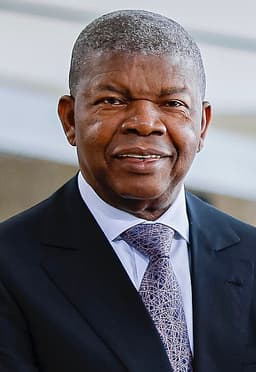
Joao Lourenco
General · Modern
51.3Total
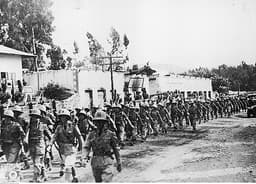
Seyoum Mengesha
General · Modern
48.2Total
Basic Information
Born
1954
1887
Died
—
1960
Era
Modern
Modern
Nationality
Angola
Ethiopia
Occupation
General
General
Civilization
Other
Other
Score Comparison
Military (10%)
25.9
38.3
Political (20%)
68.0
36.5
Influence (20%)
52.5
53.3
Legacy (20%)
40.8
41.7
Leadership (15%)
74.0
61.1
Strategy (15%)
41.0
60.0
TOTAL
51.3
48.2
Joao Lourenco — Complete Timeline
2017 AD
Elected President of AngolaPolitical Action◆ Major
João Lourenço succeeded José Eduardo dos Santos as president after winning the 2017 general election. He became the first new president of Angola in 38 years, marking a transition of power within the MPLA party.
AngolaPresidential TransitionMPLA
Impact: national
Launched Anti-Corruption CampaignPolitical Action◆ Major
Lourenço initiated a campaign against corruption and nepotism, targeting figures from the previous dos Santos administration. He removed Isabel dos Santos from the leadership of Sonangol and José Filomeno dos Santos from the sovereign wealth fund.
AngolaAnti-CorruptionDos Santos Family
Impact: nationalconstructive
2022 AD
Reelected President of AngolaPolitical Action
Lourenço won a second term in the 2022 general election with 51% of the vote. The election was marred by allegations of irregularities and low voter turnout, but the MPLA retained its parliamentary majority.
AngolaElectionMPLA
Impact: national
Seyoum Mengesha — Complete Timeline
1936 AD
Commanded Ethiopian Forces at Battle of Amba AlagiWar◆ Major
Seyoum Mengesha commanded Ethiopian troops at the Battle of Amba Alagi against Italian forces. Despite fierce resistance, his forces were defeated, leading to the Italian capture of the stronghold.
BattleSecond Italo-Ethiopian WarDefeat
Impact: regionaltragic
Surrendered to Italian ForcesWar◆ Major
After the fall of Addis Ababa, Seyoum Mengesha surrendered to Italian forces. He was subsequently exiled to Italy, where he remained until the end of World War II.
SurrenderExileSecond Italo-Ethiopian War
Impact: regionaltragic
Expert Analysis
Origins
João Lourenço was born on March 5, 1954, in Lobito, Angola, into a modest family. His father, a tailor, and mother, a nurse, provided a stable upbringing. Lourenço studied at the University of Angola but left to join the People's Movement for the Liberation of Angola (MPLA) in the 1970s, receiving military training in the Soviet Union and Algeria. He rose through party ranks, becoming a key figure in the MPLA's military wing.
Seyoum Mengesha was born in 1886 in Tigray, Ethiopia, into the imperial family. His father, Ras Mengesha Yohannes, was a prominent noble. Seyoum was educated in Ethiopian Orthodox traditions and military tactics. As a prince, he inherited leadership of Tigray province and became a commander in the Ethiopian army.
Rise to Power
Lourenço's rise was gradual within the MPLA. He served as Angola's Minister of Defense from 2014 to 2017, overseeing military modernization. In 2017, he was elected President of Angola, succeeding José Eduardo dos Santos, who had ruled for 38 years. Lourenço won with 61% of the vote, promising reform.
Seyoum Mengesha rose to prominence as a military commander during the First Italo-Ethiopian War (1895-1896) and later became a key figure in Emperor Haile Selassie's government. He commanded Ethiopian forces at the Battle of Amba Alagi in 1936, a major engagement during the Second Italo-Ethiopian War. Despite his efforts, his forces were defeated, leading to his surrender.
Leadership & Governance
Lourenço's leadership focuses on anti-corruption and economic diversification. He removed Isabel dos Santos, the former president's daughter, from her position as head of Sonangol, the state oil company. He also arrested several officials from the previous regime. His governance style is technocratic, emphasizing rule of law and transparency. However, his reforms have been slow, and Angola remains heavily dependent on oil.
Seyoum Mengesha's leadership was rooted in traditional Ethiopian feudalism. As a regional ruler, he maintained loyalty to the emperor but wielded significant autonomy. His governance was characterized by military command and kinship ties. After his surrender to Italy, he was exiled, diminishing his political influence.
Triumph & Tragedy
Lourenço's greatest success is his anti-corruption campaign, which has recovered assets and improved Angola's international standing. He also secured a second term in 2022, though the election was marred by irregularities. His greatest failure is the slow pace of economic reform; Angola's economy has not diversified, and poverty remains high.
Seyoum Mengesha's military career peaked at Amba Alagi, where his forces fought bravely but were overwhelmed by Italian technology and numbers. His surrender and exile were tragedies, but he later returned to Ethiopia and served in government. His legacy is tied to the Ethiopian resistance against colonialism.
Character & Destiny
Lourenço is pragmatic and cautious, traits that have allowed him to consolidate power without provoking a coup. His destiny is tied to Angola's transition from authoritarianism to a more open system. He scores 68.0 in political acumen, reflecting his ability to navigate elite politics.
Seyoum Mengesha was a loyalist, deeply committed to the Ethiopian monarchy. His character was shaped by tradition and honor, leading him to fight against overwhelming odds. His destiny was to be a symbol of resistance, but his surrender marked the end of his military career. He scores 61.1 in leadership, indicating competence within his context.
Legacy
Lourenço's legacy is still forming. He is remembered as a reformer who challenged the dos Santos dynasty. If his anti-corruption campaign succeeds, he could be seen as a transformative figure. Currently, his impact is limited to Angola.
Seyoum Mengesha is remembered as a prince who fought for Ethiopian independence. His legacy is tied to the Battle of Amba Alagi, which is commemorated in Ethiopian history. He scores 53.3 in influence, reflecting his symbolic importance.
Conclusion
João Lourenço has had greater impact due to his role in reshaping Angola's governance. While Seyoum Mengesha represents a historical moment of resistance, Lourenço's reforms affect millions today. Lourenço's total score of 51.3 exceeds Mengesha's 48.2, and his political and leadership scores (68.0 and 74.0) significantly outpace Mengesha's (36.5 and 61.1). Lourenço's anti-corruption campaign has tangible effects, whereas Mengesha's legacy is primarily symbolic. Therefore, Lourenço is the more impactful figure.
Rankings
🥇
Joao LourencoLeader
Mil: 25.9Pol: 68.0Inf: 52.5
51.3
🥈
Seyoum Mengesha
Mil: 38.3Pol: 36.5Inf: 53.3
48.2
+3.1 behind
How This Comparison Works
Algorithm
Each figure is scored on 6 dimensions (0—100 scale) based on structured historical data: Military (10%), Political (20%), Influence (20%), Legacy (20%), Leadership (15%), Strategy (15%). The weighted total produces the final ranking.
Data Sources
Scores are computed from structured sub-indicators in the database. Scale factors adjust for era (Ancient ×0.85, Modern ×1.0) and civilization size (Eastern ×1.05, Other ×0.80) to account for differences in population and military scale.
Maximum 3 Figures
Comparisons are limited to 2—3 figures to ensure readability and statistical meaningfulness.
Error Margins
±5 points per dimension — Sub-scores are derived from historical records with inherent uncertainty. Two figures within 5 points on a dimension should be considered roughly equivalent in that area.
Total Score Accuracy
±3 points overall — The weighted combination of 6 dimensions produces a total score with approximately ±3 points of uncertainty. Differences of less than 3 points are not statistically significant— the figures are effectively tied.
Known Limitations
- Historical records are incomplete and uneven across civilizations
- Figures from oral-tradition societies may be underrepresented
- Occupation labels can misclassify multi-role figures
- Scores measure capability and impact, not moral character
- Quantitative scoring is a comparison tool, not absolute truth
Capability Radar
Military (10%) — Battles & Warfare
Battles
10
35
Win Rate
10
30
Expansion
10
25
Political (20%) — Governance & Reform
Reform
40
20
Diplomacy
50
30
Economy
35
15
Influence (20%) — Cultural & Global Reach
Cultural
20
20
Global
25
10
Legacy (20%) — Historical Impact
Historical
25
25
Longevity
20
15
Leadership (15%) — Power & Stability
Tenure
55
40
Stability
30
25
Strategy (15%) — Tactics & Innovation
Strategy
15
35
Tactics
15
40
Reform
20
20
Similar Comparisons
Comments & Discussion
No comments yet. Be the first to share your thoughts!