Loading...
Joachim Murat vs Sun Li-jen
Joachim Murat leads by 1.5 pts · 2 figures compared
…
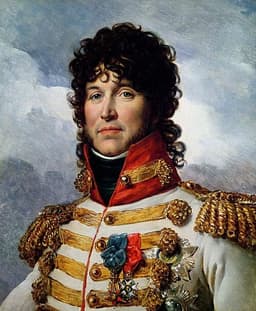
Joachim Murat
General · Modern
58.3Total
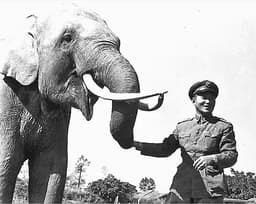
Sun Li-jen
General · Modern
56.8Total
Basic Information
Born
1767
1900
Died
1815
1990
Era
Modern
Modern
Nationality
France
China
Occupation
General
General
Civilization
Western
Eastern
Score Comparison
Military (10%)
74.7
70.0
Political (20%)
68.0
40.8
Influence (20%)
58.3
61.0
Legacy (20%)
56.0
50.0
Leadership (15%)
40.0
61.1
Strategy (15%)
60.7
67.2
TOTAL
58.3
56.8
Joachim Murat — Complete Timeline
1798 AD
Battle of the PyramidsWar◆ Major
Murat led a cavalry charge that broke the Mamluk lines near Cairo. This victory secured French control of Lower Egypt during Napoleon's Egyptian campaign.
Egyptian CampaignCavalryNapoleonic Wars
Impact: regional
1799 AD
Battle of AbukirWar◆ Major
Murat led a decisive cavalry charge that defeated the Ottoman army at Abukir, Egypt. He captured the Ottoman commander and was promoted to general of division.
Egyptian CampaignCavalryNapoleonic Wars
Impact: regional
1805 AD
Battle of AusterlitzWar◆ Major
Murat commanded the French cavalry reserve at Austerlitz. His cavalry pursued the fleeing Russian and Austrian forces after the Allied center collapsed, contributing to the decisive French victory.
Napoleonic WarsBattleCavalry
Impact: global
1808 AD
Appointed King of NaplesPolitical Action◆ Major
Napoleon appointed Murat as King of Naples, replacing Joseph Bonaparte who became King of Spain. Murat ruled the Kingdom of Naples from 1808 to 1815, implementing French administrative reforms.
Kingdom of NaplesMonarchyNapoleonic Era
Impact: regional
1813 AD
Battle of LeipzigWar◆ Major
Murat commanded the French cavalry at the Battle of Leipzig. His forces were defeated by the Allied coalition, and he later negotiated with the Allies to preserve his throne, abandoning Napoleon.
Napoleonic WarsBattleDefeatBetrayal
Impact: global
1815 AD
Hundred Days CampaignWar◆ Major
Murat declared war on Austria in an attempt to regain his throne during Napoleon's Hundred Days. He was defeated at the Battle of Tolentino and fled to France, losing his kingdom.
Hundred DaysNapoleonic WarsDefeat
Impact: regionaltragic
Execution by Firing SquadPolitical Action◆ Major
Murat was captured by Bourbon forces after attempting to land in Calabria to reclaim his throne. He was tried by a military court and executed by firing squad at the Castello di Pizzo.
ExecutionBourbon RestorationDeath
Impact: nationaltragic
Sun Li-jen — Complete Timeline
1927 AD
Graduated from Virginia Military InstituteCultural
Sun Li-jen graduated from the Virginia Military Institute (VMI) in the United States. His American military education influenced his tactical approach and distinguished him among Chinese commanders.
EducationMilitary Training
Impact: national
1942 AD
Commanded the Chinese Expeditionary Force in BurmaWar◆ Major
Sun Li-jen commanded the 38th Division of the Chinese Expeditionary Force in Burma. He led his troops to victory at the Battle of Yenangyaung, rescuing trapped British forces and earning the nickname 'Rommel of the East.'
World War IIBurma CampaignAllied Cooperation
Impact: regionalconstructive
1944 AD
Commander of the New First ArmyPolitical Action◆ Major
Sun Li-jen was appointed commander of the New First Army, one of the best-equipped Nationalist units. He led the army in the Burma Campaign and later in the Chinese Civil War.
Military CommandWorld War II
Impact: regional
1955 AD
Arrested and Imprisoned by Chiang Kai-shekPolitical Action◆ Major
Sun Li-jen was arrested by Chiang Kai-shek on charges of conspiracy with the United States to stage a coup. He was placed under house arrest for 33 years, ending his military career and becoming a symbol of Nationalist repression.
Political RepressionTaiwanHouse Arrest
Impact: nationaltragic
Expert Analysis
Origins
Joachim Murat was born on March 25, 1767, in La Bastide-Fortunière, France, the son of an innkeeper. He studied for the priesthood but left to join a cavalry regiment in 1787. His early military career advanced rapidly during the French Revolutionary Wars, where his boldness caught the attention of Napoleon Bonaparte.
Sun Li-jen was born on December 8, 1900, in Lujiang, Anhui, China, into a scholarly family. He studied engineering at Tsinghua University before attending the Virginia Military Institute (VMI), graduating in 1927. His American education shaped his tactical approach, emphasizing discipline and combined arms.
Rise to Power
Murat rose through the ranks during the Italian campaign of 1796-1797, where he served as Napoleon's aide-de-camp. His marriage to Caroline Bonaparte in 1800 cemented his political ties. He was appointed Marshal of France in 1804 and became King of Naples in 1808 after Napoleon replaced Joseph Bonaparte. His flamboyant style and cavalry charges made him a key asset in major battles.
Sun Li-jen's rise began in the 1930s as a regimental commander in the National Revolutionary Army. He distinguished himself in the Second Sino-Japanese War, particularly in the Battle of Shanghai (1937). His major breakthrough came in 1942 when he commanded the 38th Division in the Burma Campaign, rescuing British troops at Yenangyaung. This led to command of the New First Army, one of the best-equipped Nationalist units.
Leadership & Governance
Murat's leadership was defined by personal bravery and tactical aggression. He led cavalry charges from the front, inspiring his men but often neglecting strategic coordination. As King of Naples, he attempted reforms such as abolishing feudalism and introducing the Napoleonic Code, but his rule was unstable due to constant warfare and unpopular taxes. His governance score of 68.0 reflects moderate administrative ability.
Sun Li-jen was a meticulous planner who emphasized training and logistics. He modeled his forces on American lines, with professional officer corps and combined arms tactics. His leadership score of 61.1 is lower due to limited political influence. He avoided involvement in Chinese politics, focusing on military professionalism, which ultimately led to conflict with Chiang Kai-shek.
Triumph & Tragedy
Murat's greatest triumph was at the Battle of Austerlitz (1805), where his cavalry pursuit shattered the Allied rear guard. He also excelled at Abukir (1799), capturing the Ottoman commander. However, his greatest tragedy was the 1815 campaign: he declared war on Austria to regain his throne, was defeated at Tolentino, and fled to France. Napoleon refused to employ him, and he was captured and executed by firing squad on October 13, 1815, after trying to reclaim Naples.
Sun Li-jen's triumph came in Burma, where he repeatedly defeated Japanese forces and rescued Allied troops. His New First Army was considered the best Chinese unit. His tragedy was his arrest in 1955 on trumped-up charges of plotting a coup with the US. He spent 33 years under house arrest, his career destroyed by Chiang's paranoia. He was released in 1988 but died two years later.
Character & Destiny
Murat was impulsive, vain, and obsessed with glory. His decision to invade Naples in 1815 without Napoleon's approval was reckless. Historians note his "bravery bordering on folly" (David Chandler). His character made him a brilliant cavalry commander but a poor strategist, reflected in his strategy score of 60.7.
Sun Li-jen was reserved, disciplined, and politically naive. He believed in professional military standards and refused to engage in factional politics. This made him an effective commander but vulnerable to his enemies. His leadership score of 61.1 and political score of 40.8 illustrate the gap between his military skill and political survival.
Legacy
Murat's legacy is as the archetypal cavalry general, influencing tactics until World War I. His name is synonymous with dashing cavalry charges in French military history. However, his kingdom of Naples left little lasting impact. His legacy score of 56.0 is modest.
Sun Li-jen is remembered as a hero in Taiwan and among Chinese veterans of Burma. His military reforms influenced the Republic of China Army. However, his long house arrest limited his broader impact. His legacy score of 50.0 is slightly lower.
Conclusion
While Murat had higher military scores (74.7 vs 70.0) and a more dramatic career, Sun Li-jen's impact on modern Chinese military professionalism is more enduring. Murat's failures in governance and his ultimate execution undermine his long-term significance. Sun, despite his political downfall, left a model of professional military leadership that outlasted the KMT's defeat. Therefore, Sun Li-jen had greater impact, as his reforms and battlefield successes shaped Chinese military thought for decades. Murat's legend is colorful but transient.
Rankings
🥇
Joachim MuratLeader
Mil: 74.7Pol: 68.0Inf: 58.3
58.3
🥈
Sun Li-jen
Mil: 70.0Pol: 40.8Inf: 61.0
56.8
+1.5 behind
How This Comparison Works
Algorithm
Each figure is scored on 6 dimensions (0—100 scale) based on structured historical data: Military (10%), Political (20%), Influence (20%), Legacy (20%), Leadership (15%), Strategy (15%). The weighted total produces the final ranking.
Data Sources
Scores are computed from structured sub-indicators in the database. Scale factors adjust for era (Ancient ×0.85, Modern ×1.0) and civilization size (Eastern ×1.05, Other ×0.80) to account for differences in population and military scale.
Maximum 3 Figures
Comparisons are limited to 2—3 figures to ensure readability and statistical meaningfulness.
Error Margins
±5 points per dimension — Sub-scores are derived from historical records with inherent uncertainty. Two figures within 5 points on a dimension should be considered roughly equivalent in that area.
Total Score Accuracy
±3 points overall — The weighted combination of 6 dimensions produces a total score with approximately ±3 points of uncertainty. Differences of less than 3 points are not statistically significant— the figures are effectively tied.
Known Limitations
- Historical records are incomplete and uneven across civilizations
- Figures from oral-tradition societies may be underrepresented
- Occupation labels can misclassify multi-role figures
- Scores measure capability and impact, not moral character
- Quantitative scoring is a comparison tool, not absolute truth
Capability Radar
Military (10%) — Battles & Warfare
Battles
75
75
Win Rate
70
70
Expansion
65
30
Political (20%) — Governance & Reform
Reform
45
25
Diplomacy
50
35
Economy
40
20
Influence (20%) — Cultural & Global Reach
Cultural
55
45
Global
55
50
Legacy (20%) — Historical Impact
Historical
60
55
Longevity
50
40
Leadership (15%) — Power & Stability
Tenure
60
40
Stability
35
25
Strategy (15%) — Tactics & Innovation
Strategy
55
75
Tactics
85
85
Reform
40
60
Similar Comparisons
Comments & Discussion
No comments yet. Be the first to share your thoughts!