Loading...
This comparison has not been analyzed yet.
One-time AI generation (~1 minute). Scores and timeline are already available below.
Jerzy Sebastian Lubomirski vs Svetozar Boroevic
Jerzy Sebastian Lubomirski leads by 2.9 pts · 2 figures compared
…

Jerzy Sebastian Lubomirski
General · Modern
56.6Total
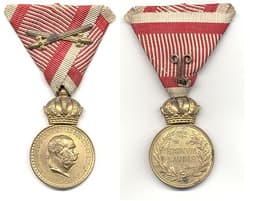
Svetozar Boroevic
General · Modern
53.7Total
Basic Information
Born
1616
1856
Died
1667
1920
Era
Modern
Modern
Nationality
Poland-Lithuania
Austria-Hungary
Occupation
General
General
Civilization
Western
Western
Score Comparison
Military (10%)
40.0
67.5
Political (20%)
68.0
35.1
Influence (20%)
54.9
55.7
Legacy (20%)
47.5
50.0
Leadership (15%)
74.0
61.1
Strategy (15%)
57.5
61.2
TOTAL
56.6
53.7
Jerzy Sebastian Lubomirski — Complete Timeline
1621 AD
Battle of ChocimWar
Lubomirski participated as a commander in the Polish victory at Chocim against Ottoman forces. The battle ended the Ottoman invasion and resulted in a treaty favorable to the Commonwealth, though Lubomirski's role was minor.
Polish-Ottoman WarBattleChocim
Impact: regional
1665 AD
Lubomirski RebellionPolitical Action◆ Major
Jerzy Sebastian Lubomirski led a rebellion against King John II Casimir's attempts to introduce absolute monarchy and reforms. The rebellion involved military clashes and forced the king to abandon his plans, preserving the Golden Liberty of the nobility.
RebellionGolden LibertyRoyal Power
Impact: national
1666 AD
Battle of MatwyWar◆ Major
Lubomirski's forces defeated the royal army at Matwy, a key engagement in his rebellion. The battle forced King John II Casimir to negotiate, leading to the Treaty of Legnica which ended the rebellion and confirmed noble privileges.
Lubomirski RebellionBattleNoble Privileges
Impact: national
Treaty of LegnicaPolitical Action◆ Major
Lubomirski and King John II Casimir signed the Treaty of Legnica, ending the rebellion. The treaty granted amnesty to Lubomirski and his followers, and the king abandoned his reform plans, maintaining the existing political system.
TreatyRebellionCompromise
Impact: national
Svetozar Boroevic — Complete Timeline
1915 AD
Battle of the Isonzo (First through Twelfth)War◆ Major
Boroević commanded the Austro-Hungarian forces on the Isonzo River front against repeated Italian offensives. Despite inferior numbers and resources, his defensive tactics held the line for over two years, inflicting heavy Italian casualties.
World War IItalian FrontDefensive Warfare
Impact: regional
1917 AD
Battle of CaporettoWar◆ Major
Boroević's forces participated in the German-led offensive at Caporetto. His army group advanced deep into Italian territory, capturing thousands of prisoners. The victory was the most significant Austro-Hungarian success of the war.
World War IItalian FrontOffensive
Impact: regional
1918 AD
Battle of the Piave RiverWar◆ Major
Boroević commanded the Austro-Hungarian forces in the Battle of the Piave River. The offensive failed to break the Italian lines, resulting in heavy losses. The defeat marked the beginning of the end for the Habsburg army.
World War IItalian FrontDefeat
Impact: regionaltragic
Refused to Surrender to Yugoslav ForcesPolitical Action
After the armistice, Boroevi
Post-WarSurrenderNationalism
Impact: nationaltragic
This comparison has not been analyzed yet.
One-time AI generation (~1 minute). Scores and timeline are already available below.
Rankings
🥇
Jerzy Sebastian LubomirskiLeader
Mil: 40.0Pol: 68.0Inf: 54.9
56.6
🥈
Svetozar Boroevic
Mil: 67.5Pol: 35.1Inf: 55.7
53.7
+2.9 behind
How This Comparison Works
Algorithm
Each figure is scored on 6 dimensions (0—100 scale) based on structured historical data: Military (10%), Political (20%), Influence (20%), Legacy (20%), Leadership (15%), Strategy (15%). The weighted total produces the final ranking.
Data Sources
Scores are computed from structured sub-indicators in the database. Scale factors adjust for era (Ancient ×0.85, Modern ×1.0) and civilization size (Eastern ×1.05, Other ×0.80) to account for differences in population and military scale.
Maximum 3 Figures
Comparisons are limited to 2—3 figures to ensure readability and statistical meaningfulness.
Error Margins
±5 points per dimension — Sub-scores are derived from historical records with inherent uncertainty. Two figures within 5 points on a dimension should be considered roughly equivalent in that area.
Total Score Accuracy
±3 points overall — The weighted combination of 6 dimensions produces a total score with approximately ±3 points of uncertainty. Differences of less than 3 points are not statistically significant— the figures are effectively tied.
Known Limitations
- Historical records are incomplete and uneven across civilizations
- Figures from oral-tradition societies may be underrepresented
- Occupation labels can misclassify multi-role figures
- Scores measure capability and impact, not moral character
- Quantitative scoring is a comparison tool, not absolute truth
Capability Radar
Military (10%) — Battles & Warfare
Battles
55
78
Win Rate
50
72
Expansion
20
30
Political (20%) — Governance & Reform
Reform
55
20
Diplomacy
50
25
Economy
40
15
Influence (20%) — Cultural & Global Reach
Cultural
40
35
Global
20
30
Legacy (20%) — Historical Impact
Historical
45
50
Longevity
30
40
Leadership (15%) — Power & Stability
Tenure
60
35
Stability
30
30
Strategy (15%) — Tactics & Innovation
Strategy
55
80
Tactics
60
85
Reform
30
40
Similar Comparisons
Comments & Discussion
No comments yet. Be the first to share your thoughts!