Loading...
Chester W. Nimitz vs Svetozar Boroevic
Chester W. Nimitz leads by 18.2 pts · 2 figures compared
…

Chester W. Nimitz
General · Modern
71.9Total
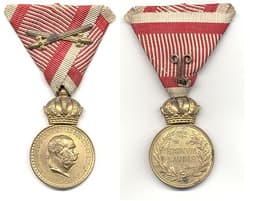
Svetozar Boroevic
General · Modern
53.7Total
Basic Information
Born
1885
1856
Died
1966
1920
Era
Modern
Modern
Nationality
United States
Austria-Hungary
Occupation
General
General
Civilization
Western
Western
Score Comparison
Military (10%)
82.0
67.5
Political (20%)
78.0
35.1
Influence (20%)
65.0
55.7
Legacy (20%)
65.0
50.0
Leadership (15%)
78.0
61.1
Strategy (15%)
78.4
61.2
TOTAL
71.9
53.7
Chester W. Nimitz — Complete Timeline
1941 AD
Appointed Commander-in-Chief of the Pacific FleetOther◆ Major
Following the attack on Pearl Harbor, Nimitz was appointed Commander-in-Chief of the U.S. Pacific Fleet on December 31, 1941. He assumed command during a period of severe losses and low morale, tasked with rebuilding the fleet and turning the tide against Japan.
World War IIPacific TheaterNaval Command
Impact: global
1942 AD
Battle of MidwayWar◆ Major
Nimitz directed the U.S. Navy to intercept the Japanese fleet at Midway Atoll from June 4-7, 1942. His forces sank four Japanese aircraft carriers against the loss of one U.S. carrier, marking a decisive turning point in the Pacific War and ending Japanese offensive capability.
World War IIPacific TheaterNaval Victory
Impact: globalconstructive
Guadalcanal CampaignWar◆ Major
Nimitz oversaw the amphibious assault on Guadalcanal beginning August 7, 1942, the first major Allied offensive in the Pacific. The campaign lasted six months, involving naval battles and ground combat, resulting in the first Japanese land defeat and securing Allied supply lines to Australia.
World War IIPacific TheaterAmphibious Assault
Impact: regionalconstructive
1943 AD
Island Hopping CampaignOther◆ Major
Nimitz implemented the island-hopping strategy, bypassing heavily fortified Japanese positions to capture strategically important islands. This campaign included the Gilbert and Marshall Islands operations in 1943-1944, progressively cutting Japanese supply lines and establishing bases for the final assault on Japan.
World War IIPacific TheaterMilitary Strategy
Impact: global
1944 AD
Battle of Leyte GulfWar◆ Major
Nimitz commanded U.S. naval forces during the Battle of Leyte Gulf from October 23-26, 1944, the largest naval battle in history. The victory destroyed the remaining Japanese fleet and secured the Allied invasion of the Philippines, effectively ending Japanese naval power.
World War IIPacific TheaterNaval Victory
Impact: globalconstructive
1945 AD
Signed the Japanese SurrenderOther◆ Major
As Commander of the Pacific Fleet, Nimitz signed the Japanese Instrument of Surrender on behalf of the United States aboard the USS Missouri on September 2, 1945. This act formally ended World War II and marked the conclusion of the Pacific War.
World War IIPacific TheaterDiplomacy
Impact: globalconstructive
Appointed Chief of Naval OperationsOther◆ Major
Nimitz was appointed Chief of Naval Operations in December 1945, the highest-ranking officer in the U.S. Navy. He served until 1947, overseeing the post-war demobilization and reorganization of the Navy, including the transition to a peacetime force.
Post-WarNaval AdministrationLeadership
Impact: national
Svetozar Boroevic — Complete Timeline
1915 AD
Battle of the Isonzo (First through Twelfth)War◆ Major
Boroević commanded the Austro-Hungarian forces on the Isonzo River front against repeated Italian offensives. Despite inferior numbers and resources, his defensive tactics held the line for over two years, inflicting heavy Italian casualties.
World War IItalian FrontDefensive Warfare
Impact: regional
1917 AD
Battle of CaporettoWar◆ Major
Boroević's forces participated in the German-led offensive at Caporetto. His army group advanced deep into Italian territory, capturing thousands of prisoners. The victory was the most significant Austro-Hungarian success of the war.
World War IItalian FrontOffensive
Impact: regional
1918 AD
Battle of the Piave RiverWar◆ Major
Boroević commanded the Austro-Hungarian forces in the Battle of the Piave River. The offensive failed to break the Italian lines, resulting in heavy losses. The defeat marked the beginning of the end for the Habsburg army.
World War IItalian FrontDefeat
Impact: regionaltragic
Refused to Surrender to Yugoslav ForcesPolitical Action
After the armistice, Boroevi
Post-WarSurrenderNationalism
Impact: nationaltragic
Expert Analysis
Origins
Chester W. Nimitz was born on February 24, 1885, in Fredericksburg, Texas, to a German-American family. His father died before his birth, and he was raised by his mother and grandfather. He entered the United States Naval Academy in 1901, graduating seventh in his class in 1905. Nimitz developed expertise in submarines early in his career, commanding the submarine USS Plunger and later serving as chief of staff to the Commander, Submarine Force, Atlantic Fleet.
Svetozar Boroevic was born on December 13, 1856, in Umetić, Croatia, then part of the Austrian Empire, to a Serbian Orthodox family. He attended the Theresian Military Academy in Wiener Neustadt and was commissioned in the Austro-Hungarian Army in 1875. Boroevic served in various infantry units, including the occupation of Bosnia and Herzegovina in 1878, and taught at the military academy. He rose through the ranks as a staff officer and regimental commander.
Rise to Power
Nimitz's rise accelerated during World War I, where he served as chief of staff to the Atlantic Fleet's submarine force. After the war, he commanded the battleship South Dakota and the cruiser Augusta. In 1939, he was appointed Chief of the Bureau of Navigation, overseeing personnel. His big break came after the attack on Pearl Harbor: on December 31, 1941, he was appointed Commander-in-Chief of the U.S. Pacific Fleet, replacing Admiral Husband Kimmel. Nimitz was chosen for his steady leadership and strategic mind.
Boroevic rose through the Austro-Hungarian officer corps, commanding a brigade during the 1908 annexation crisis. By 1914, he was a corps commander. During World War I, he was assigned to the Eastern Front, but in 1915, when Italy entered the war, he was transferred to the Italian front. He commanded the Fifth Army in the Isonzo sector. His defensive successes against repeated Italian offensives earned him promotion to field marshal in 1917.
Leadership & Governance
Nimitz led the Pacific Fleet with a decentralized command style, empowering subordinates like Admiral Raymond Spruance and Admiral William Halsey. He emphasized intelligence, logistics, and carrier warfare. Nimitz's strategic acumen is reflected in his score of 78.4 in strategy. He implemented the island-hopping strategy, bypassing heavily fortified Japanese positions like Rabaul to capture key islands such as Tarawa, Saipan, and Iwo Jima. He also championed the use of code-breaking, which was critical at Midway.
Boroevic commanded the Austro-Hungarian forces on the Isonzo front, where he faced eleven Italian offensives between 1915 and 1917. Despite inferior numbers and resources, he held the line through well-prepared defensive positions and counterattacks. His score of 61.2 in strategy and 61.1 in leadership reflect his competence as a defender. However, his political score of 35.1 indicates his limited influence beyond the battlefield. He was a strict disciplinarian but lacked Nimitz's ability to inspire broader strategic cooperation.
Triumph & Tragedy
Nimitz's greatest triumph was the Battle of Midway (June 4-7, 1942), where his forces sank four Japanese aircraft carriers at the cost of one U.S. carrier. This victory shifted the balance of power in the Pacific. He also oversaw the Guadalcanal Campaign (August 1942-February 1943), the first major Allied offensive. His greatest tragedy was the loss of the aircraft carrier USS Lexington at the Battle of the Coral Sea (May 1942), though it was a strategic check. Later, the Battle of Leyte Gulf (October 1944) was a decisive victory, but the controversial decision to split the fleet under Halsey led to the near-loss of the amphibious forces at Samar.
Boroevic's greatest triumph was the Battle of Caporetto (October-November 1917), where his forces, alongside German troops, broke through the Italian lines, advancing 100 miles and capturing 275,000 prisoners. His greatest tragedy was the failed Battle of the Piave River (June 1918), where the Austro-Hungarian offensive collapsed, leading to 150,000 casualties. This defeat signaled the empire's inability to win the war. After the armistice, Boroevic refused to surrender to Yugoslav forces, insisting on surrendering only to the Allies, but he was forced to retire in disgrace.
Character & Destiny
Nimitz was calm, methodical, and diplomatic. He built consensus among his subordinates and maintained morale even after setbacks. His character shaped his fate: his steady leadership saw the Pacific Fleet through the darkest days of 1942 to victory in 1945. He was known for his humility and focus on teamwork.
Boroevic was tenacious and stubborn, a defensive specialist who held his ground against overwhelming odds. However, his political naivety and loyalty to the dying Habsburg Empire limited his options. After the war, he was rejected by the new Yugoslav state and died in poverty in 1920. His character as a loyal soldier of a lost cause defined his tragic end.
Legacy
Nimitz's legacy is immense: he is remembered as one of the greatest naval strategists in history. His island-hopping strategy became a model for amphibious warfare. The USS Nimitz, a nuclear-powered aircraft carrier, bears his name. His scores of 65.0 in influence and legacy reflect his enduring impact on naval doctrine and American military history.
Boroevic is largely forgotten outside of military history circles. His defensive tactics are studied in some contexts, but his association with the losing side of World War I and the collapse of Austria-Hungary has limited his legacy. His scores of 50.0 in legacy and 55.7 in influence reflect this obscurity.
Conclusion
Chester W. Nimitz had far greater impact than Svetozar Boroevic. Nimitz's strategic innovations and leadership directly contributed to the defeat of Japan, a global power, while Boroevic fought a holding action for a doomed empire. Nimitz's total score of 71.9 versus Boroevic's 53.7 reflects this disparity. Nimitz's legacy endures in naval warfare and American history, while Boroevic remains a footnote. The clear position is that Nimitz's influence on world history is superior.
Rankings
🥇
Chester W. NimitzLeader
Mil: 82.0Pol: 78.0Inf: 65.0
71.9
🥈
Svetozar Boroevic
Mil: 67.5Pol: 35.1Inf: 55.7
53.7
+18.2 behind
How This Comparison Works
Algorithm
Each figure is scored on 6 dimensions (0—100 scale) based on structured historical data: Military (10%), Political (20%), Influence (20%), Legacy (20%), Leadership (15%), Strategy (15%). The weighted total produces the final ranking.
Data Sources
Scores are computed from structured sub-indicators in the database. Scale factors adjust for era (Ancient ×0.85, Modern ×1.0) and civilization size (Eastern ×1.05, Other ×0.80) to account for differences in population and military scale.
Maximum 3 Figures
Comparisons are limited to 2—3 figures to ensure readability and statistical meaningfulness.
Error Margins
±5 points per dimension — Sub-scores are derived from historical records with inherent uncertainty. Two figures within 5 points on a dimension should be considered roughly equivalent in that area.
Total Score Accuracy
±3 points overall — The weighted combination of 6 dimensions produces a total score with approximately ±3 points of uncertainty. Differences of less than 3 points are not statistically significant— the figures are effectively tied.
Known Limitations
- Historical records are incomplete and uneven across civilizations
- Figures from oral-tradition societies may be underrepresented
- Occupation labels can misclassify multi-role figures
- Scores measure capability and impact, not moral character
- Quantitative scoring is a comparison tool, not absolute truth
Capability Radar
Military (10%) — Battles & Warfare
Battles
92
78
Win Rate
95
72
Expansion
90
30
Political (20%) — Governance & Reform
Reform
75
20
Diplomacy
80
25
Economy
60
15
Influence (20%) — Cultural & Global Reach
Cultural
65
35
Global
80
30
Legacy (20%) — Historical Impact
Historical
85
50
Longevity
70
40
Leadership (15%) — Power & Stability
Tenure
70
35
Stability
85
30
Strategy (15%) — Tactics & Innovation
Strategy
95
80
Tactics
88
85
Reform
85
40
Similar Comparisons
Comments & Discussion
No comments yet. Be the first to share your thoughts!