Loading...
Jean Lannes vs Julius Caesar
Julius Caesar leads by 27.4 pts · 2 figures compared
…
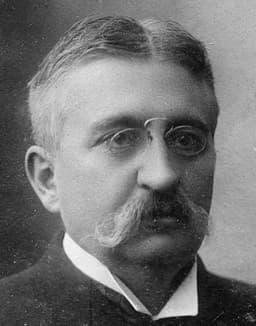
Jean Lannes
General · Modern
55.4Total

Julius Caesar
General · Ancient
82.8Total
Basic Information
Born
1769
-100
Died
1809
-44
Era
Modern
Ancient
Nationality
France
Roman Republic
Occupation
General
General
Civilization
Western
Western
Score Comparison
Military (10%)
78.5
88.0
Political (20%)
35.1
78.0
Influence (20%)
59.0
85.0
Legacy (20%)
56.0
82.0
Leadership (15%)
50.7
80.0
Strategy (15%)
58.8
85.0
TOTAL
55.4
82.8
Jean Lannes — Complete Timeline
1800 AD
Battle of MontebelloWar
Lannes commanded a division that defeated an Austrian force at Montebello. His aggressive attack routed the Austrians, capturing 2,000 prisoners. This victory cleared the way for Napoleon's advance to the Battle of Marengo.
Napoleonic WarsBattleItalian Campaign
Impact: regional
1805 AD
Battle of AusterlitzWar◆ Major
Lannes commanded the French left wing, holding the Pratzen Heights against Russian attacks. His corps pinned down the Russian right, allowing Napoleon to crush the center. This victory was a masterpiece of tactical deception and sealed the fate of the Third Coalition.
Napoleonic WarsBattleDecisive Victory
Impact: global
1806 AD
Battle of JenaWar◆ Major
Lannes' corps led the French assault on the Prussian center at Jena. His troops stormed the heights and routed the Prussian army. This victory, combined with Davout's at Auerstedt, led to the complete collapse of Prussia within weeks.
Napoleonic WarsBattlePrussian Campaign
Impact: regional
1809 AD
Siege of SaragossaWar◆ Major
Lannes took command of the French siege of Saragossa after his predecessor was killed. He used systematic bombardment and house-to-house fighting to capture the city after two months. The siege was one of the bloodiest of the Peninsular War, with heavy civilian casualties.
Peninsular WarSiegeBrutality
Impact: regionaldestructive
Battle of Aspern-EsslingWar◆ Major
Lannes commanded the French center, holding the village of Essling against Austrian attacks. He was mortally wounded by a cannonball while rallying his troops. His death was a severe blow to Napoleon, who lost his closest friend and one of his best marshals.
Napoleonic WarsBattleDeath
Impact: regionaltragic
Julius Caesar — Complete Timeline
58 BC
Gallic WarsWar◆ Major
Caesar, as proconsul of Gaul, launched a series of campaigns that conquered all of Gaul (modern France, Belgium, and parts of Switzerland). He fought numerous battles, including against the Helvetii, the Belgae, and the Gallic chieftain Vercingetorix. The wars brought immense wealth and a loyal army to Caesar.
Gallic WarsConquestRoman Expansion
Impact: regional
49 BC
Crossing the RubiconPolitical Action◆ Major
Caesar led Legio XIII across the Rubicon River into Italy, defying the Roman Senate's order to disband his army. This act triggered a civil war against Pompey and the Optimates, ultimately leading to Caesar's dictatorship and the end of the Roman Republic.
Roman Civil WarEnd of RepublicPower Struggle
Impact: global
48 BC
Battle of PharsalusWar◆ Major
Caesar's outnumbered army defeated the larger forces of Pompey the Great at Pharsalus in Greece. Caesar's tactical use of a reserve line to counter Pompey's cavalry charge proved decisive. Pompey fled to Egypt, where he was assassinated, leaving Caesar as the undisputed master of the Roman world.
Roman Civil WarBattleDecisive Victory
Impact: regional
44 BC
Appointment as Dictator for LifePolitical Action◆ Major
The Roman Senate appointed Caesar dictator perpetuo (dictator for life), granting him unprecedented personal power. This move concentrated military, legislative, and judicial authority in one person, effectively ending the Roman Republic's traditional system of checks and balances and alarming many senators.
DictatorshipEnd of RepublicPower Consolidation
Impact: regionaldestructive
Assassination on the Ides of MarchPolitical Action◆ Major
A group of Roman senators, led by Marcus Junius Brutus and Gaius Cassius Longinus, stabbed Caesar to death at a meeting of the Senate in the Theatre of Pompey. The assassination was intended to restore the Republic, but instead triggered another civil war that led to the rise of the Roman Empire.
AssassinationRoman PoliticsEnd of Republic
Impact: globaldestructive
Expert Analysis
Origins
Jean Lannes was born in 1769 in Lectoure, France, the son of a small landowner. He apprenticed as a dyer but joined the French Revolutionary Army in 1792, rising through the ranks due to courage and skill. Lannes had little formal education but learned warfare through experience. In contrast, Julius Caesar was born in 100 BCE into the patrician Julian family in Rome. He received a privileged education in rhetoric, philosophy, and military tactics, and his family's political connections gave him early advantages, despite periods of exile and debt.
Rise to Power
Lannes rose during the Italian campaigns of 1796-1797, where his bravery at the Battle of Dego and later at Arcole attracted Napoleon's attention. By 1799, he was a general of division. His key moment came at the Battle of Montebello (1800) where his division defeated an Austrian force, capturing 2,000 prisoners. Napoleon appointed him Marshal of the Empire in 1804. Caesar's rise began with his election as military tribune in 72 BCE, then quaestor, aedile, and praetor. He formed the First Triumvirate with Pompey and Crassus in 59 BCE, securing the governorship of Gaul. His conquest of Gaul (58-50 BCE) made him immensely popular and wealthy, leading to the Civil War after crossing the Rubicon in 49 BCE.
Leadership & Governance
Lannes was a frontline commander who led by example, often fighting alongside his men. His leadership style was direct and aggressive; at Austerlitz (1805) he commanded the left wing, holding the Pratzen Heights against Russian attacks. He scored 50.7 in leadership. Caesar, scoring 80.0 in leadership, combined military command with political acumen. He reformed the Roman calendar, initiated public works, and extended citizenship to provincials. His governance centralized power, but his reforms aimed to address debt and land distribution. Lannes had little political role (political score 35.1), while Caesar's political score of 78.0 reflects his mastery of Roman politics.
Triumph & Tragedy
Lannes' greatest triumph was at the Battle of Jena (1806), where his corps led the assault on the Prussian center, storming the heights and routing the enemy. His tragedy came at Aspern-Essling (1809), where he was mortally wounded by a cannonball while rallying his troops. He died days later, losing a trusted commander. Caesar's triumphs include the conquest of Gaul, where his army defeated over a million Gauls, and the victory at Pharsalus (48 BCE) over Pompey. His tragedy was his assassination on the Ides of March (44 BCE), stabbed by senators including Brutus. His reforms were cut short, and the Republic descended into civil war.
Character & Destiny
Lannes was known for his courage, loyalty to Napoleon, and bluntness. His aggressive nature led to his death—he exposed himself to fire at Essling. Caesar was ambitious, calculating, and charismatic. His clemency toward enemies won supporters but also bred resentment. His decision to accept dictatorship for life provoked the conspiracy that killed him. Both men's characters drove their fates: Lannes' battlefield bravery cost him his life; Caesar's political dominance cost him his.
Legacy
Lannes' legacy is tied to Napoleon's wars; he is remembered as one of the greatest marshals, but his impact was limited to the military sphere. His scores: legacy 56.0, influence 59.0. Caesar's legacy is immense: his conquests spread Roman culture, his writings (Commentarii) shaped history, and his reforms laid foundations for the Roman Empire. His name became synonymous with imperial rule. Caesar scores 82.0 in legacy and 85.0 in influence.
Conclusion
Julius Caesar had far greater impact than Jean Lannes. Caesar's military score (88.0) exceeds Lannes' (78.5), and his political, influence, and legacy scores dwarf Lannes'. While Lannes was a skilled general, his sphere was limited to Napoleonic warfare. Caesar transformed the Roman Republic into an empire, altering the course of Western civilization. The data supports Caesar as the more consequential figure.
Rankings
🥇
Julius CaesarLeader
Mil: 88.0Pol: 78.0Inf: 85.0
82.8
🥈
Jean Lannes
Mil: 78.5Pol: 35.1Inf: 59.0
55.4
+27.4 behind
How This Comparison Works
Algorithm
Each figure is scored on 6 dimensions (0—100 scale) based on structured historical data: Military (10%), Political (20%), Influence (20%), Legacy (20%), Leadership (15%), Strategy (15%). The weighted total produces the final ranking.
Data Sources
Scores are computed from structured sub-indicators in the database. Scale factors adjust for era (Ancient ×0.85, Modern ×1.0) and civilization size (Eastern ×1.05, Other ×0.80) to account for differences in population and military scale.
Maximum 3 Figures
Comparisons are limited to 2—3 figures to ensure readability and statistical meaningfulness.
Error Margins
±5 points per dimension — Sub-scores are derived from historical records with inherent uncertainty. Two figures within 5 points on a dimension should be considered roughly equivalent in that area.
Total Score Accuracy
±3 points overall — The weighted combination of 6 dimensions produces a total score with approximately ±3 points of uncertainty. Differences of less than 3 points are not statistically significant— the figures are effectively tied.
Known Limitations
- Historical records are incomplete and uneven across civilizations
- Figures from oral-tradition societies may be underrepresented
- Occupation labels can misclassify multi-role figures
- Scores measure capability and impact, not moral character
- Quantitative scoring is a comparison tool, not absolute truth
Capability Radar
Military (10%) — Battles & Warfare
Battles
85
95
Win Rate
90
92
Expansion
80
97
Political (20%) — Governance & Reform
Reform
20
90
Diplomacy
25
85
Economy
15
82
Influence (20%) — Cultural & Global Reach
Cultural
45
88
Global
40
94
Legacy (20%) — Historical Impact
Historical
60
95
Longevity
50
96
Leadership (15%) — Power & Stability
Tenure
30
75
Stability
20
60
Strategy (15%) — Tactics & Innovation
Strategy
75
94
Tactics
88
96
Reform
40
88
Similar Comparisons
Comments & Discussion
No comments yet. Be the first to share your thoughts!