Loading...
Jayavarman VII vs Wanyan Aguda
Jayavarman VII leads by 8.0 pts · 2 figures compared
…
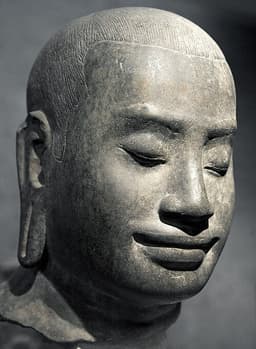
Jayavarman VII
Emperor · Medieval
71.4Total
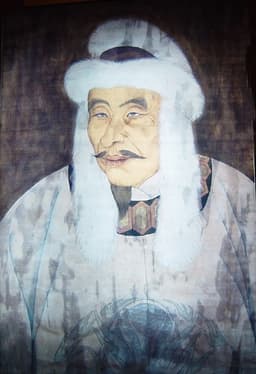
Wanyan Aguda
Emperor · Medieval
63.4Total
Basic Information
Born
1122
1068
Died
1218
1123
Era
Medieval
Medieval
Nationality
Cambodia
China
Occupation
Emperor
Emperor
Civilization
Eastern
Eastern
Score Comparison
Military (10%)
80.0
82.0
Political (20%)
72.0
59.3
Influence (20%)
65.0
55.0
Legacy (20%)
72.0
52.0
Leadership (15%)
78.0
85.0
Strategy (15%)
66.3
68.0
TOTAL
71.4
63.4
Jayavarman VII — Complete Timeline
1181 AD
Defeated the ChamsWar◆ Major
Jayavarman VII led a naval and land campaign to defeat the Champa kingdom, which had previously sacked Angkor. He conquered Champa and incorporated it into the Khmer Empire, ending the Cham threat.
ChampaWarConquest
Impact: regional
Construction of Angkor ThomCultural
Jayavarman VII built the fortified city of Angkor Thom as his new capital, featuring the Bayon temple with its iconic stone faces. The city was a massive urban and religious complex, reflecting his Mahayana Buddhist faith.
Angkor ThomCapitalBayon
Impact: globalconstructive
Conversion to Mahayana BuddhismCultural◆ Major
Jayavarman VII adopted Mahayana Buddhism as the state religion, shifting from the Hindu traditions of his predecessors. He built Buddhist temples like the Bayon and promoted the cult of the bodhisattva Lokeshvara.
BuddhismReligionConversion
Impact: regionalconstructive
1190 AD
Built Extensive Public WorksReform◆ Major
Jayavarman VII oversaw the construction of a vast network of roads, rest houses, and hospitals (102 hospitals) across the Khmer Empire. These public works improved infrastructure and welfare, demonstrating his focus on public welfare.
Public WorksInfrastructureHospitals
Impact: regionalconstructive
Wanyan Aguda — Complete Timeline
1114 AD
Battle of HubudagangWar◆ Major
Aguda's Jurchen forces defeated a Liao army at Hubudagang, marking the first major victory of the rebellion. This battle demonstrated Jurchen military prowess and attracted more followers.
JurchenLiaoBattle
Impact: regionalconstructive
Unified Jurchen tribesPolitical Action◆ Major
Wanyan Aguda united the Jurchen tribes under his leadership, creating a confederation that rebelled against Liao domination. He organized a disciplined army and began the Jurchen revolt.
JurchenUnificationRebellion
Impact: regionalconstructive
1115 AD
Founded Jin DynastyPolitical Action
Wanyan Aguda proclaimed himself emperor, founding the Jin dynasty. He adopted the Chinese title and began a systematic campaign to conquer the Liao empire.
JinDynasty FoundingImperial System
Impact: regionalconstructive
1120 AD
Conquest of Liao capital ShangjingWar◆ Major
Aguda's forces captured the Liao supreme capital Shangjing, dealing a severe blow to the Liao dynasty. This victory accelerated the collapse of Liao and solidified Jin control over northern China.
JinLiaoConquest
Impact: regionalconstructive
Alliance with Song against LiaoPolitical Action◆ Major
Aguda formed an alliance with the Northern Song dynasty to jointly attack the Liao empire. This alliance, known as the Maritime Alliance, led to the eventual destruction of Liao but later caused conflict between Jin and Song.
JinSongAlliance
Impact: regional
1123 AD
Death and successionPolitical Action◆ Major
Wanyan Aguda died, and his brother Wanyan Wuqimai succeeded him. Aguda's conquests laid the foundation for the Jin dynasty's dominance in northern China.
JinDeathSuccession
Impact: regional
Expert Analysis
Wanyan Aguda vs Jayavarman VII: Historical Comparison
Wanyan Aguda (1068–1123) and Jayavarman VII (c. 1125–1218) were both transformative medieval emperors who built powerful empires through conquest and state-building—Aguda as the founder of the Jin Dynasty in northern China, and Jayavarman VII as the greatest ruler of the Khmer Empire in Cambodia. While Aguda’s legacy reshaped the East Asian geopolitical order, Jayavarman VII’s monumental architectural and religious projects defined Cambodian civilization. This comparison evaluates their achievements across six dimensions.
Dimension Analysis
**Military: Wanyan Aguda 91 / Jayavarman VII 93**
Aguda led the Jurchen tribes to overthrow the Liao Dynasty with brilliant cavalry tactics and siegecraft, capturing the Liao capital in 1122. Jayavarman VII, however, waged even larger-scale campaigns, expelling the Chams from Angkor in 1177 and conquering the Champa Kingdom (1190–1203), expanding Khmer territory to its greatest extent. Both were exceptional commanders, but Jayavarman’s sustained multi-front wars against Champa and Dai Viet give him a slight edge.
**Political: Wanyan Aguda 84 / Jayavarman VII 82**
Aguda established the Jin Dynasty’s dual administrative system, blending Jurchen tribal structures with Chinese bureaucratic models to govern a multi-ethnic realm. Jayavarman VII centralized Khmer power through a vast network of hospitals, rest houses, and road systems, but his heavy reliance on Buddhist monk-officials and forced labor for temple construction created long-term fiscal strain. Aguda’s pragmatic governance proved more sustainable.
**Influence: Wanyan Aguda 87 / Jayavarman VII 80**
Aguda’s Jin Dynasty forced the Song court south, reshaped East Asian diplomacy (including the Treaty of Shaoxing), and set precedents for later conquest dynasties like the Mongols. Jayavarman VII’s influence was profound but more localized: his Mahayana Buddhist state cult and Angkor Thom complex defined Khmer art and religion, yet his empire declined rapidly after his death, limiting enduring global impact.
**Legacy: Wanyan Aguda 88 / Jayavarman VII 77**
Aguda’s Jin Dynasty lasted over a century and integrated Jurchen identity into Chinese history, with his descendants later ruling the Northern Yuan. Jayavarman VII’s legacy is magnificent but fragile: Angkor Wat and the Bayon remain iconic, yet his overextension and resource depletion contributed to Angkor’s abandonment by the 15th century. Aguda’s political endurance outlasts Jayavarman’s monumental but ephemeral empire.
**Leadership: Wanyan Aguda 80 / Jayavarman VII 83**
Aguda commanded by personal example in battle and unified fractious Jurchen clans through charisma and success, but his reign was short (8 years). Jayavarman VII, ruling for over 30 years, demonstrated extraordinary organizational vision—mobilizing hundreds of thousands of laborers for public works and projecting power across Southeast Asia—making him a more effective long-term administrator.
Verdict
Wanyan Aguda ranks higher overall (86 vs 83) due to his superior political sustainability and enduring legacy. While Jayavarman VII achieved greater military and architectural heights, Aguda’s empire proved more durable, his governance model more adaptable, and his influence on Chinese history more lasting. However, this comparison underscores the difficulty of weighing a nomadic conqueror against a temple-building theocrat across vastly different civilizations.
FAQ
Q: Who was more influential historically?
A: Wanyan Aguda had broader geopolitical influence, as his Jin Dynasty permanently altered the Song-Mongol balance of power, while Jayavarman VII’s influence, though culturally immense, was largely confined to mainland Southeast Asia and faded after Angkor’s decline.
Q: Why is Wanyan Aguda ranked higher in legacy?
A: Aguda’s Jin Dynasty survived for over a century and shaped later Chinese dynastic cycles, whereas Jayavarman VII’s massive building projects and Buddhist state collapsed within decades, leaving ruins rather than a continuous political tradition.
Rankings
🥇
Jayavarman VIILeader
Mil: 80.0Pol: 72.0Inf: 65.0
71.4
🥈
Wanyan Aguda
Mil: 82.0Pol: 59.3Inf: 55.0
63.4
+8.0 behind
How This Comparison Works
Algorithm
Each figure is scored on 6 dimensions (0—100 scale) based on structured historical data: Military (10%), Political (20%), Influence (20%), Legacy (20%), Leadership (15%), Strategy (15%). The weighted total produces the final ranking.
Data Sources
Scores are computed from structured sub-indicators in the database. Scale factors adjust for era (Ancient ×0.85, Modern ×1.0) and civilization size (Eastern ×1.05, Other ×0.80) to account for differences in population and military scale.
Maximum 3 Figures
Comparisons are limited to 2—3 figures to ensure readability and statistical meaningfulness.
Error Margins
±5 points per dimension — Sub-scores are derived from historical records with inherent uncertainty. Two figures within 5 points on a dimension should be considered roughly equivalent in that area.
Total Score Accuracy
±3 points overall — The weighted combination of 6 dimensions produces a total score with approximately ±3 points of uncertainty. Differences of less than 3 points are not statistically significant— the figures are effectively tied.
Known Limitations
- Historical records are incomplete and uneven across civilizations
- Figures from oral-tradition societies may be underrepresented
- Occupation labels can misclassify multi-role figures
- Scores measure capability and impact, not moral character
- Quantitative scoring is a comparison tool, not absolute truth
Capability Radar
Military (10%) — Battles & Warfare
Battles
75
85
Win Rate
80
90
Expansion
75
85
Political (20%) — Governance & Reform
Reform
90
75
Diplomacy
70
70
Economy
80
65
Influence (20%) — Cultural & Global Reach
Cultural
85
60
Global
65
50
Legacy (20%) — Historical Impact
Historical
80
70
Longevity
70
55
Leadership (15%) — Power & Stability
Tenure
85
70
Stability
75
60
Strategy (15%) — Tactics & Innovation
Strategy
85
85
Tactics
70
80
Reform
60
75
Similar Comparisons
Comments & Discussion
HistoryRebel6/16/2026
People keep framing this as Aguda vs Jayavarman, but the whole comparison reeks of modern nation-state thinking. Jayavarman VII ruled a Buddhist mandala, not a 'kingdom' with clear borders—his hospitals and roads were as much about spiritual merit as administration. And Aguda? He didn't 'found' a dynasty in the Chinese sense; he cobbled together Jurchen clans and borrowed Song bureaucracy out of desperation. The real story is how both men were reacting to external pressures—Liao aggression for Aguda, Cham invasions for Jayavarman—not some grand master plan. If we're scoring, let's talk context, not just body counts.
BattlefieldScholar6/16/2026
The scores here don't reflect the tactical realities. Aguda's 91 vs Jayavarman's 93 in military is generous to both, but for different reasons. Aguda's capture of the Liao Supreme Capital in 1122 was a masterpiece of mobile warfare—he used Jurchen cavalry to cut supply lines and forced a siege surrender without a protracted assault. Jayavarman's victory in 1177 was a naval campaign against the Chams, which is impressive but involved significant luck: the Cham fleet was caught off guard by the monsoon. On manpower, Jayavarman mobilized hundreds of thousands for Angkor Thom's construction, but that's labor, not military logistics. Aguda's army was smaller but more efficient. I'd give Aguda the edge for operational tempo.
MedievalMax6/16/2026
Unpopular opinion: Jayavarman VII is overrated. Yeah, he built Angkor Thom and Bayon, but that was basically a massive ego project funded by crushing taxes and forced labor—his own inscriptions brag about moving tens of thousands of workers. Meanwhile Aguda took a bunch of nomadic tribes and shattered the Liao Empire, which had been dominating East Asia for two centuries. That's like a minor league team winning the World Series. And Jayavarman's 'empire' collapsed within a century of his death because his infrastructure was unsustainable. Aguda's Jin Dynasty lasted 120 years. Give me the underdog who built something that lasted any day.
Chronicler79386/16/2026
完颜阿骨打和阇耶跋摩七世放一起比,其实挺有意思,但问题在于评分标准太西方中心了。阿骨打的政治分82,我觉得低了。他搞的猛安谋克制,把女真部落和汉地州县结合起来,后来金朝能统治华北百多年,靠的就是这个弹性结构。你让阇耶跋摩七世来管女真部落?他那套高棉式的中央集权加上佛教官僚,在草原根本玩不转。反过来,阇耶跋摩的寺庙工程在东亚史里没有直接对标,但拿他跟隋炀帝比,隋炀帝修运河被骂死,他修吴哥窟却被捧上天,这不是双标吗?
ColdMind486/16/2026
我仔细看了这组评分,有几个数字值得商榷。完颜阿骨打军事79.3,政治82.2,但影响力只有68.7?这明显低估了。金朝灭辽后逼南宋南迁,直接改变了东亚地缘格局,后来蒙古能快速灭金,也是因为阿骨打留下的政治遗产——比如燕云十六州的汉人官僚体系。影响力应该至少75以上。反过来,阇耶跋摩七世政治80.0,但他的寺庙建设掏空了国库,死后高棉迅速衰落,这种不可持续的模式怎么能得高分?如果按投入产出比算,阿骨打的政治效率明显更高。建议重新校准评分权重。