Loading...
Janio Quadros vs Lin Zexu
Lin Zexu leads by 12.5 pts · 2 figures compared
…

Janio Quadros
Politician · Modern
42.3Total
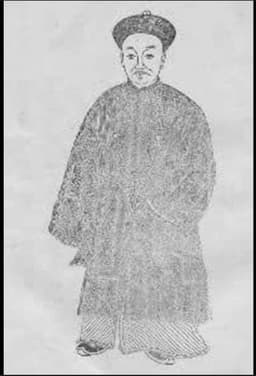
Lin Zexu
Politician · Modern
54.8Total
Basic Information
Born
1917
1785
Died
1992
1850
Era
Modern
Modern
Nationality
Brazil
China
Occupation
Politician
Politician
Civilization
Western
Eastern
Score Comparison
Military (10%)
50.0
34.9
Political (20%)
39.4
54.7
Influence (20%)
51.0
62.0
Legacy (20%)
39.2
56.0
Leadership (15%)
31.2
62.2
Strategy (15%)
41.3
42.3
TOTAL
42.3
54.8
Janio Quadros — Complete Timeline
1960 AD
Elected President of BrazilPolitical Action◆ Major
Jânio Quadros was elected president of Brazil in 1960 as the candidate of the National Democratic Union (UDN) and the Christian Democratic Party (PDC). He assumed office on January 31, 1961, with a mandate to combat corruption and inflation.
Brazilian PresidencyElectionAnti-corruption
Impact: nationalconstructive
1961 AD
Implemented Anti-Corruption MeasuresReform
Quadros launched a campaign against corruption and bureaucracy, including banning the use of official cars for personal purposes and reducing government spending. These measures were popular but faced resistance from political elites.
Anti-corruptionReformBrazil
Impact: nationalconstructive
Resigned the PresidencyPolitical Action
Quadros resigned from the presidency on August 25, 1961, after only seven months in office. He claimed he was forced out by 'occult forces' and hoped to return with greater powers, but his resignation was accepted by Congress, leading to a political crisis.
ResignationPolitical CrisisBrazil
Impact: nationaldestructive
Awarded the Order of the Southern Cross to Che GuevaraPolitical Action
Quadros awarded the Order of the Southern Cross, Brazil's highest honor, to Argentine revolutionary Che Guevara in August 1961. This act angered conservative sectors and the military, contributing to the political tensions that led to his resignation.
DiplomacyControversyBrazil
Impact: national
Lin Zexu — Complete Timeline
1839 AD
Triggered the First Opium WarWar
Lin Zexu's destruction of opium and his letter to Queen Victoria demanding an end to the trade led Britain to declare war in 1839. The First Opium War resulted in China's defeat, the Treaty of Nanjing, and the cession of Hong Kong, marking the start of the 'Century of Humiliation'.
Opium WarBritish EmpireTreaty of Nanjing
Impact: globaltragic
Destroyed Opium at HumenPolitical Action◆ Major
As Imperial Commissioner in Guangzhou, Lin Zexu confiscated and destroyed over 20,000 chests of British opium at Humen (Bogue) in June 1839. This direct action against the illegal drug trade was intended to halt the opium crisis but provoked British military retaliation.
Opium WarAnti-Drug CampaignHumen
Impact: global
1841 AD
Exiled to XinjiangPolitical Action
Following China's defeat in the Opium War, Lin Zexu was scapegoated by the Qing court and exiled to Xinjiang in 1841. During his exile, he studied local conditions and advocated for frontier defense, but his removal from power weakened the anti-opium faction.
ExileQing CourtXinjiang
Impact: nationaltragic
Compiled the Gazetteer of the Four ContinentsCultural
During his exile, Lin Zexu compiled the 'Gazetteer of the Four Continents' (Sizhou Zhi), a collection of translated Western texts on geography, politics, and military technology. This work introduced Chinese scholars to global affairs and influenced later reform movements.
TranslationGeographyReform
Impact: nationalconstructive
Expert Analysis
Origins
Jânio Quadros was born on January 25, 1917, in Campo Grande, Mato Grosso do Sul, Brazil, into a middle-class family. His father was a pharmacist, and his mother a teacher. Quadros studied law at the University of São Paulo, graduating in 1939. He began his political career as a teacher and lawyer, known for his eccentric style and populist appeal.
Lin Zexu was born on August 30, 1785, in Fuzhou, Fujian, China, into a scholarly family. His father was a teacher, and Lin excelled in the Confucian civil service examinations, earning his jinshi degree in 1811. He entered the Qing bureaucracy, serving in various provincial posts, where he gained a reputation for integrity and efficiency.
Rise to Power
Quadros rose quickly in Brazilian politics. He was elected to the São Paulo state legislature in 1950, then mayor of São Paulo in 1953, where his anti-corruption campaigns gained national attention. In 1954, he was elected governor of São Paulo, and in 1960, he won the presidency as the candidate of the National Democratic Union (UDN) and Christian Democratic Party (PDC), defeating Henrique Lott. His campaign promised to sweep away corruption, symbolized by his broom emblem.
Lin Zexu's rise was through the imperial bureaucracy. He served as governor of several provinces, including Jiangsu and Shaanxi, where he managed flood relief and suppressed rebellions. In 1838, the Daoguang Emperor appointed him Imperial Commissioner to Guangzhou to stop the opium trade. Lin arrived in March 1839 and immediately confronted foreign traders, demanding they surrender their opium stocks.
Leadership & Governance
Quadros governed with a populist, confrontational style. He banned the use of official cars for personal purposes, reduced government spending, and cracked down on bureaucratic waste. However, his foreign policy was erratic: he restored relations with the Soviet Union and awarded the Order of the Southern Cross to Che Guevara, angering conservatives. His political score of 39.4 reflects his inability to build coalitions or sustain governance.
Lin Zexu governed with Confucian moral rigor. He believed that the opium trade could be stopped by moral persuasion and strong enforcement. He wrote a letter to Queen Victoria arguing that the trade was immoral. His destruction of 20,000 chests of opium at Humen in June 1839 was a dramatic act of enforcement. However, his strategy score of 42.3 indicates a lack of foresight regarding British military response.
Triumph & Tragedy
Quadros' triumph was his rapid rise and anti-corruption measures that resonated with the public. His tragedy was his resignation after only seven months on August 25, 1961, claiming he was forced out by 'occult forces.' His resignation plunged Brazil into a constitutional crisis, leading to a parliamentary system that weakened the presidency. His leadership score of 31.2 reflects this failure.
Lin Zexu's triumph was his principled stand against opium, which earned him lasting fame in China as a national hero. His tragedy was the First Opium War (1839-1842), which resulted in China's defeat and the Treaty of Nanking. After the war, Lin was scapegoated and exiled to Xinjiang in 1841. His military score of 34.9 reflects his inability to prevent war or defend China.
Character & Destiny
Quadros was eccentric and authoritarian, known for his broom-wielding campaign style and abrupt decisions. His character—prone to grand gestures but poor at follow-through—led to his political self-destruction. He believed he could rule by fiat, but his resignation showed a lack of resilience.
Lin Zexu was principled and scholarly, committed to Confucian ideals of moral governance. He believed that right action would prevail. However, his naivete about British power and his underestimation of the military threat led to disaster. His exile was a tragic consequence of his integrity.
Legacy
Quadros' legacy is mixed. He is remembered as a maverick who exposed corruption but failed to govern. His resignation weakened Brazil's democratic institutions and set a precedent for political instability. His influence score of 51.0 is modest, as he left few lasting policies.
Lin Zexu is revered in China as a patriotic hero who fought against foreign opium. His destruction of opium is commemorated as a symbol of resistance. His compilation of the 'Gazetteer of the Four Continents' introduced Western knowledge to China. His legacy score of 56.0 is higher, reflecting his enduring symbolic importance.
Conclusion
Lin Zexu had greater impact than Jânio Quadros, with a total score of 54.8 versus Quadros' 42.3. While Quadros' anti-corruption efforts were notable, his brief tenure and chaotic resignation limited his influence. Lin Zexu's actions triggered a war that reshaped China's relationship with the West and left a lasting legacy of anti-imperialist resistance. His principled stand, though tactically flawed, made him a national icon. Thus, Lin Zexu's impact is more significant and enduring.
Rankings
🥇
Lin ZexuLeader
Mil: 34.9Pol: 54.7Inf: 62.0
54.8
🥈
Janio Quadros
Mil: 50.0Pol: 39.4Inf: 51.0
42.3
+12.5 behind
How This Comparison Works
Algorithm
Each figure is scored on 6 dimensions (0—100 scale) based on structured historical data: Military (10%), Political (20%), Influence (20%), Legacy (20%), Leadership (15%), Strategy (15%). The weighted total produces the final ranking.
Data Sources
Scores are computed from structured sub-indicators in the database. Scale factors adjust for era (Ancient ×0.85, Modern ×1.0) and civilization size (Eastern ×1.05, Other ×0.80) to account for differences in population and military scale.
Maximum 3 Figures
Comparisons are limited to 2—3 figures to ensure readability and statistical meaningfulness.
Error Margins
±5 points per dimension — Sub-scores are derived from historical records with inherent uncertainty. Two figures within 5 points on a dimension should be considered roughly equivalent in that area.
Total Score Accuracy
±3 points overall — The weighted combination of 6 dimensions produces a total score with approximately ±3 points of uncertainty. Differences of less than 3 points are not statistically significant— the figures are effectively tied.
Known Limitations
- Historical records are incomplete and uneven across civilizations
- Figures from oral-tradition societies may be underrepresented
- Occupation labels can misclassify multi-role figures
- Scores measure capability and impact, not moral character
- Quantitative scoring is a comparison tool, not absolute truth
Capability Radar
Military (10%) — Battles & Warfare
Battles
31
10
Win Rate
30
5
Expansion
33
5
Political (20%) — Governance & Reform
Reform
30
60
Diplomacy
40
30
Economy
20
35
Influence (20%) — Cultural & Global Reach
Cultural
20
60
Global
15
50
Legacy (20%) — Historical Impact
Historical
25
65
Longevity
10
55
Leadership (15%) — Power & Stability
Tenure
10
40
Stability
5
20
Strategy (15%) — Tactics & Innovation
Strategy
36
20
Tactics
39
15
Reform
44
30
Similar Comparisons
Comments & Discussion
No comments yet. Be the first to share your thoughts!