Loading...
Gerhard Schroder vs Lin Zexu
Gerhard Schroder leads by 3.8 pts · 2 figures compared
…

Gerhard Schroder
Politician · Modern
58.6Total
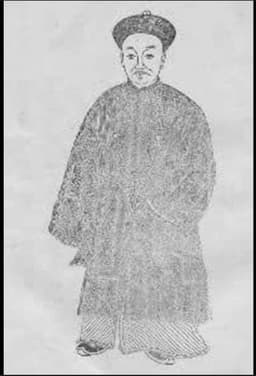
Lin Zexu
Politician · Modern
54.8Total
Basic Information
Born
1944
1785
Died
—
1850
Era
Modern
Modern
Nationality
Germany
China
Occupation
Politician
Politician
Civilization
Western
Eastern
Score Comparison
Military (10%)
49.6
34.9
Political (20%)
70.0
54.7
Influence (20%)
60.0
62.0
Legacy (20%)
52.0
56.0
Leadership (15%)
72.0
62.2
Strategy (15%)
43.1
42.3
TOTAL
58.6
54.8
Gerhard Schroder — Complete Timeline
2003 AD
Implementation of Agenda 2010 ReformsReform
Schroder's government enacted the Agenda 2010 package of labor market and welfare reforms, which cut unemployment benefits, deregulated the labor market, and reduced the power of unions. The reforms were credited with later reducing unemployment but were deeply unpopular with the SPD's base.
Labor ReformWelfare StateHartz Reforms
Impact: nationaldestructive
Opposition to the Iraq WarPolitical Action◆ Major
Schroder firmly opposed the US-led invasion of Iraq, refusing to commit German troops even if a UN mandate was obtained. This stance was popular in Germany but strained relations with the US, particularly with President George W. Bush.
Iraq WarForeign PolicyUS-Germany Relations
Impact: globalconstructive
2005 AD
Loss of Confidence Vote and Early ElectionPolitical Action◆ Major
Schroder deliberately lost a confidence vote in the Bundestag to trigger early federal elections after his SPD lost a key state election. The gambit backfired as the CDU/CSU won the most seats, leading to a grand coalition under Angela Merkel and Schroder's departure.
Confidence VoteElectionPolitical Strategy
Impact: nationaldestructive
Lin Zexu — Complete Timeline
1839 AD
Triggered the First Opium WarWar
Lin Zexu's destruction of opium and his letter to Queen Victoria demanding an end to the trade led Britain to declare war in 1839. The First Opium War resulted in China's defeat, the Treaty of Nanjing, and the cession of Hong Kong, marking the start of the 'Century of Humiliation'.
Opium WarBritish EmpireTreaty of Nanjing
Impact: globaltragic
Destroyed Opium at HumenPolitical Action◆ Major
As Imperial Commissioner in Guangzhou, Lin Zexu confiscated and destroyed over 20,000 chests of British opium at Humen (Bogue) in June 1839. This direct action against the illegal drug trade was intended to halt the opium crisis but provoked British military retaliation.
Opium WarAnti-Drug CampaignHumen
Impact: global
1841 AD
Exiled to XinjiangPolitical Action
Following China's defeat in the Opium War, Lin Zexu was scapegoated by the Qing court and exiled to Xinjiang in 1841. During his exile, he studied local conditions and advocated for frontier defense, but his removal from power weakened the anti-opium faction.
ExileQing CourtXinjiang
Impact: nationaltragic
Compiled the Gazetteer of the Four ContinentsCultural
During his exile, Lin Zexu compiled the 'Gazetteer of the Four Continents' (Sizhou Zhi), a collection of translated Western texts on geography, politics, and military technology. This work introduced Chinese scholars to global affairs and influenced later reform movements.
TranslationGeographyReform
Impact: nationalconstructive
Expert Analysis
Origins
Gerhard Schröder was born on April 7, 1944, in Mossenberg, Germany, into a working-class family. His father died in World War II, and his mother worked as a cleaner. Schröder left school at 14 to work as a retail apprentice, but later earned his Abitur through night school and studied law at the University of Göttingen. He joined the Social Democratic Party (SPD) in 1963 and became a lawyer specializing in labor law.
Lin Zexu was born on August 30, 1785, in Fuzhou, Fujian, China, into a scholarly family. His father was a private tutor. Lin excelled in the imperial civil service examinations, earning his jinshi degree in 1814 at age 29. He served in various provincial posts, gaining a reputation for integrity and effective administration.
Rise to Power
Schröder rose through the ranks of the SPD, becoming a member of the Bundestag in 1980. He served as Minister-President of Lower Saxony from 1990 to 1998, winning three consecutive state elections. In 1998, he led the SPD to a federal election victory, forming a coalition with the Greens and becoming Chancellor of Germany.
Lin Zexu rose through the Qing bureaucracy, holding posts as governor of Jiangsu and Huguang. In 1838, he was appointed Imperial Commissioner to Guangzhou with a mandate to eradicate the opium trade. His vigorous enforcement led to the destruction of over 20,000 chests of opium at Humen in June 1839, directly provoking the First Opium War.
Leadership & Governance
Schröder's leadership was defined by his Agenda 2010 reforms, implemented from 2003 to 2005. These included cuts to unemployment benefits, deregulation of the labor market, and reductions in pension contributions. The reforms aimed to boost economic competitiveness but were deeply unpopular with the SPD's traditional base. Schröder pushed them through despite opposition, using his political capital and coalition discipline.
Lin Zexu took a moralistic and authoritarian approach. He confiscated opium, arrested Chinese dealers, and blockaded foreign factories. He wrote a letter to Queen Victoria appealing to her sense of justice, but when diplomacy failed, he escalated to military confrontation. His direct action, while principled, lacked strategic foresight regarding British military capabilities.
Triumph & Tragedy
Schröder's triumph was the successful implementation of Agenda 2010, which reduced unemployment from 11.3% in 2005 to 7.5% by 2008 and laid the groundwork for Germany's economic resilience during the 2008 financial crisis. However, his political tragedy came in 2005 when he lost a confidence vote and subsequent election to Angela Merkel, ending his chancellorship.
Lin Zexu's triumph was his uncompromising stand against the opium trade, which made him a national hero. He destroyed 20,283 chests of opium, a dramatic act of defiance. His tragedy was the catastrophic outcome: the First Opium War (1839-1842) ended in China's defeat, leading to the Treaty of Nanking and the cession of Hong Kong. Lin was scapegoated and exiled to Xinjiang in 1841.
Character & Destiny
Schröder was pragmatic and reform-minded, willing to sacrifice popularity for long-term economic health. His scoring pattern reflects this: Political 70.0, Leadership 72.0, but Strategy only 43.1. He misjudged the political cost of his reforms, losing power despite their success.
Lin Zexu was principled and fearless, but rigid in his Confucian worldview. His military score of 34.9 and strategy of 42.3 highlight his underestimation of British power. His character made him a martyr but also a catalyst for China's humiliation.
Legacy
Schröder's legacy is the transformation of the German welfare state. His reforms are credited with making Germany the "sick man of Europe" into an economic powerhouse. However, his legacy is contested: his close ties to Vladimir Putin after leaving office have tarnished his reputation.
Lin Zexu is revered in China as a national hero and the "Father of Chinese Anti-Opium Movement." His compilation of the 'Gazetteer of the Four Continents' introduced Western knowledge to China. The Opium War he triggered forced China to confront its weakness, leading to the Self-Strengthening Movement.
Conclusion
Gerhard Schröder scores higher overall (58.6 vs 54.8), but impact is not solely numerical. Schröder's reforms had a measurable positive effect on Germany's economy, while Lin Zexu's actions led to national disaster. However, Lin's moral stand against opium and his role as a symbol of resistance give him enduring influence. Ultimately, Schröder had greater practical impact because his policies improved the lives of millions within a functioning state, whereas Lin's heroic failure accelerated China's decline. Thus, Schröder's legacy is more substantial in terms of concrete outcomes.
Rankings
🥇
Gerhard SchroderLeader
Mil: 49.6Pol: 70.0Inf: 60.0
58.6
🥈
Lin Zexu
Mil: 34.9Pol: 54.7Inf: 62.0
54.8
+3.8 behind
How This Comparison Works
Algorithm
Each figure is scored on 6 dimensions (0—100 scale) based on structured historical data: Military (10%), Political (20%), Influence (20%), Legacy (20%), Leadership (15%), Strategy (15%). The weighted total produces the final ranking.
Data Sources
Scores are computed from structured sub-indicators in the database. Scale factors adjust for era (Ancient ×0.85, Modern ×1.0) and civilization size (Eastern ×1.05, Other ×0.80) to account for differences in population and military scale.
Maximum 3 Figures
Comparisons are limited to 2—3 figures to ensure readability and statistical meaningfulness.
Error Margins
±5 points per dimension — Sub-scores are derived from historical records with inherent uncertainty. Two figures within 5 points on a dimension should be considered roughly equivalent in that area.
Total Score Accuracy
±3 points overall — The weighted combination of 6 dimensions produces a total score with approximately ±3 points of uncertainty. Differences of less than 3 points are not statistically significant— the figures are effectively tied.
Known Limitations
- Historical records are incomplete and uneven across civilizations
- Figures from oral-tradition societies may be underrepresented
- Occupation labels can misclassify multi-role figures
- Scores measure capability and impact, not moral character
- Quantitative scoring is a comparison tool, not absolute truth
Capability Radar
Military (10%) — Battles & Warfare
Battles
29
10
Win Rate
34
5
Expansion
33
5
Political (20%) — Governance & Reform
Reform
75
60
Diplomacy
60
30
Economy
70
35
Influence (20%) — Cultural & Global Reach
Cultural
40
60
Global
50
50
Legacy (20%) — Historical Impact
Historical
55
65
Longevity
45
55
Leadership (15%) — Power & Stability
Tenure
65
40
Stability
55
20
Strategy (15%) — Tactics & Innovation
Strategy
37
20
Tactics
41
15
Reform
47
30
Similar Comparisons
Comments & Discussion
No comments yet. Be the first to share your thoughts!