Loading...
This comparison has not been analyzed yet.
One-time AI generation (~1 minute). Scores and timeline are already available below.
Jan Smuts vs Patrice Lumumba
Jan Smuts leads by 4.5 pts · 2 figures compared
…

Jan Smuts
Politician · Modern
65.5Total
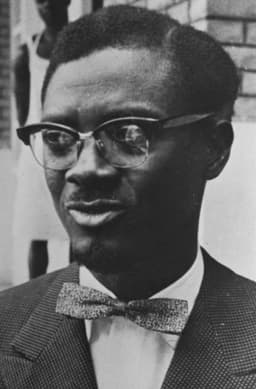
Patrice Lumumba
Politician · Modern
61.0Total
Basic Information
Born
1870
1925
Died
1950
—
Era
Modern
Modern
Nationality
South Africa
Congo
Occupation
Politician
Politician
Civilization
Other
Other
Score Comparison
Military (10%)
55.0
50.0
Political (20%)
70.0
53.8
Influence (20%)
82.0
82.0
Legacy (20%)
52.0
52.0
Leadership (15%)
72.0
67.0
Strategy (15%)
52.5
44.1
TOTAL
65.5
61.0
Jan Smuts — Complete Timeline
1901 AD
Boer War Guerrilla CommanderWar◆ Major
Smuts led Boer commando forces in the Second Boer War against the British. His guerrilla tactics, including raids into the Cape Colony, prolonged the conflict and made him a prominent Afrikaner military leader.
Second Boer WarGuerrillaMilitary
Impact: regional
1910 AD
Helped Found the Union of South AfricaPolitical Action◆ Major
Smuts played a key role in the National Convention that drafted the constitution for the Union of South Africa. He advocated for a unified state with a centralized government, which was established in 1910.
Union of South AfricaConstitutionFounding
Impact: nationalconstructive
1919 AD
Prime Minister of South Africa (First Term)Political Action◆ Major
Smuts became Prime Minister after Louis Botha's death. His first term saw the suppression of the Rand Revolt (1922) by white miners and the implementation of the Native Urban Areas Act, which tightened segregation.
Prime MinisterRand RevoltSegregation
Impact: national
Helped Found the League of NationsPolitical Action◆ Major
Smuts was a key figure at the Paris Peace Conference and helped draft the covenant of the League of Nations. He advocated for international cooperation and collective security, earning a global reputation as a statesman.
League of NationsInternationalismPeace
Impact: globalconstructive
1939 AD
Prime Minister of South Africa (Second Term)Political Action◆ Major
Smuts became Prime Minister again after a split in the United Party over entering World War II. He led South Africa into the war on the Allied side and served as a close advisor to Winston Churchill.
World War IIPrime MinisterAllied
Impact: globalconstructive
1945 AD
Helped Draft the UN CharterPolitical Action◆ Major
Smuts participated in the San Francisco Conference and helped draft the preamble to the United Nations Charter. His influence helped shape the post-war international order, though his domestic policies on race were increasingly criticized.
United NationsCharterInternationalism
Impact: globalconstructive
1948 AD
Defeated in 1948 ElectionPolitical Action
Smuts and his United Party were defeated by D.F. Malan's National Party in the general election. This marked the end of Smuts' political career and the beginning of formal apartheid rule in South Africa.
ElectionDefeatApartheid
Impact: nationaltragic
Patrice Lumumba — Complete Timeline
1960 AD
Congo Independence SpeechPolitical Action◆ Major
Patrice Lumumba delivered a powerful independence day speech in the presence of King Baudouin of Belgium, criticizing colonial abuses and calling for true freedom. The speech angered Belgian officials and set the tone for his confrontational approach to decolonization.
IndependenceSpeechDecolonization
Impact: national
Appointment as Prime MinisterPolitical Action◆ Major
Lumumba became the first Prime Minister of the independent Democratic Republic of the Congo after his party won the elections. He advocated for a unitary state and rapid Africanization of the administration, opposing federalist and Belgian interests.
Prime MinisterElectionsUnitary State
Impact: national
Congo Crisis and Katanga SecessionPolitical Action◆ Major
Lumumba faced the secession of the mineral-rich Katanga province, backed by Belgian mining interests. He appealed to the United Nations for military assistance but was frustrated by the UN's refusal to help suppress the secession, leading to a political crisis.
SecessionKatangaUN Intervention
Impact: regionaltragic
1961 AD
Overthrow and AssassinationPolitical Action
Lumumba was overthrown by Colonel Joseph Mobutu, arrested, and transferred to Katanga where he was executed by firing squad with Belgian complicity. His assassination shocked the world and made him a martyr for African independence and anti-colonialism.
AssassinationMobutuCold War
Impact: globaltragic
This comparison has not been analyzed yet.
One-time AI generation (~1 minute). Scores and timeline are already available below.
Rankings
🥇
Jan SmutsLeader
Mil: 55.0Pol: 70.0Inf: 82.0
65.5
🥈
Patrice Lumumba
Mil: 50.0Pol: 53.8Inf: 82.0
61.0
+4.5 behind
How This Comparison Works
Algorithm
Each figure is scored on 6 dimensions (0—100 scale) based on structured historical data: Military (10%), Political (20%), Influence (20%), Legacy (20%), Leadership (15%), Strategy (15%). The weighted total produces the final ranking.
Data Sources
Scores are computed from structured sub-indicators in the database. Scale factors adjust for era (Ancient ×0.85, Modern ×1.0) and civilization size (Eastern ×1.05, Other ×0.80) to account for differences in population and military scale.
Maximum 3 Figures
Comparisons are limited to 2—3 figures to ensure readability and statistical meaningfulness.
Error Margins
±5 points per dimension — Sub-scores are derived from historical records with inherent uncertainty. Two figures within 5 points on a dimension should be considered roughly equivalent in that area.
Total Score Accuracy
±3 points overall — The weighted combination of 6 dimensions produces a total score with approximately ±3 points of uncertainty. Differences of less than 3 points are not statistically significant— the figures are effectively tied.
Known Limitations
- Historical records are incomplete and uneven across civilizations
- Figures from oral-tradition societies may be underrepresented
- Occupation labels can misclassify multi-role figures
- Scores measure capability and impact, not moral character
- Quantitative scoring is a comparison tool, not absolute truth
Capability Radar
Military (10%) — Battles & Warfare
Battles
65
23
Win Rate
60
26
Expansion
50
27
Political (20%) — Governance & Reform
Reform
65
55
Diplomacy
80
60
Economy
60
30
Influence (20%) — Cultural & Global Reach
Cultural
60
65
Global
70
65
Legacy (20%) — Historical Impact
Historical
70
70
Longevity
55
60
Leadership (15%) — Power & Stability
Tenure
70
40
Stability
55
10
Strategy (15%) — Tactics & Innovation
Strategy
75
28
Tactics
70
35
Reform
55
36
Similar Comparisons
Comments & Discussion
No comments yet. Be the first to share your thoughts!