Loading...
Hifikepunye Pohamba vs Patrice Lumumba
Patrice Lumumba leads by 9.9 pts · 2 figures compared
…

Hifikepunye Pohamba
Politician · Modern
51.1Total
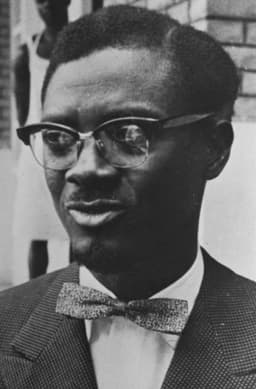
Patrice Lumumba
Politician · Modern
61.0Total
Basic Information
Born
1935
1925
Died
—
—
Era
Modern
Modern
Nationality
Namibia
Congo
Occupation
Politician
Politician
Civilization
Other
Other
Score Comparison
Military (10%)
32.7
50.0
Political (20%)
53.8
53.8
Influence (20%)
54.1
82.0
Legacy (20%)
45.0
52.0
Leadership (15%)
72.0
67.0
Strategy (15%)
41.5
44.1
TOTAL
51.1
61.0
Hifikepunye Pohamba — Complete Timeline
1989 AD
Elected to the Constituent Assembly of NamibiaPolitical Action◆ Major
Pohamba was elected to the Constituent Assembly in the 1989 elections, which drafted Namibia's constitution. He was a key figure in SWAPO's transition from liberation movement to political party.
Constituent AssemblyConstitution Drafting
Impact: nationalconstructive
1990 AD
Appointed Minister of Home AffairsPolitical Action◆ Major
Pohamba was appointed Minister of Home Affairs in Namibia's first independent government under President Sam Nujoma. He oversaw the establishment of a national identity system and immigration control.
Ministerial RoleState Building
Impact: nationalconstructive
2005 AD
Became President of NamibiaPolitical Action
Pohamba became President of Namibia on March 21, 2005, succeeding Sam Nujoma. He pledged to continue Nujoma's policies of reconciliation and development.
PresidencySuccession
Impact: nationalconstructive
2007 AD
Launched the National Development Plan 3Reform◆ Major
Pohamba launched the third National Development Plan (NDP3), focusing on poverty reduction, education, and infrastructure. The plan aimed to achieve Vision 2030 goals for a prosperous Namibia.
Development PlanEconomic Policy
Impact: nationalconstructive
2009 AD
Re-elected President (2009)Political Action◆ Major
Pohamba was re-elected in the 2009 general election with 76.4% of the vote. His second term focused on land reform and addressing inequality.
Re-electionLand Reform
Impact: national
2015 AD
Retired as PresidentPolitical Action◆ Major
Pohamba retired as President in March 2015, handing power to Hage Geingob. His retirement was peaceful and constitutional, maintaining Namibia's democratic tradition.
RetirementDemocratic Transition
Impact: nationalconstructive
Patrice Lumumba — Complete Timeline
1960 AD
Congo Independence SpeechPolitical Action◆ Major
Patrice Lumumba delivered a powerful independence day speech in the presence of King Baudouin of Belgium, criticizing colonial abuses and calling for true freedom. The speech angered Belgian officials and set the tone for his confrontational approach to decolonization.
IndependenceSpeechDecolonization
Impact: national
Appointment as Prime MinisterPolitical Action◆ Major
Lumumba became the first Prime Minister of the independent Democratic Republic of the Congo after his party won the elections. He advocated for a unitary state and rapid Africanization of the administration, opposing federalist and Belgian interests.
Prime MinisterElectionsUnitary State
Impact: national
Congo Crisis and Katanga SecessionPolitical Action◆ Major
Lumumba faced the secession of the mineral-rich Katanga province, backed by Belgian mining interests. He appealed to the United Nations for military assistance but was frustrated by the UN's refusal to help suppress the secession, leading to a political crisis.
SecessionKatangaUN Intervention
Impact: regionaltragic
1961 AD
Overthrow and AssassinationPolitical Action
Lumumba was overthrown by Colonel Joseph Mobutu, arrested, and transferred to Katanga where he was executed by firing squad with Belgian complicity. His assassination shocked the world and made him a martyr for African independence and anti-colonialism.
AssassinationMobutuCold War
Impact: globaltragic
Expert Analysis
Origins
Hifikepunye Pohamba was born on August 18, 1935, in Okanghudi, South West Africa (now Namibia). He came from a peasant family and received limited formal education, attending missionary schools before working as a clerk. His early exposure to the injustices of apartheid South African rule led him to join the Ovamboland People's Congress in 1959, which later became the South West Africa People's Organisation (SWAPO). Pohamba spent decades in exile, studying in the Soviet Union and China, and working as SWAPO's representative in various African countries.
Patrice Lumumba was born on July 2, 1925, in Onalua, Belgian Congo. He was part of the Tetela ethnic group and received a primary education at a Catholic mission school before studying at a Protestant school. Lumumba worked as a postal clerk in Léopoldville (now Kinshasa) and became involved in journalism and politics. He co-founded the Mouvement National Congolais (MNC) in 1958, advocating for independence and national unity. His charisma and oratory skills quickly made him a leading figure in the Congolese independence movement.
Rise to Power
Pohamba's rise was gradual within SWAPO's hierarchy. He served as SWAPO's representative in Tanzania and later as the party's secretary for finance. After Namibia's first democratic elections in 1989, he was elected to the Constituent Assembly and became Minister of Home Affairs in 1990 under President Sam Nujoma. Pohamba's loyalty and administrative competence earned him the position of SWAPO's vice-president in 2002, and he succeeded Nujoma as president in 2005, winning with 76.4% of the vote.
Lumumba's rise was meteoric. After the Belgian government agreed to Congolese independence following riots, the MNC won the 1960 elections with a plurality, and Lumumba became prime minister at age 34. He advocated for a unitary state and immediate independence, which was granted on June 30, 1960. His independence day speech criticized Belgian colonialism, angering King Baudouin. Lumumba's political score of 53.8 reflects his rapid ascent but also the instability he faced.
Leadership & Governance
Pohamba's leadership style was consensus-driven and focused on reconciliation. He continued Nujoma's policy of national unity, appointing a multi-ethnic cabinet and promoting economic development. His signature initiative was the National Development Plan 3 (NDP3), launched in 2007, which targeted poverty reduction, education, and infrastructure. Pohamba's leadership score of 72.0 reflects his ability to maintain stability in a post-conflict society. He also pursued land reform, though progress was slow, and he was praised for respecting term limits, stepping down in 2015 after two terms.
Lumumba faced immediate crises: the army mutiny, the secession of Katanga province (backed by Belgian interests), and UN intervention. He attempted to govern a vast country with little administrative experience. His political score of 53.8 is equal to Pohamba's, but his governance was chaotic. He appealed to the Soviet Union for aid, alarming Western powers. His leadership was decisive but confrontational, leading to his overthrow by Colonel Mobutu in September 1960.
Triumph & Tragedy
Pohamba's greatest triumph was overseeing Namibia's peaceful consolidation of democracy. Under his leadership, Namibia maintained political stability and economic growth, with GDP per capita rising. He was awarded the Mo Ibrahim Prize for Achievement in African Leadership in 2014, recognizing his commitment to constitutional rule. His failures include limited progress on land redistribution and persistent inequality; by 2015, less than 20% of commercial farmland had been transferred to black Namibians.
Lumumba's triumph was his role in achieving Congolese independence and his powerful advocacy for African unity and anti-colonialism. His influence score of 82.0 reflects his iconic status. His tragedy was his short tenure and brutal assassination on January 17, 1961, with Belgian complicity. His failure to prevent the Katanga secession and his reliance on Soviet support alienated the West, leading to his downfall.
Character & Destiny
Pohamba was methodical, patient, and pragmatic. His character shaped a destiny of steady, unspectacular leadership. He was not a charismatic figure but a competent administrator. His military score of 32.7 reflects his lack of involvement in armed struggle; he was a political organizer. His destiny was to be a transitional figure, bridging the Nujoma era and a more modern Namibia.
Lumumba was fiery, idealistic, and uncompromising. His character led him to confront colonial powers directly, which made him a hero to many but also a target. His military score of 50.0 indicates some involvement in the security crisis, but he was primarily a political leader. His destiny was tragic: his assassination turned him into a martyr for African liberation, but his death destabilized the Congo for decades.
Legacy
Pohamba's legacy is that of a peaceful steward. He is remembered for upholding democracy and economic stability. His influence score of 54.1 is moderate; he is not widely known outside Namibia. The Mo Ibrahim Prize is his most notable recognition. His legacy score of 45.0 reflects his limited global impact.
Lumumba's legacy is far-reaching. He is a symbol of anti-colonial struggle and Pan-Africanism. His influence score of 82.0 is high; his name adorns streets and institutions across Africa. His assassination exposed Western interference and fueled anti-imperialist movements. However, his legacy score of 52.0 is tempered by the chaos that followed his death.
Conclusion
Patrice Lumumba had greater impact than Hifikepunye Pohamba. Despite his short tenure and tragic end, Lumumba's influence score of 82.0 dwarfs Pohamba's 54.1. His role in Congo's independence and his martyrdom reshaped African politics and inspired generations. Pohamba's leadership score of 72.0 is higher, but his impact was limited to Namibia's peaceful transition. Lumumba's total score of 61.0 exceeds Pohamba's 51.1 by 9.9 points. While Pohamba was effective in his context, Lumumba's legacy as a revolutionary icon endures globally.
Rankings
🥇
Patrice LumumbaLeader
Mil: 50.0Pol: 53.8Inf: 82.0
61.0
🥈
Hifikepunye Pohamba
Mil: 32.7Pol: 53.8Inf: 54.1
51.1
+9.9 behind
How This Comparison Works
Algorithm
Each figure is scored on 6 dimensions (0—100 scale) based on structured historical data: Military (10%), Political (20%), Influence (20%), Legacy (20%), Leadership (15%), Strategy (15%). The weighted total produces the final ranking.
Data Sources
Scores are computed from structured sub-indicators in the database. Scale factors adjust for era (Ancient ×0.85, Modern ×1.0) and civilization size (Eastern ×1.05, Other ×0.80) to account for differences in population and military scale.
Maximum 3 Figures
Comparisons are limited to 2—3 figures to ensure readability and statistical meaningfulness.
Error Margins
±5 points per dimension — Sub-scores are derived from historical records with inherent uncertainty. Two figures within 5 points on a dimension should be considered roughly equivalent in that area.
Total Score Accuracy
±3 points overall — The weighted combination of 6 dimensions produces a total score with approximately ±3 points of uncertainty. Differences of less than 3 points are not statistically significant— the figures are effectively tied.
Known Limitations
- Historical records are incomplete and uneven across civilizations
- Figures from oral-tradition societies may be underrepresented
- Occupation labels can misclassify multi-role figures
- Scores measure capability and impact, not moral character
- Quantitative scoring is a comparison tool, not absolute truth
Capability Radar
Military (10%) — Battles & Warfare
Battles
24
23
Win Rate
22
26
Expansion
25
27
Political (20%) — Governance & Reform
Reform
60
55
Diplomacy
65
60
Economy
50
30
Influence (20%) — Cultural & Global Reach
Cultural
30
65
Global
35
65
Legacy (20%) — Historical Impact
Historical
40
70
Longevity
30
60
Leadership (15%) — Power & Stability
Tenure
55
40
Stability
70
10
Strategy (15%) — Tactics & Innovation
Strategy
28
28
Tactics
34
35
Reform
34
36
Similar Comparisons
Comments & Discussion
No comments yet. Be the first to share your thoughts!