Loading...
James Madison vs Qin Shi Huang
Qin Shi Huang leads by 12.1 pts · 2 figures compared
…

James Madison
Politician · Modern
73.1Total
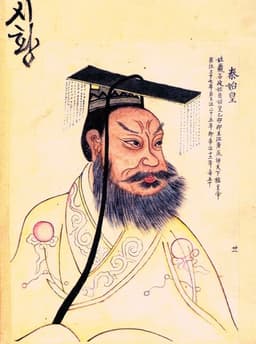
Qin Shi Huang
Emperor · Ancient
85.2Total
Basic Information
Born
1751
-259
Died
1836
-210
Era
Modern
Ancient
Nationality
United States
China
Occupation
Politician
Emperor
Civilization
Western
Eastern
Score Comparison
Military (10%)
48.2
80.0
Political (20%)
82.0
90.0
Influence (20%)
80.0
85.0
Legacy (20%)
82.0
90.0
Leadership (15%)
75.0
78.0
Strategy (15%)
42.2
82.0
TOTAL
73.1
85.2
James Madison — Complete Timeline
1787 AD
Drafting of the Virginia PlanPolitical Action
Madison drafted the Virginia Plan, which proposed a strong central government with three branches and proportional representation. This plan became the basis for the US Constitution debated at the Constitutional Convention.
US ConstitutionVirginia PlanConstitutional Convention
Impact: nationalconstructive
1788 AD
Co-Authorship of The Federalist PapersCultural◆ Major
Madison co-authored The Federalist Papers with Alexander Hamilton and John Jay. These 85 essays argued for ratification of the US Constitution and remain a key source for constitutional interpretation.
Federalist PapersUS ConstitutionPolitical Philosophy
Impact: nationalconstructive
1789 AD
Drafting of the Bill of RightsPolitical Action
Madison drafted the first ten amendments to the US Constitution, known as the Bill of Rights. These amendments guaranteed individual liberties such as freedom of speech, religion, and the right to bear arms.
Bill of RightsUS ConstitutionCivil Liberties
Impact: nationalconstructive
1812 AD
Presidency and the War of 1812War◆ Major
Madison led the US into the War of 1812 against Britain, citing impressment of American sailors and trade restrictions. The war ended in a stalemate but solidified US independence and led to the burning of Washington, D.C.
War of 1812US PresidencyForeign Policy
Impact: national
1815 AD
Veto of the Second Bank of the United StatesPolitical Action◆ Major
Madison vetoed a bill to recharter the Second Bank of the United States, arguing it was unconstitutional. This action reflected his strict constructionist views and influenced later debates over federal power.
Bank of the United StatesConstitutional InterpretationEconomic Policy
Impact: national
Qin Shi Huang — Complete Timeline
246 BC
Construction of the Mausoleum and Terracotta ArmyOther◆ Major
Qin Shi Huang commissioned a vast mausoleum complex near Xi'an, guarded by thousands of life-sized terracotta soldiers, horses, and chariots. The project employed hundreds of thousands of workers and reflected his obsession with immortality and imperial power.
Impact: global
230 BC
Conquest of the Six Warring StatesWar
From 230 to 221 BCE, Ying Zheng led the Qin state in a series of campaigns that conquered the Han, Zhao, Wei, Chu, Yan, and Qi states. This unified China under a single ruler for the first time, ending the Warring States period.
Impact: global
221 BC
Standardization of Writing, Currency, and MeasurementsReform◆ Major
Qin Shi Huang ordered the standardization of Chinese script, currency, and weights and measures across the unified empire. This facilitated administration, trade, and cultural integration, laying a foundation for future dynasties.
Impact: globalconstructive
Proclamation of the Qin DynastyPolitical Action
After conquering the last independent state, Ying Zheng declared himself Shi Huangdi (First Emperor), founding the Qin Dynasty. He adopted a new title to signify his supreme authority and initiated centralized imperial rule.
Impact: global
214 BC
Initiation of the Great Wall ConstructionOther◆ Major
Qin Shi Huang ordered the connection and extension of existing northern fortifications to create a unified defensive wall against nomadic Xiongnu raids. This project involved massive conscripted labor and became the precursor to the later Great Wall.
Impact: regional
213 BC
Burning of Books and Burying of ScholarsPolitical Action◆ Major
On the advice of Li Si, Qin Shi Huang ordered the burning of historical records and philosophical texts not aligned with Legalist doctrine. He also had 460 Confucian scholars buried alive to suppress dissent and consolidate ideological control.
Impact: nationaldestructive
Expert Analysis
james-madison-vs-qin-shi-huang
The Unifier and the Architect
On a spring morning in 221 BC, Ying Zheng stood before his assembled generals in the captured palace of the last independent kingdom. He was thirty-eight years old, and he had just accomplished what no Chinese ruler had ever done: the complete military conquest of all known Chinese civilization. He declared himself Shi Huangdi, the First Emperor, and set about erasing the past. In Philadelphia, Pennsylvania, on a sweltering September afternoon in 1787, James Madison, a small, soft-spoken Virginian of thirty-six, sat at a crowded table, his notes scattered before him. He had just finished arguing for hours over the structure of a legislative branch. He was not conquering anything; he was inventing a government. These two men, separated by two thousand years and half a world, both sought to create order from chaos. But the chaos they faced, and the order they imposed, could not have been more different.
Origins
Qin Shi Huang was born into a world of war. The Warring States period of ancient China had seen seven rival kingdoms locked in a brutal, endless struggle for supremacy for over two centuries. Born Ying Zheng in 259 BC, he was the son of a king who had been a hostage in a rival state. His childhood was spent in the shadow of assassination plots, shifting alliances, and the ever-present threat of annihilation. He learned early that trust was a weakness and that power was the only currency that mattered. The Legalist philosophy that dominated his court taught that human nature was inherently selfish and could only be controlled through strict laws and harsh punishments. Every aspect of his upbringing screamed that the world was a place of conflict, and the only path to peace was total control.
James Madison, born in 1751, grew up in the relative stability of colonial Virginia, on a prosperous plantation called Montpelier. The American Revolution was still two decades away. He was a frail, sickly child who found refuge in books. He studied at Princeton, where he absorbed the ideas of the Enlightenment—John Locke, Montesquieu, David Hume. These thinkers argued that power could be divided, that human reason could design better societies, and that liberty was a natural right. When the revolution came, Madison did not fight on battlefields; he fought in legislative chambers. The chaos he faced was not military but political: a weak central government under the Articles of Confederation, where thirteen quarreling states could barely collect taxes or pay their debts. For Madison, the problem was not too much freedom, but too little structure to protect it.
Rise to Power
Qin Shi Huang’s rise was a matter of inheritance and conquest. He became king of Qin at thirteen, but real power was held by regents and his mother’s lover. At twenty-two, he discovered a plot against his life, and he moved with cold precision. He executed his mother’s lover, exiled his mother, and purged the court of rivals. Then he turned outward. From 230 to 221 BC, he unleashed the Qin war machine, a disciplined army armed with standardized bronze weapons and crossbows. State after state fell: Han, Zhao, Wei, Chu, Yan, Qi. Each victory was absolute. He did not negotiate or form alliances; he annihilated. When he was done, there was no one left to oppose him.
Madison’s rise was one of persuasion and paper. He did not command armies; he commanded arguments. In 1787, he arrived at the Constitutional Convention in Philadelphia with the Virginia Plan in hand, a blueprint for a radically new government. He was not the most charismatic speaker—that was Alexander Hamilton or James Wilson—but he was the best-prepared. He spoke 150 times during the convention, patiently dissecting every proposal. He understood that power would not be taken by force but given by consent. The turning point came not with a battle but with a vote: the ratification of the Constitution in 1788. Madison then co-authored *The Federalist Papers*, a series of essays that explained the new system to a skeptical public. He did not conquer the states; he convinced them.
Leadership & Governance
Qin Shi Huang governed through standardization and suppression. He ordered that all writing be unified under a single script. He standardized currency, weights, and measures so that a cartwheel in one province fit the roads of another. He built a network of roads and canals to bind his empire together. And then, in 213 BC, he ordered the burning of all historical records and philosophical texts not aligned with Legalism. Scholars who protested were buried alive. The First Emperor believed that the past was a threat to his new order. He wanted a blank slate, and he was willing to write it in blood. His military genius lay in organization—the terracotta army guarding his tomb, with thousands of life-sized soldiers, each with a unique face, was a monument not to artistry but to command. Every soldier, every brick in the Great Wall he began constructing in 214 BC, was a testament to his belief that unity meant uniformity.
Madison governed through compromise and checks. As president during the War of 1812, he led a nation that was deeply divided. New England states threatened secession over the war. The British burned Washington, D.C., and Madison fled the capital. Yet he did not impose martial law or silence his critics. He vetoed the Second Bank of the United States in 1815 on constitutional grounds, even though he knew it was economically necessary. He believed that the Constitution was a living framework, not a weapon. His political wisdom was not in creating a perfect system but in designing one that could correct its own mistakes. The Bill of Rights, which he drafted in 1789, guaranteed freedoms of speech, press, and religion—the very freedoms Qin Shi Huang had sought to extinguish.
Triumph & Tragedy
Qin Shi Huang’s greatest triumph was the unification of China. He gave a fractured civilization a single identity that would last, on and off, for two millennia. But his greatest tragedy was the cost. The First Emperor died in 210 BC during a tour of his empire, and his death was kept secret for weeks while his body rotted in his carriage. His son was weak, his officials corrupt, and within four years, the Qin Dynasty collapsed in rebellion. The man who had tried to create an eternal empire saw it crumble before his bones were cold. His mausoleum, with its terracotta army, remains unopened, a symbol of a ruler who tried to conquer even death.
Madison’s triumph was the Constitution itself. It has survived for over two centuries, amended but unbroken. His tragedy was more personal: the War of 1812 nearly destroyed his presidency. He was forced to flee Washington as the British burned the White House. He died in 1836, the last of the Founding Fathers, a man who had outlived his era. He saw his beloved Union begin to fracture over slavery, a problem he had never solved and had often avoided. The system he designed would eventually be tested by civil war.
Character & Destiny
Qin Shi Huang was a man of absolute will. He believed that history was made by force and that mercy was weakness. His paranoia drove him to seek immortality, consuming mercury pills that likely hastened his death. His character was his destiny: his ruthlessness built an empire, and his ruthlessness destroyed it. Madison was a man of reason. He believed that history was made by ideas and that compromise was strength. His caution made him a master of government but a hesitant leader in war. His character was his destiny: his moderation created a durable republic, but it also left deep flaws unresolved.
Legacy
Qin Shi Huang’s legacy is a paradox. He is remembered as both a tyrant and a founder. The Great Wall, though later rebuilt, began with him. The name “China” itself comes from the Qin Dynasty. He gave the world the terracotta army, a silent army that still stands guard. But he also gave the world a warning: that unity bought with terror is fragile.
Madison’s legacy is the American constitutional system. He is remembered as the “Father of the Constitution,” but he was also a slaveholder who never fully confronted the contradiction of liberty and bondage. He gave the world the concept of federalism, of separated powers, of a bill of rights. His system has been exported, imitated, and debated for centuries.
Conclusion
Two men, two visions of order. One sought to unify by erasing difference, the other by balancing it. One trusted power, the other trusted process. Qin Shi Huang’s empire lasted a generation; Madison’s republic has lasted for centuries. Yet both understood a fundamental truth: that chaos is the natural state of human affairs, and that order, however fragile, must be built. The First Emperor built with iron and fire. The Founder built with ink and argument. Which lasts longer? The answer is not as simple as we might wish. The terracotta soldiers still stand, silent and eternal. And the Constitution is still being argued over, in courtrooms and legislatures, every single day.
Rankings
🥇
Qin Shi HuangLeader
Mil: 80.0Pol: 90.0Inf: 85.0
85.2
🥈
James Madison
Mil: 48.2Pol: 82.0Inf: 80.0
73.1
+12.1 behind
How This Comparison Works
Algorithm
Each figure is scored on 6 dimensions (0—100 scale) based on structured historical data: Military (10%), Political (20%), Influence (20%), Legacy (20%), Leadership (15%), Strategy (15%). The weighted total produces the final ranking.
Data Sources
Scores are computed from structured sub-indicators in the database. Scale factors adjust for era (Ancient ×0.85, Modern ×1.0) and civilization size (Eastern ×1.05, Other ×0.80) to account for differences in population and military scale.
Maximum 3 Figures
Comparisons are limited to 2—3 figures to ensure readability and statistical meaningfulness.
Error Margins
±5 points per dimension — Sub-scores are derived from historical records with inherent uncertainty. Two figures within 5 points on a dimension should be considered roughly equivalent in that area.
Total Score Accuracy
±3 points overall — The weighted combination of 6 dimensions produces a total score with approximately ±3 points of uncertainty. Differences of less than 3 points are not statistically significant— the figures are effectively tied.
Known Limitations
- Historical records are incomplete and uneven across civilizations
- Figures from oral-tradition societies may be underrepresented
- Occupation labels can misclassify multi-role figures
- Scores measure capability and impact, not moral character
- Quantitative scoring is a comparison tool, not absolute truth
Capability Radar
Military (10%) — Battles & Warfare
Battles
27
85
Win Rate
34
90
Expansion
37
90
Political (20%) — Governance & Reform
Reform
95
95
Diplomacy
85
75
Economy
60
90
Influence (20%) — Cultural & Global Reach
Cultural
80
95
Global
85
85
Legacy (20%) — Historical Impact
Historical
95
95
Longevity
90
95
Leadership (15%) — Power & Stability
Tenure
70
70
Stability
75
65
Strategy (15%) — Tactics & Innovation
Strategy
40
85
Tactics
40
80
Reform
42
95
Similar Comparisons
Comments & Discussion
LegalistLad6/17/2026
Qin Shi Huang wiped out six kingdoms like wiping dust off a table, then burned books and buried scholars alive. Madison? He barely unified a handful of quarreling colonies with endless debates about state's rights. One man forged a centralized empire through blood and iron; the other wrote a pamphlet. Let's be real—Madison couldn't even keep his own Virginia gentlemen in line without three compromises. The First Emperor ended centuries of war in a decade. That's a unifier.
铁血史官6/17/2026
别再吹麦迪逊那套纸面文章了。秦始皇干的活比你们一整个制宪会议都大:废除分封制、统一文字度量衡、修驰道、筑长城。你麦迪逊呢?连个全国性货币都搞不定,还要各州自己发钱。号称"宪法之父",结果奴隶制问题拖到内战才解决。一个用铁血碾碎三百年战乱,一个用废纸制造了另一个世纪的扯皮——这也能比?