Loading...
James Ibori vs Seewoosagur Ramgoolam
Seewoosagur Ramgoolam leads by 13.3 pts · 2 figures compared
…

James Ibori
Politician · Modern
41.7Total
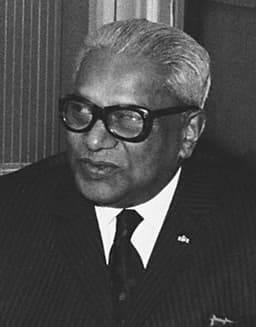
Seewoosagur Ramgoolam
Politician · Modern
55.0Total
Basic Information
Born
1959
1900
Died
—
1985
Era
Modern
Modern
Nationality
Nigeria
Mauritius
Occupation
Politician
Politician
Civilization
Other
Other
Score Comparison
Military (10%)
50.0
24.1
Political (20%)
27.9
70.3
Influence (20%)
46.3
55.0
Legacy (20%)
35.8
52.0
Leadership (15%)
51.9
75.0
Strategy (15%)
42.3
40.2
TOTAL
41.7
55.0
James Ibori — Complete Timeline
1999 AD
Governor of Delta StatePolitical Action◆ Major
James Ibori was elected Governor of Delta State under the People's Democratic Party (PDP). He served two terms from 1999 to 2007, overseeing oil revenue management and infrastructure projects.
Nigerian PoliticsGovernorshipDelta State
Impact: regional
2012 AD
Convicted of Money Laundering in the UKPolitical Action◆ Major
Ibori was convicted in a UK court on charges of money laundering and fraud, involving over
CorruptionMoney LaunderingUK ConvictionNigerian Politics
Impact: globaldestructive
2016 AD
Released from UK PrisonPolitical Action
Ibori was released from a UK prison after serving four years of his sentence. He returned to Nigeria, where he remained politically influential despite his conviction.
Prison ReleaseNigerian PoliticsCorruption
Impact: national
Seewoosagur Ramgoolam — Complete Timeline
1948 AD
Elected to the Legislative Council of MauritiusPolitical Action◆ Major
Ramgoolam was elected to the Legislative Council in the 1948 general election, representing the Labour Party. This marked the beginning of his political career in colonial Mauritius.
Political EntryColonial Politics
Impact: nationalconstructive
1961 AD
Became Chief Minister of MauritiusPolitical Action◆ Major
Ramgoolam became Chief Minister of Mauritius after the 1961 constitutional conference in London. He led the push for self-government and eventual independence from Britain.
Self-GovernmentIndependence Movement
Impact: nationalconstructive
1968 AD
Led Mauritius to IndependencePolitical Action
Ramgoolam led Mauritius to independence from the United Kingdom on March 12, 1968, becoming the first Prime Minister. He navigated ethnic tensions between Hindus and Creoles to achieve a peaceful transition.
IndependenceFounding Prime Minister
Impact: nationalconstructive
1976 AD
Implemented free education policyReform◆ Major
Ramgoolam's government introduced free primary and secondary education in Mauritius. This policy significantly increased literacy rates and access to education, laying the foundation for the country's human capital development.
Education ReformSocial Policy
Impact: nationalprogressive
1982 AD
Lost 1982 general electionPolitical Action◆ Major
Ramgoolam's Labour Party was defeated in the 1982 general election by the Militant Socialist Movement (MSM) led by Anerood Jugnauth. The defeat ended his 14-year tenure as Prime Minister, following economic difficulties and unemployment.
Electoral DefeatEnd of Era
Impact: nationaltragic
1983 AD
Appointed Governor-General of MauritiusPolitical Action
Ramgoolam was appointed Governor-General of Mauritius, a ceremonial role representing the British monarch. He served until his death in 1985, providing continuity and stability after his electoral loss.
Ceremonial RolePost-Prime Minister
Impact: national
Expert Analysis
Origins
James Ibori was born in 1958 in Oghara, Delta State, Nigeria, into a modest family. He studied at the University of Jos and later worked as a lawyer. His early career involved business and politics, but details remain sparse. Seewoosagur Ramgoolam was born in 1900 in Belle Rive, Mauritius, to Indian immigrant parents. He studied medicine in the UK and returned to Mauritius as a doctor. His exposure to Fabian socialism shaped his political ideology. Both emerged from colonial contexts, but Ramgoolam's path was rooted in activism, while Ibori's in patronage.
Rise to Power
Ibori's rise began in the 1990s as a close ally of General Sani Abacha. He leveraged connections to secure the PDP gubernatorial nomination in 1999, winning Delta State's election. His tenure (1999-2007) coincided with Nigeria's oil boom. Ramgoolam entered politics in 1940, co-founding the Labour Party. He won a legislative seat in 1948 and became Chief Minister in 1961. His key turning point was the 1965 Lancaster House Conference, where he negotiated independence terms. Both used political networks, but Ramgoolam's rise was democratic, while Ibori's relied on military ties.
Leadership & Governance
Ibori's governance focused on consolidating power and wealth. He controlled Delta State's oil revenues, but development indicators lagged. He scored 51.9 in leadership, reflecting his ability to maintain control despite corruption. Ramgoolam, scoring 75.0 in leadership, implemented free primary and secondary education in 1976, boosting literacy from 60% to 90%. He also promoted national unity through a consociational model, balancing Hindu, Muslim, and Creole interests. Ibori's approach was extractive; Ramgoolam's was developmental.
Triumph & Tragedy
Ibori's triumph was winning two terms and amassing a fortune estimated at £200 million. His tragedy was his 2012 UK conviction for laundering £50 million, resulting in a 13-year sentence (reduced to 4). Ramgoolam's triumph was leading Mauritius to independence in 1968 and establishing social welfare. His tragedy was losing the 1982 election to Anerood Jugnauth, partly due to economic stagnation and ethnic tensions. Ramgoolam's legacy score of 52.0 reflects his foundational role; Ibori's 35.8 reflects his criminal record.
Character & Destiny
Ibori was charismatic but ruthless, using state funds for personal luxury. His conviction stemmed from a UK investigation that uncovered shell companies and properties. Ramgoolam was idealistic and patient, earning the title "Father of the Nation." His character shaped a peaceful transition to independence. Ibori's destiny was infamy; Ramgoolam's was veneration. Ibori's political score of 27.9 indicates his failure to build lasting institutions; Ramgoolam's 70.3 shows his success.
Legacy
Ibori's legacy is a cautionary tale of African corruption. His case led to asset recovery efforts but little systemic change in Nigeria. Ramgoolam's legacy includes Mauritius's stable democracy, high human development, and free education. He is commemorated with a statue and national holiday. Ibori's influence score of 46.3 is limited; Ramgoolam's 55.0 is broader. The total score gap of 13.3 points (Ramgoolam 55.0 vs Ibori 41.7) underscores Ramgoolam's greater impact.
Conclusion
Seewoosagur Ramgoolam had a greater impact than James Ibori. Ramgoolam's policies transformed Mauritius from a poor sugar colony to a middle-income democracy, while Ibori's corruption undermined Nigeria's development. Ramgoolam's leadership score of 75.0 and political score of 70.3 far exceed Ibori's 51.9 and 27.9. Although Ibori influenced Delta State politics, his legacy is negative. Ramgoolam's nation-building endures; Ibori's theft is a stain. Thus, Ramgoolam is the more significant figure.
Rankings
🥇
Seewoosagur RamgoolamLeader
Mil: 24.1Pol: 70.3Inf: 55.0
55.0
🥈
James Ibori
Mil: 50.0Pol: 27.9Inf: 46.3
41.7
+13.3 behind
How This Comparison Works
Algorithm
Each figure is scored on 6 dimensions (0—100 scale) based on structured historical data: Military (10%), Political (20%), Influence (20%), Legacy (20%), Leadership (15%), Strategy (15%). The weighted total produces the final ranking.
Data Sources
Scores are computed from structured sub-indicators in the database. Scale factors adjust for era (Ancient ×0.85, Modern ×1.0) and civilization size (Eastern ×1.05, Other ×0.80) to account for differences in population and military scale.
Maximum 3 Figures
Comparisons are limited to 2—3 figures to ensure readability and statistical meaningfulness.
Error Margins
±5 points per dimension — Sub-scores are derived from historical records with inherent uncertainty. Two figures within 5 points on a dimension should be considered roughly equivalent in that area.
Total Score Accuracy
±3 points overall — The weighted combination of 6 dimensions produces a total score with approximately ±3 points of uncertainty. Differences of less than 3 points are not statistically significant— the figures are effectively tied.
Known Limitations
- Historical records are incomplete and uneven across civilizations
- Figures from oral-tradition societies may be underrepresented
- Occupation labels can misclassify multi-role figures
- Scores measure capability and impact, not moral character
- Quantitative scoring is a comparison tool, not absolute truth
Capability Radar
Military (10%) — Battles & Warfare
Battles
24
25
Win Rate
25
27
Expansion
26
29
Political (20%) — Governance & Reform
Reform
10
80
Diplomacy
15
85
Economy
5
75
Influence (20%) — Cultural & Global Reach
Cultural
5
60
Global
10
60
Legacy (20%) — Historical Impact
Historical
10
70
Longevity
5
65
Leadership (15%) — Power & Stability
Tenure
40
85
Stability
5
80
Strategy (15%) — Tactics & Innovation
Strategy
28
35
Tactics
35
35
Reform
38
41
Similar Comparisons
Comments & Discussion
No comments yet. Be the first to share your thoughts!