Loading...
This comparison has not been analyzed yet.
One-time AI generation (~1 minute). Scores and timeline are already available below.
James I of England vs Tukoji Rao Holkar II
James I of England leads by 11.8 pts · 2 figures compared
…

James I of England
Emperor · Modern
57.2Total
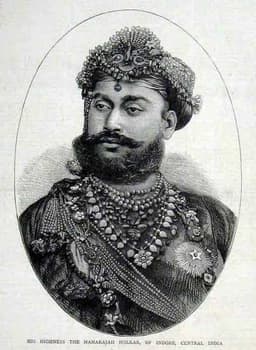
Tukoji Rao Holkar II
Emperor · Modern
45.4Total
Basic Information
Born
1566
1835
Died
1625
1886
Era
Modern
Modern
Nationality
England
India
Occupation
Emperor
Emperor
Civilization
Western
Indian
Score Comparison
Military (10%)
20.0
20.0
Political (20%)
45.0
43.7
Influence (20%)
68.0
48.6
Legacy (20%)
72.0
37.5
Leadership (15%)
53.2
74.0
Strategy (15%)
54.6
42.3
TOTAL
57.2
45.4
James I of England — Complete Timeline
1603 AD
Accession of James IPolitical Action
James VI of Scotland succeeded Elizabeth I as James I of England, uniting the crowns of England and Scotland. This union created the Kingdom of Great Britain under a single monarch, though the parliaments remained separate.
UnionSuccessionStuart
Impact: regionalconstructive
1605 AD
Gunpowder PlotPolitical Action◆ Major
A group of Catholic conspirators, including Guy Fawkes, attempted to blow up the House of Lords during the State Opening of Parliament. The plot was foiled, leading to harsh anti-Catholic laws and increased persecution.
ConspiracyCatholicTerrorism
Impact: nationaldestructive
1611 AD
Publication of the King James BibleCultural
James I authorized a new translation of the Bible, which became known as the King James Version. This translation had a profound impact on English literature and religion, becoming the standard Bible for English-speaking Protestants.
BibleTranslationReligion
Impact: globalconstructive
1614 AD
Addled ParliamentPolitical Action
James I's second parliament was dissolved after only two months without passing any legislation. This failure highlighted the growing conflict between the crown and Parliament over finances and royal prerogative.
ParliamentConflictStalemate
Impact: national
1623 AD
Spanish Match ControversyPolitical Action◆ Major
James I pursued a marriage alliance between his son Charles and the Spanish Infanta, which was deeply unpopular in Protestant England. The negotiations failed, leading to a shift toward war with Spain and a stronger alliance with France.
DiplomacySpainMarriage
Impact: regional
Tukoji Rao Holkar II — Complete Timeline
1835 AD
Accession to Indore ThronePolitical Action
Tukoji Rao Holkar II became Maharaja of Indore at age 0 after the death of his father, Malhar Rao Holkar III. His reign was initially under a regency, and he later assumed full powers, ruling until his death in 1886.
IndoreSuccession
1857 AD
Support for British During Indian Rebellion of 1857War◆ Major
Tukoji Rao Holkar II provided military support to the British East India Company during the Indian Rebellion of 1857. He sent troops to assist in suppressing the uprising in Central India, maintaining Indore's loyalty to the British.
Indian Rebellion of 1857British Raj
Impact: regional
1886 AD
Construction of Lal Bagh PalaceCultural
Tukoji Rao Holkar II began the construction of the Lal Bagh Palace in Indore, a grand neoclassical residence. The palace was completed after his death and became a symbol of Holkar wealth and architectural patronage.
IndoreArchitecture
constructive
This comparison has not been analyzed yet.
One-time AI generation (~1 minute). Scores and timeline are already available below.
Rankings
🥇
James I of EnglandLeader
Mil: 20.0Pol: 45.0Inf: 68.0
57.2
🥈
Tukoji Rao Holkar II
Mil: 20.0Pol: 43.7Inf: 48.6
45.4
+11.8 behind
How This Comparison Works
Algorithm
Each figure is scored on 6 dimensions (0—100 scale) based on structured historical data: Military (10%), Political (20%), Influence (20%), Legacy (20%), Leadership (15%), Strategy (15%). The weighted total produces the final ranking.
Data Sources
Scores are computed from structured sub-indicators in the database. Scale factors adjust for era (Ancient ×0.85, Modern ×1.0) and civilization size (Eastern ×1.05, Other ×0.80) to account for differences in population and military scale.
Maximum 3 Figures
Comparisons are limited to 2—3 figures to ensure readability and statistical meaningfulness.
Error Margins
±5 points per dimension — Sub-scores are derived from historical records with inherent uncertainty. Two figures within 5 points on a dimension should be considered roughly equivalent in that area.
Total Score Accuracy
±3 points overall — The weighted combination of 6 dimensions produces a total score with approximately ±3 points of uncertainty. Differences of less than 3 points are not statistically significant— the figures are effectively tied.
Known Limitations
- Historical records are incomplete and uneven across civilizations
- Figures from oral-tradition societies may be underrepresented
- Occupation labels can misclassify multi-role figures
- Scores measure capability and impact, not moral character
- Quantitative scoring is a comparison tool, not absolute truth
Capability Radar
Military (10%) — Battles & Warfare
Battles
5
10
Win Rate
5
10
Expansion
5
5
Political (20%) — Governance & Reform
Reform
55
30
Diplomacy
60
40
Economy
50
35
Influence (20%) — Cultural & Global Reach
Cultural
75
20
Global
70
10
Legacy (20%) — Historical Impact
Historical
80
20
Longevity
80
15
Leadership (15%) — Power & Stability
Tenure
60
60
Stability
40
25
Strategy (15%) — Tactics & Innovation
Strategy
5
10
Tactics
5
10
Reform
10
15
Similar Comparisons
Comments & Discussion
No comments yet. Be the first to share your thoughts!