Loading...
This comparison has not been analyzed yet.
One-time AI generation (~1 minute). Scores and timeline are already available below.
James Connolly vs Jose Marti
James Connolly leads by 1.2 pts · 2 figures compared
…

James Connolly
Revolutionary · Modern
45.2Total
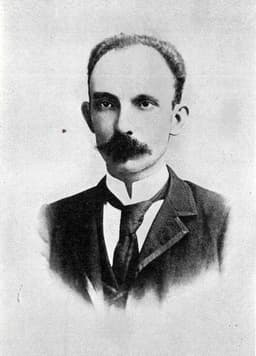
Jose Marti
Revolutionary · Modern
44.0Total
Basic Information
Born
1868
1853
Died
1916
1895
Era
Modern
Modern
Nationality
Ireland
Cuba
Occupation
Revolutionary
Revolutionary
Civilization
Western
Western
Score Comparison
Military (10%)
39.9
20.0
Political (20%)
30.8
33.6
Influence (20%)
51.0
59.0
Legacy (20%)
42.5
50.0
Leadership (15%)
51.7
40.9
Strategy (15%)
54.6
35.7
TOTAL
45.2
44.0
James Connolly — Complete Timeline
1896 AD
Founding of the Irish Socialist Republican PartyPolitical Action◆ Major
Connolly founded the Irish Socialist Republican Party (ISRP), the first Marxist political party in Ireland. The party advocated for an independent Irish republic based on socialist principles.
SocialismPolitical PartyMarxism
Impact: nationalprogressive
1910 AD
Publication of 'Labour in Irish History'Cultural◆ Major
Connolly published 'Labour in Irish History', a book arguing that Irish history was a class struggle and that national independence was inseparable from workers' emancipation. It became a key text of Irish socialist republicanism.
BookSocialist TheoryIrish History
Impact: nationalprogressive
1913 AD
Dublin LockoutPolitical Action◆ Major
Connolly led the Irish Transport and General Workers' Union during the Dublin Lockout, a major industrial dispute. The lockout involved 20,000 workers and lasted five months, ending in defeat for the union but raising class consciousness.
Labour DisputeLockoutTrade Unionism
Impact: national
Founding of the Irish Citizen ArmyPolitical Action◆ Major
Connolly co-founded the Irish Citizen Army (ICA) as a workers' militia to protect strikers during the Dublin Lockout. The ICA later became a paramilitary force dedicated to an independent Irish republic.
MilitiaLabourParamilitary
Impact: nationalprogressive
1916 AD
Easter Rising CommandWar◆ Major
Connolly commanded the Irish Citizen Army during the Easter Rising, leading a force at the General Post Office. He was one of the key military strategists of the rebellion.
Easter RisingCommandRebellion
Impact: national
Execution Tied to a ChairPolitical Action◆ Major
Connolly, wounded in the ankle during the Rising, was executed by firing squad tied to a chair in Kilmainham Gaol. His execution, due to his injuries, became a symbol of British brutality and a rallying point for republicanism.
ExecutionMartyrdomEaster Rising
Impact: nationaltragic
Jose Marti — Complete Timeline
1892 AD
Founding of the Cuban Revolutionary PartyPolitical Action
Marti founded the Cuban Revolutionary Party (PRC) in New York, uniting Cuban exiles. The party aimed to achieve Cuban independence from Spain through armed struggle and democratic governance.
Political OrganizationIndependence MovementExile
Impact: nationalprogressive
1895 AD
Battle of Dos RiosWar
Marti was killed in action at Dos Rios while fighting Spanish forces. His death made him a martyr for Cuban independence and galvanized the revolutionary movement, though it deprived the cause of its civilian leader.
BattleDeathMartyrdom
Impact: nationaltragic
Manifesto of MontecristiPolitical Action◆ Major
Marti and General Maximo Gomez signed the Manifesto of Montecristi, outlining the goals of the Cuban War of Independence. It called for racial equality, civilian control of the military, and a democratic republic.
ManifestoWar GoalsIndependence
Impact: nationalprogressive
This comparison has not been analyzed yet.
One-time AI generation (~1 minute). Scores and timeline are already available below.
Rankings
🥇
James ConnollyLeader
Mil: 39.9Pol: 30.8Inf: 51.0
45.2
🥈
Jose Marti
Mil: 20.0Pol: 33.6Inf: 59.0
44.0
+1.2 behind
How This Comparison Works
Algorithm
Each figure is scored on 6 dimensions (0—100 scale) based on structured historical data: Military (10%), Political (20%), Influence (20%), Legacy (20%), Leadership (15%), Strategy (15%). The weighted total produces the final ranking.
Data Sources
Scores are computed from structured sub-indicators in the database. Scale factors adjust for era (Ancient ×0.85, Modern ×1.0) and civilization size (Eastern ×1.05, Other ×0.80) to account for differences in population and military scale.
Maximum 3 Figures
Comparisons are limited to 2—3 figures to ensure readability and statistical meaningfulness.
Error Margins
±5 points per dimension — Sub-scores are derived from historical records with inherent uncertainty. Two figures within 5 points on a dimension should be considered roughly equivalent in that area.
Total Score Accuracy
±3 points overall — The weighted combination of 6 dimensions produces a total score with approximately ±3 points of uncertainty. Differences of less than 3 points are not statistically significant— the figures are effectively tied.
Known Limitations
- Historical records are incomplete and uneven across civilizations
- Figures from oral-tradition societies may be underrepresented
- Occupation labels can misclassify multi-role figures
- Scores measure capability and impact, not moral character
- Quantitative scoring is a comparison tool, not absolute truth
Capability Radar
Military (10%) — Battles & Warfare
Battles
5
15
Win Rate
5
10
Expansion
5
10
Political (20%) — Governance & Reform
Reform
40
40
Diplomacy
20
45
Economy
30
15
Influence (20%) — Cultural & Global Reach
Cultural
40
70
Global
35
55
Legacy (20%) — Historical Impact
Historical
45
65
Longevity
40
60
Leadership (15%) — Power & Stability
Tenure
10
20
Stability
10
10
Strategy (15%) — Tactics & Innovation
Strategy
10
25
Tactics
10
20
Reform
15
30
Similar Comparisons
Comments & Discussion
No comments yet. Be the first to share your thoughts!