Loading...
Aruna Asaf Ali vs Jose Marti
Jose Marti leads by 0.7 pts · 2 figures compared
…

Aruna Asaf Ali
Revolutionary · Modern
43.3Total
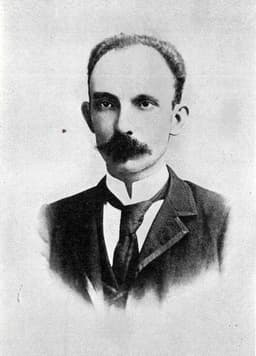
Jose Marti
Revolutionary · Modern
44.0Total
Basic Information
Born
1909
1853
Died
1996
1895
Era
Modern
Modern
Nationality
India
Cuba
Occupation
Revolutionary
Revolutionary
Civilization
Indian
Western
Score Comparison
Military (10%)
50.0
20.0
Political (20%)
30.8
33.6
Influence (20%)
53.3
59.0
Legacy (20%)
45.8
50.0
Leadership (15%)
30.0
40.9
Strategy (15%)
43.6
35.7
TOTAL
43.3
44.0
Aruna Asaf Ali — Complete Timeline
1942 AD
Hoisted the Indian National Congress Flag at Gowalia Tank MaidanPolitical Action
Aruna Asaf Ali famously hoisted the Indian National Congress flag at Gowalia Tank Maidan in Bombay on August 9, 1942, marking the start of the Quit India Movement. This act defied British authority and inspired mass protests.
Quit IndiaFlag HoistingDefiance
Impact: nationalconstructive
Went Underground During Quit India MovementPolitical Action◆ Major
After the flag hoisting, Aruna Asaf Ali went underground to evade arrest. She continued to organize resistance, publish illegal pamphlets, and coordinate with other leaders, becoming a symbol of defiance.
UndergroundResistanceQuit India
Impact: national
1958 AD
Served as First Mayor of DelhiPolitical Action
Aruna Asaf Ali was elected as the first Mayor of Delhi. She focused on urban development and social welfare, though her tenure was brief and largely ceremonial.
MayorDelhiMunicipal
constructive
1997 AD
Awarded Bharat RatnaCultural◆ Major
Aruna Asaf Ali was awarded the Bharat Ratna, India's highest civilian award, for her role in the independence movement and social work. The award recognized her lifelong commitment to the nation.
AwardHonorCivilian
Impact: nationalconstructive
Jose Marti — Complete Timeline
1892 AD
Founding of the Cuban Revolutionary PartyPolitical Action
Marti founded the Cuban Revolutionary Party (PRC) in New York, uniting Cuban exiles. The party aimed to achieve Cuban independence from Spain through armed struggle and democratic governance.
Political OrganizationIndependence MovementExile
Impact: nationalprogressive
1895 AD
Battle of Dos RiosWar
Marti was killed in action at Dos Rios while fighting Spanish forces. His death made him a martyr for Cuban independence and galvanized the revolutionary movement, though it deprived the cause of its civilian leader.
BattleDeathMartyrdom
Impact: nationaltragic
Manifesto of MontecristiPolitical Action◆ Major
Marti and General Maximo Gomez signed the Manifesto of Montecristi, outlining the goals of the Cuban War of Independence. It called for racial equality, civilian control of the military, and a democratic republic.
ManifestoWar GoalsIndependence
Impact: nationalprogressive
Expert Analysis
Origins
Aruna Asaf Ali was born on July 16, 1909, in Kalka, Punjab, British India, into a Bengali Brahmin family. Her father, Upendranath Ganguly, was a restaurant owner, and her mother, Ambalika Devi, was a homemaker. She was educated at Sacred Heart Convent in Lahore and later at the University of Cambridge, but returned to India without completing her degree. In 1928, she married Asaf Ali, a prominent Congress leader, and was drawn into the independence movement.
Jose Marti was born on January 28, 1853, in Havana, Cuba, to Spanish immigrants Mariano Marti and Leonor Perez. His father was a sergeant in the Spanish army. Marti showed early literary talent and was influenced by the anti-slavery and independence movements. He was imprisoned at age 16 for writing against Spanish rule, then exiled to Spain, where he studied law and philosophy at the University of Madrid.
Rise to Power
Aruna Asaf Ali's rise began with the Quit India Movement in 1942. On August 9, 1942, she hoisted the Indian National Congress flag at Gowalia Tank Maidan in Bombay, defying British orders. This act sparked nationwide protests. She then went underground to avoid arrest, organizing resistance, publishing illegal pamphlets, and coordinating activities until 1946. Her defiance made her a symbol of courage.
Jose Marti's rise was through intellectual and political organizing. In 1892, he founded the Cuban Revolutionary Party (PRC) in New York, uniting Cuban exiles. He wrote extensively, including the Manifesto of Montecristi (1895) with General Maximo Gomez, which outlined the goals of the Cuban War of Independence: racial equality and independence. He also raised funds and coordinated military strategy.
Leadership & Governance
Aruna Asaf Ali's leadership was characterized by grassroots activism and defiance. She was not a formal political leader but a revolutionary figure. After independence, she served as the first Mayor of Delhi (1958), focusing on urban development and social welfare, though her tenure was brief. Her leadership style was confrontational and moral, prioritizing direct action over negotiation. She scored 30.0 in leadership and 30.8 in political metrics.
Jose Marti's leadership was strategic and ideological. He combined political organization with literary influence. As head of the PRC, he emphasized unity and racial equality. He was a planner rather than a military commander; his military score is 20.0, reflecting his lack of battlefield experience. He scored 40.9 in leadership and 33.6 in political, indicating stronger organizational skills.
Triumph & Tragedy
Aruna Asaf Ali's greatest triumph was her role in the Quit India Movement, where her flag hoisting and underground activities galvanized resistance. She was awarded the Bharat Ratna in 1997, India's highest civilian award. However, her political career after independence was limited; she failed to translate her revolutionary fame into sustained political power. Her tenure as Mayor was largely ceremonial.
Jose Marti's triumph was founding the PRC and inspiring the Cuban War of Independence. His writings, like "Our America," shaped Latin American anti-imperialist thought. His tragedy was his death at the Battle of Dos Rios on May 19, 1895, early in the war. He was killed while charging Spanish lines, becoming a martyr. His death removed a key leader, but his ideas endured.
Character & Destiny
Aruna Asaf Ali was determined and independent, often clashing with Congress leadership. Her underground life required resilience. She was more comfortable as a rebel than a politician. Her destiny was to be a symbol of resistance, but she never attained high office. Her influence score is 53.3, reflecting her symbolic power.
Jose Marti was idealistic and poetic, believing in moral force. He was a prolific writer and thinker. His character—a blend of intellectual and activist—led him to sacrifice his life for Cuba. His destiny was martyrdom, which amplified his legacy. He scored 59.0 in influence, higher than Aruna's 53.3.
Legacy
Aruna Asaf Ali is remembered as a heroine of India's independence. Her legacy is tied to the Quit India Movement and women's participation. The Bharat Ratna and numerous institutions named after her ensure her memory. However, her impact on post-independence India is minimal; her legacy score is 45.8.
Jose Marti's legacy is profound. He is a national hero in Cuba, revered as the "Apostle of Cuban Independence." His writings are studied across Latin America. The Cuban Revolution of 1959 claimed his mantle. His legacy score is 50.0, higher than Aruna's. His ideas on anti-imperialism and racial equality continue to resonate.
Conclusion
While both were revolutionaries, Jose Marti had greater impact. His total score of 44.0 edges Aruna's 43.3. Marti's creation of the PRC and his writings provided the ideological foundation for Cuban independence, and his martyrdom made him an enduring symbol. Aruna Asaf Ali's flag hoisting was a powerful moment, but her political influence was short-lived. Marti's legacy spans continents and centuries, while Aruna's remains largely within India. Thus, Marti's overall impact is greater.
Rankings
🥇
Jose MartiLeader
Mil: 20.0Pol: 33.6Inf: 59.0
44.0
🥈
Aruna Asaf Ali
Mil: 50.0Pol: 30.8Inf: 53.3
43.3
+0.7 behind
How This Comparison Works
Algorithm
Each figure is scored on 6 dimensions (0—100 scale) based on structured historical data: Military (10%), Political (20%), Influence (20%), Legacy (20%), Leadership (15%), Strategy (15%). The weighted total produces the final ranking.
Data Sources
Scores are computed from structured sub-indicators in the database. Scale factors adjust for era (Ancient ×0.85, Modern ×1.0) and civilization size (Eastern ×1.05, Other ×0.80) to account for differences in population and military scale.
Maximum 3 Figures
Comparisons are limited to 2—3 figures to ensure readability and statistical meaningfulness.
Error Margins
±5 points per dimension — Sub-scores are derived from historical records with inherent uncertainty. Two figures within 5 points on a dimension should be considered roughly equivalent in that area.
Total Score Accuracy
±3 points overall — The weighted combination of 6 dimensions produces a total score with approximately ±3 points of uncertainty. Differences of less than 3 points are not statistically significant— the figures are effectively tied.
Known Limitations
- Historical records are incomplete and uneven across civilizations
- Figures from oral-tradition societies may be underrepresented
- Occupation labels can misclassify multi-role figures
- Scores measure capability and impact, not moral character
- Quantitative scoring is a comparison tool, not absolute truth
Capability Radar
Military (10%) — Battles & Warfare
Battles
25
15
Win Rate
29
10
Expansion
30
10
Political (20%) — Governance & Reform
Reform
40
40
Diplomacy
35
45
Economy
15
15
Influence (20%) — Cultural & Global Reach
Cultural
45
70
Global
35
55
Legacy (20%) — Historical Impact
Historical
55
65
Longevity
40
60
Leadership (15%) — Power & Stability
Tenure
20
20
Stability
20
10
Strategy (15%) — Tactics & Innovation
Strategy
36
25
Tactics
35
20
Reform
39
30
Similar Comparisons
Comments & Discussion
No comments yet. Be the first to share your thoughts!