Loading...
Jalal Talabani vs V. P. Singh
V. P. Singh leads by 0.6 pts · 2 figures compared
…

Jalal Talabani
Politician · Modern
55.5Total
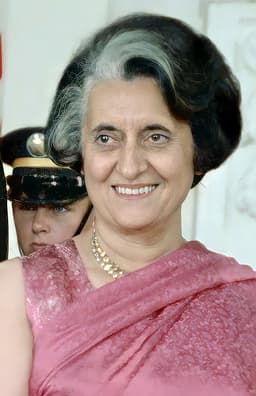
V. P. Singh
Politician · Modern
56.1Total
Basic Information
Born
1933
1931
Died
—
—
Era
Modern
Modern
Nationality
Iraq
India
Occupation
Politician
Politician
Civilization
Middle Eastern
Indian
Score Comparison
Military (10%)
23.4
29.8
Political (20%)
68.0
68.0
Influence (20%)
61.0
58.3
Legacy (20%)
49.2
52.0
Leadership (15%)
72.0
62.2
Strategy (15%)
46.3
60.0
TOTAL
55.5
56.1
Jalal Talabani — Complete Timeline
2005 AD
Elected President of IraqPolitical Action
Jalal Talabani was elected President of Iraq by the National Assembly, becoming the first Kurdish head of state in the country's history. His election was a landmark for Kurdish representation in post-Saddam Iraq.
PresidencyKurdish RightsPost-Saddam
Impact: nationalconstructive
Negotiated Iraqi ConstitutionPolitical Action◆ Major
As president, Talabani played a key role in negotiating the new Iraqi constitution, which established a federal system and recognized Kurdish autonomy. The constitution was approved by referendum in October 2005.
ConstitutionFederalismKurdistan
Impact: nationalconstructive
2009 AD
Re-elected for Second TermPolitical Action
Talabani was re-elected for a second term as president, reflecting his continued role as a unifying figure in Iraq's fragile political landscape. His tenure saw ongoing sectarian tensions and the withdrawal of US troops.
Re-electionPolitical Stability
Impact: national
V. P. Singh — Complete Timeline
1987 AD
Exposed Bofors Scandal as Defence MinisterPolitical Action◆ Major
As Defence Minister, V. P. Singh initiated investigations into the Bofors howitzer deal, alleging corruption involving the Rajiv Gandhi government. This led to his dismissal from the cabinet and later fueled his political rise.
CorruptionBoforsDefence Scandal
Impact: national
1989 AD
Appointed Prime Minister of IndiaPolitical Action◆ Major
V. P. Singh became the seventh Prime Minister of India, leading the National Front coalition government. His appointment followed the defeat of Rajiv Gandhi's Congress party in the general election.
Indian PoliticsCoalition GovernmentNational Front
Impact: nationalconstructive
1990 AD
Implemented Mandal Commission RecommendationsReform
As Prime Minister, V. P. Singh announced the implementation of the Mandal Commission's recommendations, reserving 27% of central government jobs for Other Backward Classes. This decision sparked widespread protests and political realignment in India.
ReservationSocial JusticeCaste Politics
Impact: nationalconstructive
Resigned as Prime MinisterPolitical Action◆ Major
V. P. Singh resigned as Prime Minister after losing a vote of confidence in the Lok Sabha, following the withdrawal of support by the Bharatiya Janata Party. His resignation ended the National Front government.
Indian PoliticsGovernment CollapseVote of Confidence
Impact: nationaldestructive
Expert Analysis
Origins
**Jalal Talabani** was born in 1933 in the village of Koy Sanjaq, Iraqi Kurdistan, into a prominent Kurdish family. His father was a religious leader, and Talabani received traditional education before studying law at Baghdad University. He joined the Kurdish Democratic Party (KDP) as a teenager and quickly became involved in Kurdish nationalist movements. His early experiences under the monarchy and subsequent republics shaped his commitment to Kurdish rights.
**V. P. Singh** was born in 1931 into a royal Rajput family in Allahabad, India. He studied at Allahabad University and later at Fergusson College in Pune. Singh entered politics through the Congress Party, serving as a member of the Uttar Pradesh Legislative Assembly before rising to national prominence. His aristocratic background contrasted with his later championing of social justice.
Rise to Power
Talabani's rise was marked by armed struggle and political maneuvering. In 1964, he split from the KDP to form the Patriotic Union of Kurdistan (PUK), becoming its leader. He led guerrilla campaigns against the Iraqi government, notably during the 1975 Kurdish rebellion. After the 1991 Gulf War, he established Kurdish autonomy in northern Iraq under US protection. His election as President of Iraq in 2005, scoring 68.0 in political skill, was the culmination of decades of struggle.
Singh's ascent was more conventional. He served as Chief Minister of Uttar Pradesh (1980-1982) and later as Defence Minister under Rajiv Gandhi. His exposure of the Bofors scandal in 1987 forced his resignation from Congress. He then formed the Janata Dal and became Prime Minister in 1989 leading the National Front coalition, scoring 68.0 in political skill.
Leadership & Governance
Talabani's leadership style was conciliatory and pragmatic. As president, he promoted federalism and Kurdish autonomy within a unified Iraq. He negotiated the 2005 constitution, which recognized Kurdish regional government. His approach was to balance ethnic tensions, often acting as a mediator between Shia, Sunni, and Kurdish factions. He scored 72.0 in leadership, reflecting his ability to hold together a diverse coalition.
Singh's governance was defined by social justice. In 1990, he implemented the Mandal Commission recommendations, reserving 27% of central government jobs for Other Backward Classes. This sparked massive protests and political realignment. His leadership score of 62.2 reflects his principled but polarizing style. He also pursued economic reforms, though his tenure was cut short.
Triumph & Tragedy
Talabani's greatest triumph was becoming Iraq's first Kurdish president and securing Kurdish autonomy. He successfully navigated the post-Saddam political landscape, re-elected in 2009. His tragedy was the ongoing instability in Iraq, including sectarian violence and the rise of ISIS after his presidency. He scored 49.2 in legacy, as his achievements were fragile.
Singh's triumph was the Mandal implementation, which empowered millions of OBCs and reshaped Indian politics. His tragedy was the political fallout: his coalition collapsed in 1990 after the BJP withdrew support, leading to his resignation. He scored 52.0 in legacy, with his reforms having lasting impact despite his short term.
Character & Destiny
Talabani was known as 'Mam Jalal' (Uncle Jalal), reflecting his avuncular image. He was a skilled negotiator, often using humor to defuse tensions. His character was shaped by decades of struggle; he was resilient and adaptive. His destiny was to be a symbol of Kurdish unity, but his influence was limited by Iraq's deep divisions.
Singh was introspective and principled, often described as a 'reluctant politician'. His decision to implement Mandal despite opposition showed moral conviction. However, his lack of political ruthlessness led to his downfall. He scored 60.0 in strategy, but his idealism sometimes outpaced political reality.
Legacy
Talabani's legacy is the establishment of Kurdish political power in Iraq. The Kurdish region's autonomy and constitutional recognition endure. He died in 2017, remembered as a founding father of modern Iraqi Kurdistan. His influence score of 61.0 reflects his role in shaping Iraq's federal structure.
Singh's legacy is more contentious but profound. The Mandal Commission's implementation permanently altered India's social fabric, increasing OBC representation in government and education. His legacy score of 52.0 acknowledges the controversy but also the enduring impact. He died in 2008, remembered as a champion of social justice.
Conclusion
While both scored similarly overall (Talabani 55.5, Singh 56.1), V. P. Singh's impact on Indian society was more transformative. His reforms directly affected millions, restructuring access to opportunity in the world's largest democracy. Talabani's achievements were significant but tied to a fragile state. Singh's legacy, though incomplete, has proven more durable and far-reaching. Thus, V. P. Singh had greater historical impact.
Rankings
🥇
V. P. SinghLeader
Mil: 29.8Pol: 68.0Inf: 58.3
56.1
🥈
Jalal Talabani
Mil: 23.4Pol: 68.0Inf: 61.0
55.5
+0.6 behind
How This Comparison Works
Algorithm
Each figure is scored on 6 dimensions (0—100 scale) based on structured historical data: Military (10%), Political (20%), Influence (20%), Legacy (20%), Leadership (15%), Strategy (15%). The weighted total produces the final ranking.
Data Sources
Scores are computed from structured sub-indicators in the database. Scale factors adjust for era (Ancient ×0.85, Modern ×1.0) and civilization size (Eastern ×1.05, Other ×0.80) to account for differences in population and military scale.
Maximum 3 Figures
Comparisons are limited to 2—3 figures to ensure readability and statistical meaningfulness.
Error Margins
±5 points per dimension — Sub-scores are derived from historical records with inherent uncertainty. Two figures within 5 points on a dimension should be considered roughly equivalent in that area.
Total Score Accuracy
±3 points overall — The weighted combination of 6 dimensions produces a total score with approximately ±3 points of uncertainty. Differences of less than 3 points are not statistically significant— the figures are effectively tied.
Known Limitations
- Historical records are incomplete and uneven across civilizations
- Figures from oral-tradition societies may be underrepresented
- Occupation labels can misclassify multi-role figures
- Scores measure capability and impact, not moral character
- Quantitative scoring is a comparison tool, not absolute truth
Capability Radar
Military (10%) — Battles & Warfare
Battles
25
46
Win Rate
26
48
Expansion
30
49
Political (20%) — Governance & Reform
Reform
55
75
Diplomacy
70
55
Economy
40
30
Influence (20%) — Cultural & Global Reach
Cultural
50
60
Global
45
50
Legacy (20%) — Historical Impact
Historical
55
65
Longevity
40
55
Leadership (15%) — Power & Stability
Tenure
65
40
Stability
45
20
Strategy (15%) — Tactics & Innovation
Strategy
36
52
Tactics
37
58
Reform
41
56
Similar Comparisons
Comments & Discussion
No comments yet. Be the first to share your thoughts!