Loading...
Alexander Stubb vs V. P. Singh
V. P. Singh leads by 2.8 pts · 2 figures compared
…

Alexander Stubb
Politician · Modern
53.3Total
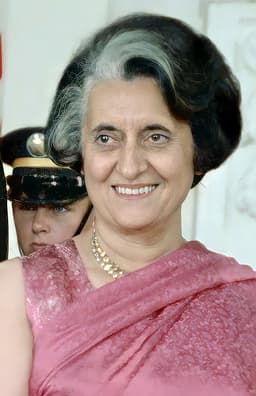
V. P. Singh
Politician · Modern
56.1Total
Basic Information
Born
1968
1931
Died
—
—
Era
Modern
Modern
Nationality
Finland
India
Occupation
Politician
Politician
Civilization
Western
Indian
Score Comparison
Military (10%)
50.0
29.8
Political (20%)
60.0
68.0
Influence (20%)
54.9
58.3
Legacy (20%)
41.7
52.0
Leadership (15%)
72.0
62.2
Strategy (15%)
43.6
60.0
TOTAL
53.3
56.1
Alexander Stubb — Complete Timeline
2008 AD
Minister for European Affairs and Foreign TradePolitical Action
Stubb served as Minister for European Affairs and Foreign Trade from 2008 to 2011. He represented Finland in EU affairs and promoted Finnish trade interests.
Finnish PoliticsMinisterial Role
Impact: national
2014 AD
Appointed Prime Minister of FinlandPolitical Action◆ Major
Stubb became Prime Minister of Finland in June 2014, succeeding Jyrki Katainen. He led a coalition government of the National Coalition Party, Social Democrats, and other parties until 2015.
Finnish PoliticsGovernment Formation
Impact: national
2024 AD
Elected President of FinlandPolitical Action
Stubb won the 2024 Finnish presidential election, defeating Pekka Haavisto in the second round. He became the 13th President of Finland, taking office in March 2024.
Finnish PoliticsPresidential Election
Impact: national
V. P. Singh — Complete Timeline
1987 AD
Exposed Bofors Scandal as Defence MinisterPolitical Action◆ Major
As Defence Minister, V. P. Singh initiated investigations into the Bofors howitzer deal, alleging corruption involving the Rajiv Gandhi government. This led to his dismissal from the cabinet and later fueled his political rise.
CorruptionBoforsDefence Scandal
Impact: national
1989 AD
Appointed Prime Minister of IndiaPolitical Action◆ Major
V. P. Singh became the seventh Prime Minister of India, leading the National Front coalition government. His appointment followed the defeat of Rajiv Gandhi's Congress party in the general election.
Indian PoliticsCoalition GovernmentNational Front
Impact: nationalconstructive
1990 AD
Implemented Mandal Commission RecommendationsReform
As Prime Minister, V. P. Singh announced the implementation of the Mandal Commission's recommendations, reserving 27% of central government jobs for Other Backward Classes. This decision sparked widespread protests and political realignment in India.
ReservationSocial JusticeCaste Politics
Impact: nationalconstructive
Resigned as Prime MinisterPolitical Action◆ Major
V. P. Singh resigned as Prime Minister after losing a vote of confidence in the Lok Sabha, following the withdrawal of support by the Bharatiya Janata Party. His resignation ended the National Front government.
Indian PoliticsGovernment CollapseVote of Confidence
Impact: nationaldestructive
Expert Analysis
Origins
Alexander Stubb was born on April 1, 1968, in Helsinki, Finland, to a middle-class family. His father was a diplomat, which exposed Stubb to international affairs from an early age. He studied political science at Furman University in the United States, earned a master's from the London School of Economics, and a PhD in international relations from the University of Cambridge. His academic background focused on European integration and the European Union.
Vishwanath Pratap Singh was born on June 25, 1931, in Allahabad, India, into a royal Rajput family. He inherited the title of Raja of Manda after his father's death. He was educated at the University of Allahabad and later at the University of Poona, where he studied law. His early life was steeped in feudal privilege, but he later adopted socialist ideals.
Rise to Power
Stubb's political career began in the European Parliament, where he served as a member from 2004 to 2008. He then became Finland's Minister for European Affairs and Foreign Trade from 2008 to 2011, gaining prominence as a pro-European voice. In 2014, he became Prime Minister of Finland, leading a coalition government. His rise was marked by his expertise in EU affairs and his charismatic, media-friendly style. However, his tenure as PM was short-lived; he lost the 2015 election and later served as Minister of Finance. In 2024, he won the presidency, defeating Pekka Haavisto in the second round.
V.P. Singh's political ascendance was rooted in his aristocratic background and entry into politics via the Indian National Congress. He served as a member of the Uttar Pradesh Legislative Assembly and later as Chief Minister of Uttar Pradesh. His reputation for honesty grew during his tenure as Union Minister of Commerce and then as Defence Minister, where he exposed the Bofors scandal, implicating the Rajiv Gandhi government. This catapulted him to national prominence and led to the formation of the Janata Dal. In 1989, he became Prime Minister at the head of the National Front coalition, defeating the Congress party.
Leadership & Governance
Stubb's leadership style is pragmatic and pro-European, emphasizing Finland's integration into the EU and NATO. As President, he focuses on foreign policy and national security, advocating for strong defense ties with Western allies. His governance approach is technocratic, relying on expertise and coalition-building. In contrast, V.P. Singh was a socialist reformer who prioritized social justice. His landmark decision was implementing the Mandal Commission recommendations in 1990, reserving 27% of central government jobs for Other Backward Classes (OBCs). This policy aimed to address historical caste discrimination but sparked widespread protests and political turmoil. Singh's governance was marked by his commitment to anti-corruption and empowerment of marginalized groups, but his coalition management was weak, leading to instability.
Triumph & Tragedy
Stubb's greatest success is becoming Finland's president in 2024, a role that allows him to shape foreign policy. He played a key role in Finland's NATO accession process, strengthening national security. His tragedy is his short and turbulent tenure as Prime Minister, where he failed to manage the economy and lost public support. His leadership score of 72.0 reflects his effectiveness in high office, but his military score of 50.0 indicates limited direct impact on defense.
V.P. Singh's triumph is the implementation of the Mandal Commission report, which fundamentally reshaped Indian politics and social structure by empowering OBCs. His exposure of the Bofors scandal also cemented his image as a crusader against corruption. His tragedy is his brief 11-month prime ministership, ending in resignation after losing a confidence vote. His inability to maintain coalition unity and the violent protests over Mandal (including self-immolations) marred his legacy. His political score of 68.0 and strategy score of 60.0 highlight his tactical skills but also his limitations in governance.
Character & Destiny
Stubb is characterized by his intellectual curiosity, charm, and adaptability. He is a polyglot (speaks five languages) and an avid triathlete, projecting an image of energy and competence. His destiny was shaped by his ability to reinvent himself after political setbacks. V.P. Singh, by contrast, was known for his moral rectitude, simple lifestyle, and stubbornness. His decision to implement Mandal despite opposition reflects his conviction, but also his inflexibility. His character earned him the moniker "Mr. Clean," but his inability to compromise led to his downfall.
Legacy
Stubb's legacy is still evolving. As president, he is shaping Finland's post-NATO identity and its stance on European security. His long-term impact will be measured by Finland's strengthened defense posture and his influence on EU policy. V.P. Singh's legacy is more defined: the Mandal Commission's implementation permanently altered Indian politics, empowering backward castes and reshaping electoral dynamics. His exposure of Bofors also set a precedent for accountability. However, his short tenure limited his ability to implement broader reforms. In the comparison, Singh's impact on India's social fabric is profound, whereas Stubb's influence is more institutional and still developing.
Conclusion
While Alexander Stubb has had a successful political career in a stable democracy, V.P. Singh's impact on India's social and political landscape is more transformative. Singh's implementation of the Mandal Commission was a seismic shift, empowering millions and altering the course of Indian democracy. Stubb's presidency is notable but lacks a comparable transformative event. Despite Singh's lower overall score (56.1 vs Stubb's 53.3), his legacy score of 52.0 reflects his enduring influence, whereas Stubb's legacy score of 41.7 indicates a more modest long-term impact. Thus, V.P. Singh had greater historical impact.
Rankings
🥇
V. P. SinghLeader
Mil: 29.8Pol: 68.0Inf: 58.3
56.1
🥈
Alexander Stubb
Mil: 50.0Pol: 60.0Inf: 54.9
53.3
+2.8 behind
How This Comparison Works
Algorithm
Each figure is scored on 6 dimensions (0—100 scale) based on structured historical data: Military (10%), Political (20%), Influence (20%), Legacy (20%), Leadership (15%), Strategy (15%). The weighted total produces the final ranking.
Data Sources
Scores are computed from structured sub-indicators in the database. Scale factors adjust for era (Ancient ×0.85, Modern ×1.0) and civilization size (Eastern ×1.05, Other ×0.80) to account for differences in population and military scale.
Maximum 3 Figures
Comparisons are limited to 2—3 figures to ensure readability and statistical meaningfulness.
Error Margins
±5 points per dimension — Sub-scores are derived from historical records with inherent uncertainty. Two figures within 5 points on a dimension should be considered roughly equivalent in that area.
Total Score Accuracy
±3 points overall — The weighted combination of 6 dimensions produces a total score with approximately ±3 points of uncertainty. Differences of less than 3 points are not statistically significant— the figures are effectively tied.
Known Limitations
- Historical records are incomplete and uneven across civilizations
- Figures from oral-tradition societies may be underrepresented
- Occupation labels can misclassify multi-role figures
- Scores measure capability and impact, not moral character
- Quantitative scoring is a comparison tool, not absolute truth
Capability Radar
Military (10%) — Battles & Warfare
Battles
31
46
Win Rate
31
48
Expansion
33
49
Political (20%) — Governance & Reform
Reform
55
75
Diplomacy
65
55
Economy
60
30
Influence (20%) — Cultural & Global Reach
Cultural
30
60
Global
40
50
Legacy (20%) — Historical Impact
Historical
30
65
Longevity
20
55
Leadership (15%) — Power & Stability
Tenure
60
40
Stability
60
20
Strategy (15%) — Tactics & Innovation
Strategy
39
52
Tactics
41
58
Reform
46
56
Similar Comparisons
Comments & Discussion
No comments yet. Be the first to share your thoughts!