Loading...
Jalal ad-Din Mingburnu vs Raymond of Toulouse
Jalal ad-Din Mingburnu leads by 3.2 pts · 2 figures compared
…

Jalal ad-Din Mingburnu
General · Medieval
54.7Total
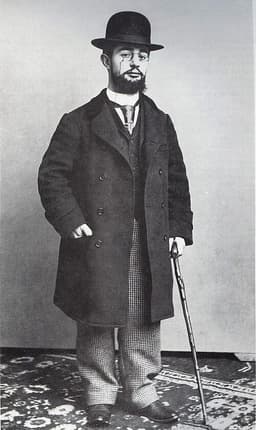
Raymond of Toulouse
General · Medieval
51.5Total
Basic Information
Born
1199
1041
Died
1231
1105
Era
Medieval
Medieval
Nationality
Khwarezmian Empire
France
Occupation
General
General
Civilization
Middle Eastern
Western
Score Comparison
Military (10%)
80.0
70.0
Political (20%)
35.1
40.8
Influence (20%)
58.0
51.0
Legacy (20%)
48.3
44.2
Leadership (15%)
54.2
62.0
Strategy (15%)
67.2
52.5
TOTAL
54.7
51.5
Jalal ad-Din Mingburnu — Complete Timeline
1221 AD
Battle of Indus RiverWar◆ Major
Jalal ad-Din Mingburnu fought a desperate battle against Genghis Khan at the Indus River. He defeated a Mongol detachment but was overwhelmed by the main Mongol army. He escaped by jumping his horse into the river, swimming to safety.
BattleMongolEscape
Impact: regional
1225 AD
Campaigns in Persia and the CaucasusWar◆ Major
Jalal ad-Din regrouped in India and then returned to Persia, where he defeated local rulers and established a new kingdom. He conquered parts of the Caucasus, including Georgia and Azerbaijan, and fought against the Seljuks of Rum.
CampaignsPersiaCaucasus
Impact: regional
1228 AD
Defeat by the Mongols at the Battle of IsfahanWar◆ Major
Jalal ad-Din was defeated by a Mongol army under Chormaqan near Isfahan. He lost his capital and was forced to flee again, this time to the Kurdish mountains, where he was eventually killed by local bandits.
BattleMongolDefeat
Impact: regionaltragic
1231 AD
Death in the MountainsOther◆ Major
Jalal ad-Din was murdered by Kurdish peasants in the mountains of Anatolia while fleeing the Mongols. His death ended the Khwarezmian resistance and marked the final extinction of the Khwarezmian Empire.
DeathAssassinationEnd of Empire
Impact: regionaltragic
Raymond of Toulouse — Complete Timeline
1096 AD
Leadership of the First CrusadeWar◆ Major
Raymond of Toulouse was a principal leader of the First Crusade, commanding a large army from southern France. He participated in the siege of Nicaea and the Battle of Dorylaeum, and was a key figure in the capture of Antioch in 1098.
CrusadeMilitary Campaign
Impact: regional
1098 AD
Siege of AntiochWar◆ Major
Raymond played a leading role in the siege of Antioch, which lasted from October 1097 to June 1098. After the city's capture, he claimed the citadel but was outmaneuvered by Bohemond, who became Prince of Antioch.
CrusadeSiege
Impact: regional
1099 AD
Refusal of the Crown of JerusalemPolitical Action◆ Major
After the capture of Jerusalem in July 1099, Raymond was offered the crown but refused, reportedly out of piety. Godfrey of Bouillon was elected instead, taking the title 'Advocate of the Holy Sepulchre.'
Crusader StatesPolitics
Impact: regional
1102 AD
Siege of TripoliWar◆ Major
Raymond began the siege of Tripoli in 1102, establishing a fortified camp called Mount Pilgrim. He died in 1105 before the city fell, but his efforts laid the groundwork for the creation of the County of Tripoli under his son.
CrusadeSiegeCrusader States
Impact: regional
Expert Analysis
Origins
Jalal ad-Din Mingburnu (born c. 1199) was the eldest son of Ala ad-Din Muhammad II, the Khwarezmshah of the vast Khwarezmian Empire. He grew up in a court marked by administrative complexity and military ambition, receiving training in cavalry warfare and Persian governance. His father's empire stretched from the Oxus to the Persian Gulf, but tensions with the rising Mongol Empire under Genghis Khan were escalating. Jalal ad-Din's early life was shaped by the impending storm.
Raymond of Toulouse (born c. 1041) was the count of Toulouse, one of the most powerful nobles in southern France. He inherited a rich territory with strong ties to the Church, having participated in the Reconquista in Spain. His upbringing was typical of Frankish nobility: military training, feudal administration, and devout Catholicism. Raymond was already in his 50s when Pope Urban II called the First Crusade in 1095, making him one of the older crusade leaders.
Rise to Power
Jalal ad-Din came to power in 1220 after his father's death during the Mongol invasion. The Khwarezmian Empire was collapsing, and Jalal ad-Din rallied remnants of the army, fleeing eastward. His first major test was the Battle of Indus River in 1221, where he fought Genghis Khan's main army. Though defeated, his personal bravery—swimming the Indus with his horse—earned him Mongol respect. He then spent years in exile in India and Persia, rebuilding a following.
Raymond of Toulouse emerged as a leader during the Council of Clermont (1095) and was among the first to take the cross. He led a large army from Provence across the Balkans and Anatolia, participating in the Siege of Nicaea (1097) and the Battle of Dorylaeum. His wealth and status made him a key figure in the crusader leadership, often clashing with Bohemond of Taranto over strategic decisions.
Leadership & Governance
Jalal ad-Din's leadership was reactive and nomadic. After his escape from India, he established a base in northwestern Iran and Azerbaijan, conquering parts of Georgia and Armenia. He imposed heavy taxes and conscripted locals, but his rule was fragile. He scored 54.2 in leadership, reflecting his ability to inspire loyalty among his Khwarezmian core but failure to integrate conquered peoples. His political score of 35.1 indicates poor state-building; he relied on plunder and short-term alliances.
Raymond of Toulouse governed as a feudal lord, maintaining strict discipline in his army and funding the crusade from his own coffers. He refused the crown of Jerusalem in 1099, preferring to continue his personal pilgrimage. His leadership score of 62.0 reflects his steadiness, but his political score of 40.8 shows limited ambition for power. He was more interested in establishing a principality around Tripoli, which he besieged from 1102 until his death.
Triumph & Tragedy
Jalal ad-Din's greatest success was his escape from the Mongols and his temporary reconquest of Persia and the Caucasus. He defeated a Mongol detachment at the Indus and later crushed Georgian forces. However, his tragedy was total: he could not unite the Islamic world against the Mongols. His defeat at Isfahan in 1228 by Chormaqan's army led to his flight and eventual murder by Kurdish peasants in 1231. His military score of 80.0 is high, but his legacy score of 48.3 reflects his failure to create a lasting state.
Raymond of Toulouse's triumph was his role in capturing Antioch (1098) and Jerusalem (1099). He was instrumental in the siege of Antioch, holding the citadel after its fall. His refusal of the crown of Jerusalem is seen as either piety or political miscalculation. His tragedy was his death in 1105 before Tripoli fell, leaving his siege incomplete. His military score of 70.0 is solid, but his legacy score of 44.2 is tempered by the ephemeral nature of his Tripolitan ambitions.
Character & Destiny
Jalal ad-Din was courageous but reckless. His decision to fight the Mongols in the open field, despite numerical inferiority, led to his downfall. He trusted few and often alienated potential allies through harsh treatment. His character was shaped by desperation; he fought to the end, but his inability to compromise sealed his fate. Historical assessments note his personal bravery but strategic shortsightedness.
Raymond was pious and stubborn. His refusal to accept the crown of Jerusalem may have stemmed from genuine religious devotion, but it also reflected his desire to avoid entanglements. He was a capable organizer but often quarreled with other crusader leaders. His destiny was to be a supporting actor rather than a king; he died at the siege of Tripoli, his goal unachieved.
Legacy
Jalal ad-Din is remembered as the last Khwarezmshah, a symbol of resistance against the Mongols. His story influenced Persian and Islamic historiography, but his political achievements were nil. The Khwarezmian Empire vanished after his death, and the Mongols consolidated control. His legacy score of 48.3 reflects his limited long-term impact.
Raymond of Toulouse's legacy is tied to the Crusader states. He founded the County of Tripoli, which lasted until 1289. His participation in the First Crusade helped establish Latin rule in the Levant. However, his personal contributions are often overshadowed by Godfrey of Bouillon and Bohemond. His legacy score of 44.2 is modest, but his influence on crusading institutions endures.
Conclusion
Jalal ad-Din Mingburnu scored 54.7 overall, Raymond of Toulouse 51.5. The gap of 3.2 points is narrow, but Jalal ad-Din's higher military score (80.0 vs 70.0) and strategic rating (67.2 vs 52.5) give him the edge in raw martial ability. However, Raymond's leadership (62.0 vs 54.2) and political acumen (40.8 vs 35.1) were more effective in achieving concrete, lasting outcomes. In terms of impact, Raymond's crusade shaped the medieval Middle East for two centuries, while Jalal ad-Din's resistance was a footnote in the Mongol conquest. Therefore, Raymond of Toulouse had greater historical impact, despite his lower total score.
Rankings
🥇
Jalal ad-Din MingburnuLeader
Mil: 80.0Pol: 35.1Inf: 58.0
54.7
🥈
Raymond of Toulouse
Mil: 70.0Pol: 40.8Inf: 51.0
51.5
+3.2 behind
How This Comparison Works
Algorithm
Each figure is scored on 6 dimensions (0—100 scale) based on structured historical data: Military (10%), Political (20%), Influence (20%), Legacy (20%), Leadership (15%), Strategy (15%). The weighted total produces the final ranking.
Data Sources
Scores are computed from structured sub-indicators in the database. Scale factors adjust for era (Ancient ×0.85, Modern ×1.0) and civilization size (Eastern ×1.05, Other ×0.80) to account for differences in population and military scale.
Maximum 3 Figures
Comparisons are limited to 2—3 figures to ensure readability and statistical meaningfulness.
Error Margins
±5 points per dimension — Sub-scores are derived from historical records with inherent uncertainty. Two figures within 5 points on a dimension should be considered roughly equivalent in that area.
Total Score Accuracy
±3 points overall — The weighted combination of 6 dimensions produces a total score with approximately ±3 points of uncertainty. Differences of less than 3 points are not statistically significant— the figures are effectively tied.
Known Limitations
- Historical records are incomplete and uneven across civilizations
- Figures from oral-tradition societies may be underrepresented
- Occupation labels can misclassify multi-role figures
- Scores measure capability and impact, not moral character
- Quantitative scoring is a comparison tool, not absolute truth
Capability Radar
Military (10%) — Battles & Warfare
Battles
75
55
Win Rate
60
50
Expansion
65
50
Political (20%) — Governance & Reform
Reform
30
30
Diplomacy
50
55
Economy
25
40
Influence (20%) — Cultural & Global Reach
Cultural
55
40
Global
55
35
Legacy (20%) — Historical Impact
Historical
60
55
Longevity
50
40
Leadership (15%) — Power & Stability
Tenure
55
60
Stability
20
45
Strategy (15%) — Tactics & Innovation
Strategy
70
60
Tactics
80
45
Reform
40
20
Similar Comparisons
Comments & Discussion
No comments yet. Be the first to share your thoughts!