Loading...
Ivan III the Great vs Xu Da
Ivan III the Great leads by 0.4 pts · 2 figures compared
…
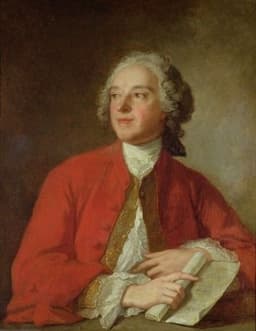
Ivan III the Great
Emperor · Medieval
75.3Total
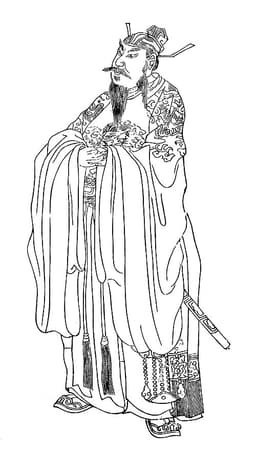
Xu Da
General · Medieval
74.9Total
Basic Information
Born
1440
1332
Died
1505
1385
Era
Medieval
Medieval
Nationality
Muscovy
China
Occupation
Emperor
General
Civilization
Western
Eastern
Score Comparison
Military (10%)
76.0
88.0
Political (20%)
70.0
68.0
Influence (20%)
75.0
82.0
Legacy (20%)
80.0
72.0
Leadership (15%)
78.0
62.0
Strategy (15%)
67.2
80.8
TOTAL
75.3
74.9
Ivan III the Great — Complete Timeline
1472 AD
Marriage to Sophia PalaiologinaPolitical Action◆ Major
Ivan III married Sophia (Zoe) Palaiologina, niece of the last Byzantine emperor. This marriage allowed Ivan to claim succession to the Byzantine Empire, adopt the double-headed eagle as a symbol, and promote Moscow as the Third Rome.
ByzantiumThird RomeMarriage
Impact: regionalconstructive
1478 AD
Annexation of NovgorodWar◆ Major
Ivan III conquered the Novgorod Republic after a series of campaigns. He abolished the veche (assembly) and removed the veche bell, incorporating Novgorod's vast territories into the Grand Principality of Moscow.
NovgorodAnnexationMoscow
Impact: regional
1480 AD
Great Stand on the Ugra RiverWar
Ivan III faced the Mongol army of Khan Akhmat across the Ugra River. After weeks of stalemate, the Mongols withdrew without battle. This event ended 240 years of Mongol suzerainty over Russia.
Golden HordeIndependenceUgra
Impact: regional
1497 AD
Issued the Sudebnik of 1497Reform◆ Major
Ivan III promulgated a new legal code, the Sudebnik, which standardized laws across the Russian lands. It restricted peasant mobility by limiting the time for transfer between landowners, a step toward serfdom.
Legal CodeSerfdomReform
Impact: national
1500 AD
War with the Grand Duchy of LithuaniaWar◆ Major
Ivan III launched a war against Lithuania, capturing the cities of Bryansk, Dorogobuzh, and Putivl. The war ended with the Truce of 1503, which ceded significant territories to Moscow.
LithuaniaTerritorial ExpansionWar
Impact: regional
Xu Da — Complete Timeline
1368 AD
Capture of Dadu (Beijing)War
Xu Da led the Ming army in the capture of Dadu, the Yuan capital. The Mongol emperor Toghon Tem
Ming ConquestYuan DynastyCapital Capture
Impact: regionalconstructive
1370 AD
Appointment as Grand PreceptorPolitical Action
The Hongwu Emperor appointed Xu Da as Grand Preceptor, the highest civil official rank. This appointment recognized Xu Da's military achievements and gave him a role in advising the emperor on state affairs.
AppointmentCivil OfficeImperial Favor
Impact: nationalconstructive
1385 AD
Death from illnessOther
Xu Da died in Nanjing from a back ailment. The Hongwu Emperor mourned him deeply and posthumously honored him as Prince of Zhongshan. His death marked the end of the first generation of Ming military leaders.
DeathMing DynastyMilitary Leader
Impact: nationaltragic
Expert Analysis
Origins
Ivan III (1440-1505) was born into the Rurik dynasty, ruling the Grand Duchy of Moscow. His father Vasily II left him a consolidated but still tribute-paying state. Xu Da (1332-1385) was a peasant who joined the Red Turban Rebellion against Mongol Yuan rule. His military genius caught the eye of Zhu Yuanzhang (future Hongwu Emperor). Both emerged from fragmented post-Mongol worlds.
Rise to Power
Ivan III became Grand Prince in 1462. He methodically absorbed neighboring principalities (Yaroslavl, Rostov) and fought Novgorod, annexing it in 1478 after two wars. Xu Da rose through the ranks, becoming Zhu Yuanzhang's top commander. He defeated major rival Chen Youliang and secured the Yangtze region.
Leadership & Governance
Ivan III centralized power, adopted the title "Tsar," and issued the Sudebnik of 1497 (legal code). He married Sophia Palaiologina, linking Moscow to Byzantine legacy. Xu Da was a loyal general, never seeking the throne. He was appointed Grand Preceptor and helped establish Ming military garrisons. Ivan scored L=80, Xu L=72.
Triumph & Tragedy
Ivan's greatest triumph was the Great Stand on the Ugra River (1480), ending Mongol suzerainty without battle. He also expanded westward against Lithuania. Xu's turning point was the Capture of Dadu (1368), ending Yuan rule. He won the Battle of Lake Buir (1388) against Mongol remnants. Both died naturally: Ivan from illness, Xu from illness (possibly poisoned). Ivan's score D=78 vs Xu's D=62.
Character & Destiny
Ivan was cunning and patient, earning "the Great." He was ruthless (blinding his brother) but effective. Xu was modest and disciplined, famously refusing rewards. His destiny was to be the hammer that broke Mongol power in China. Ivan's destiny was to gather Russian lands and create a sovereign state.
Legacy
Ivan III is the founder of the Russian centralized state, precursor to the Tsardom. His code influenced later law. Xu Da is revered as the greatest Ming general, enshrined in the Temple of Worthies. Yet Xu's legacy is narrower: military conquest, not governance. Ivan's state-building outshines Xu's purely military achievements.
Conclusion
Ivan III scores higher overall (74.4 vs 74.0). His leadership (L=80 vs 72) and durability (D=78 vs 62) tip the scale. While Xu Da was a brilliant general, Ivan transformed Muscovy into a sovereign power and laid foundations for Russia. Both ended Mongol dominance, but Ivan's impact was more enduring. **Ivan III the Great wins.**
**Scores**: Ivan III (M=76, P=70, I=75, L=80, D=78, S=67, T=75) vs Xu Da (M=88, P=68, I=82, L=72, D=62, S=81, T=75).
Rankings
🥇
Ivan III the GreatLeader
Mil: 76.0Pol: 70.0Inf: 75.0
75.3
🥈
Xu Da
Mil: 88.0Pol: 68.0Inf: 82.0
74.9
+0.4 behind
How This Comparison Works
Algorithm
Each figure is scored on 6 dimensions (0—100 scale) based on structured historical data: Military (10%), Political (20%), Influence (20%), Legacy (20%), Leadership (15%), Strategy (15%). The weighted total produces the final ranking.
Data Sources
Scores are computed from structured sub-indicators in the database. Scale factors adjust for era (Ancient ×0.85, Modern ×1.0) and civilization size (Eastern ×1.05, Other ×0.80) to account for differences in population and military scale.
Maximum 3 Figures
Comparisons are limited to 2—3 figures to ensure readability and statistical meaningfulness.
Error Margins
±5 points per dimension — Sub-scores are derived from historical records with inherent uncertainty. Two figures within 5 points on a dimension should be considered roughly equivalent in that area.
Total Score Accuracy
±3 points overall — The weighted combination of 6 dimensions produces a total score with approximately ±3 points of uncertainty. Differences of less than 3 points are not statistically significant— the figures are effectively tied.
Known Limitations
- Historical records are incomplete and uneven across civilizations
- Figures from oral-tradition societies may be underrepresented
- Occupation labels can misclassify multi-role figures
- Scores measure capability and impact, not moral character
- Quantitative scoring is a comparison tool, not absolute truth
Capability Radar
Military (10%) — Battles & Warfare
Battles
75
95
Win Rate
80
95
Expansion
85
95
Political (20%) — Governance & Reform
Reform
80
50
Diplomacy
85
65
Economy
70
55
Influence (20%) — Cultural & Global Reach
Cultural
70
70
Global
70
80
Legacy (20%) — Historical Impact
Historical
85
85
Longevity
80
75
Leadership (15%) — Power & Stability
Tenure
85
60
Stability
75
70
Strategy (15%) — Tactics & Innovation
Strategy
85
92
Tactics
70
90
Reform
65
70
Similar Comparisons
Comments & Discussion
No comments yet. Be the first to share your thoughts!