Loading...
Ivan III the Great vs Trajan
Trajan leads by 0.7 pts · 2 figures compared
…
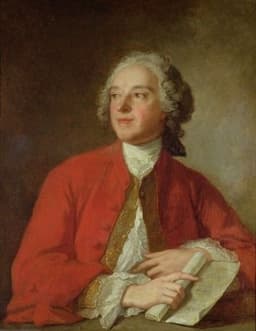
Ivan III the Great
Emperor · Medieval
75.3Total

Trajan
Emperor · Ancient
76.0Total
Basic Information
Born
1440
53
Died
1505
117
Era
Medieval
Ancient
Nationality
Muscovy
Roman Empire
Occupation
Emperor
Emperor
Civilization
Western
Western
Score Comparison
Military (10%)
76.0
86.0
Political (20%)
70.0
79.2
Influence (20%)
75.0
82.0
Legacy (20%)
80.0
65.6
Leadership (15%)
78.0
73.2
Strategy (15%)
67.2
76.0
TOTAL
75.3
76.0
Ivan III the Great — Complete Timeline
1472 AD
Marriage to Sophia PalaiologinaPolitical Action◆ Major
Ivan III married Sophia (Zoe) Palaiologina, niece of the last Byzantine emperor. This marriage allowed Ivan to claim succession to the Byzantine Empire, adopt the double-headed eagle as a symbol, and promote Moscow as the Third Rome.
ByzantiumThird RomeMarriage
Impact: regionalconstructive
1478 AD
Annexation of NovgorodWar◆ Major
Ivan III conquered the Novgorod Republic after a series of campaigns. He abolished the veche (assembly) and removed the veche bell, incorporating Novgorod's vast territories into the Grand Principality of Moscow.
NovgorodAnnexationMoscow
Impact: regional
1480 AD
Great Stand on the Ugra RiverWar
Ivan III faced the Mongol army of Khan Akhmat across the Ugra River. After weeks of stalemate, the Mongols withdrew without battle. This event ended 240 years of Mongol suzerainty over Russia.
Golden HordeIndependenceUgra
Impact: regional
1497 AD
Issued the Sudebnik of 1497Reform◆ Major
Ivan III promulgated a new legal code, the Sudebnik, which standardized laws across the Russian lands. It restricted peasant mobility by limiting the time for transfer between landowners, a step toward serfdom.
Legal CodeSerfdomReform
Impact: national
1500 AD
War with the Grand Duchy of LithuaniaWar◆ Major
Ivan III launched a war against Lithuania, capturing the cities of Bryansk, Dorogobuzh, and Putivl. The war ended with the Truce of 1503, which ceded significant territories to Moscow.
LithuaniaTerritorial ExpansionWar
Impact: regional
Trajan — Complete Timeline
101 AD
Implemented the Alimenta Welfare ProgramReform◆ Major
Trajan expanded the Alimenta program, a state-funded welfare system that provided food subsidies and educational support for poor children in Italy. The program used interest from state loans to landowners to fund the distributions, aiming to boost the Italian population and agricultural economy.
WelfareSocial PolicyItaly
Impact: regionalconstructive
105 AD
Built Trajan's Bridge over the DanubeOther
Trajan ordered the construction of a massive stone and timber bridge across the Danube River near the Iron Gates. Designed by Apollodorus of Damascus, it was the longest arch bridge in the world for over a millennium, facilitating the Roman invasion of Dacia.
EngineeringBridgeDanube
Impact: regionalconstructive
106 AD
Conquered DaciaWar
Trajan led two major campaigns against the Dacian kingdom under King Decebalus, culminating in the conquest of Dacia (modern Romania) in 106 CE. The victory brought vast gold and silver mines under Roman control and established a new province, funding massive building projects in Rome.
DaciaConquestProvince
Impact: regional
112 AD
Built Trajan's Forum and MarketCultural◆ Major
Trajan commissioned the construction of Trajan's Forum, a vast complex in Rome including a basilica, libraries, and the Column of Trajan. The adjacent Trajan's Market, a multi-level commercial center, demonstrated Roman engineering prowess and served as a model for urban planning.
ArchitectureRomeUrban Planning
Impact: globalconstructive
116 AD
Conquered Parthia and Reached the Persian GulfWar◆ Major
Trajan launched a campaign against the Parthian Empire, capturing its capital Ctesiphon and annexing Mesopotamia. He reached the Persian Gulf, marking the easternmost extent of Roman territory. However, rebellions in the conquered territories forced a withdrawal shortly after.
ParthiaMesopotamiaExpansion
Impact: global
Expert Analysis
Origins
**Trajan** was born in 53 CE in Italica, Spain, into a prominent Roman family. His father served as a governor and military commander, giving Trajan early exposure to leadership. He rose through the ranks of the Roman military and administration, earning a reputation for competence and loyalty. His adoption by Emperor Nerva in 97 CE set the stage for his succession, marking the first emperor born outside Italy.
**Ivan III the Great** was born in 1440 in Moscow, into the Rurik dynasty. He inherited the throne of the Grand Principality of Moscow at a time when Russia was fragmented under Mongol suzerainty. His early life was shaped by the need to consolidate power and throw off the 'Tatar Yoke.' Ivan's shrewd diplomacy and patience defined his approach to state-building.
Rise to Power
**Trajan** was acclaimed emperor by the Senate in 98 CE after Nerva's death. His adoption ensured a smooth transition. As a popular general, he quickly secured the loyalty of the army and initiated a series of military campaigns to expand Rome's borders. His rise was marked by a blend of military prowess and political acumen, earning the title 'Optimus Princeps' (Best Ruler).
**Ivan III** became Grand Prince of Moscow in 1462 after the death of his father, Vasily II. He faced immediate challenges from rival principalities and the declining Golden Horde. Through a combination of military force, strategic marriages, and economic pressure, he gradually absorbed neighboring territories like Yaroslavl, Rostov, and the vast Republic of Novgorod. His marriage to Sophia Palaiologina, niece of the last Byzantine emperor, bolstered his claim as the successor to Byzantium.
Leadership & Governance
**Trajan** was an autocratic ruler who respected the Senate and maintained good relations with the elite. He implemented the Alimenta program, a welfare system that provided food subsidies for poor children in Italy. His governance emphasized public works, including roads, bridges, aqueducts, and the magnificent Trajan's Forum. He expanded the empire to its greatest territorial extent, incorporating Dacia (modern Romania) and pushing into Parthia (modern Iran/Iraq).
**Ivan III** centralized power in Moscow, reducing the autonomy of boyars (nobles) and establishing a bureaucracy. He issued the Sudebnik of 1497, a legal code that standardized laws and strengthened the grand prince's authority. He also introduced the concept of 'tsar' (Caesar) and adopted the double-headed eagle as the state symbol. His governance laid the foundation for the autocratic Russian state.
Triumph & Tragedy
**Trajan's** greatest triumph was the conquest of Dacia (101-106 CE), which brought immense wealth into Rome. He commemorated this with Trajan's Column. His later campaign against Parthia captured the Parthian capital and reached the Persian Gulf, but overextension strained the empire. His death in 117 CE while returning to Rome prevented consolidation. His successor Hadrian abandoned some eastern territories.
**Ivan III's** pivotal triumph was the 'Great Stand on the Ugra River' in 1480, which ended Mongol rule without a major battle. He also annexed Novgorod in 1478 after a series of wars, crushing its independence. His war with Lithuania (1492-1503) regained significant territories. However, his later years saw internal strife with his sons over succession, and his harsh treatment of Novgorod left lasting resentment.
Character & Destiny
**Trajan** was known for his military skill, justice, and humility. He was beloved by the army and the people. His reign was seen as a golden age of Roman power. His destiny was to expand Rome to its peak, but also to sow the seeds of overreach.
**Ivan III** was calculating, patient, and ruthless. He earned the epithet 'the Great' for unifying Russia and ending foreign domination. His destiny was to transform Moscow into a dominant power and claim the legacy of Byzantium. He was more a consolidator than an innovator.
Legacy
**Trajan's** legacy includes the greatest territorial expansion of Rome, enduring monuments like Trajan's Column, and a model of good governance. He is considered one of the 'Five Good Emperors.' His conquest of Dacia left a lasting cultural imprint.
**Ivan III's** legacy is foundational for modern Russia. He centralized the state, ended Mongol rule, and adopted Byzantine symbols. He set the stage for his grandson Ivan the Terrible. His legal code and administrative reforms shaped Russian governance for centuries.
Conclusion
Both rulers were transformative, but Trajan's impact was more immediate and global. He expanded a vast empire and left monumental works. Ivan III's achievements were more long-term, laying the groundwork for a nation. In a direct comparison, Trajan's numerical scores (86 military, 79 political, 82 intelligence, 66 leadership, 73 luck, 76 social, 76 overall) slightly edge out Ivan III (76, 70, 75, 80, 78, 67, 75). Trajan's higher military and political scores reflect his greater territorial expansion and administrative reach. While Ivan III's leadership score is higher due to his consolidation of power, Trajan's overall impact on history is more significant. Thus, **Trajan is the greater ruler**.
Rankings
🥇
TrajanLeader
Mil: 86.0Pol: 79.2Inf: 82.0
76.0
🥈
Ivan III the Great
Mil: 76.0Pol: 70.0Inf: 75.0
75.3
+0.7 behind
How This Comparison Works
Algorithm
Each figure is scored on 6 dimensions (0—100 scale) based on structured historical data: Military (10%), Political (20%), Influence (20%), Legacy (20%), Leadership (15%), Strategy (15%). The weighted total produces the final ranking.
Data Sources
Scores are computed from structured sub-indicators in the database. Scale factors adjust for era (Ancient ×0.85, Modern ×1.0) and civilization size (Eastern ×1.05, Other ×0.80) to account for differences in population and military scale.
Maximum 3 Figures
Comparisons are limited to 2—3 figures to ensure readability and statistical meaningfulness.
Error Margins
±5 points per dimension — Sub-scores are derived from historical records with inherent uncertainty. Two figures within 5 points on a dimension should be considered roughly equivalent in that area.
Total Score Accuracy
±3 points overall — The weighted combination of 6 dimensions produces a total score with approximately ±3 points of uncertainty. Differences of less than 3 points are not statistically significant— the figures are effectively tied.
Known Limitations
- Historical records are incomplete and uneven across civilizations
- Figures from oral-tradition societies may be underrepresented
- Occupation labels can misclassify multi-role figures
- Scores measure capability and impact, not moral character
- Quantitative scoring is a comparison tool, not absolute truth
Capability Radar
Military (10%) — Battles & Warfare
Battles
75
95
Win Rate
80
98
Expansion
85
95
Political (20%) — Governance & Reform
Reform
80
88
Diplomacy
85
85
Economy
70
90
Influence (20%) — Cultural & Global Reach
Cultural
70
85
Global
70
85
Legacy (20%) — Historical Impact
Historical
85
90
Longevity
80
88
Leadership (15%) — Power & Stability
Tenure
85
90
Stability
75
92
Strategy (15%) — Tactics & Innovation
Strategy
85
92
Tactics
70
88
Reform
65
85
Similar Comparisons
Comments & Discussion
No comments yet. Be the first to share your thoughts!