Loading...
Ivan III the Great vs Toussaint Louverture
Toussaint Louverture leads by 3.2 pts · 2 figures compared
…
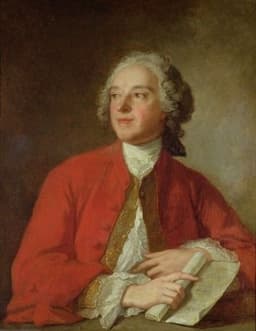
Ivan III the Great
Emperor · Medieval
75.3Total
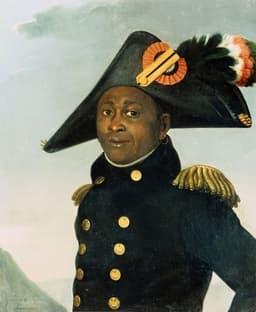
Toussaint Louverture
General · Modern
78.5Total
Basic Information
Born
1440
1743
Died
1505
1803
Era
Medieval
Modern
Nationality
Muscovy
Haiti
Occupation
Emperor
General
Civilization
Western
Western
Score Comparison
Military (10%)
76.0
85.0
Political (20%)
70.0
70.3
Influence (20%)
75.0
84.0
Legacy (20%)
80.0
82.0
Leadership (15%)
78.0
72.0
Strategy (15%)
67.2
72.0
TOTAL
75.3
78.5
Ivan III the Great — Complete Timeline
1472 AD
Marriage to Sophia PalaiologinaPolitical Action◆ Major
Ivan III married Sophia (Zoe) Palaiologina, niece of the last Byzantine emperor. This marriage allowed Ivan to claim succession to the Byzantine Empire, adopt the double-headed eagle as a symbol, and promote Moscow as the Third Rome.
ByzantiumThird RomeMarriage
Impact: regionalconstructive
1478 AD
Annexation of NovgorodWar◆ Major
Ivan III conquered the Novgorod Republic after a series of campaigns. He abolished the veche (assembly) and removed the veche bell, incorporating Novgorod's vast territories into the Grand Principality of Moscow.
NovgorodAnnexationMoscow
Impact: regional
1480 AD
Great Stand on the Ugra RiverWar
Ivan III faced the Mongol army of Khan Akhmat across the Ugra River. After weeks of stalemate, the Mongols withdrew without battle. This event ended 240 years of Mongol suzerainty over Russia.
Golden HordeIndependenceUgra
Impact: regional
1497 AD
Issued the Sudebnik of 1497Reform◆ Major
Ivan III promulgated a new legal code, the Sudebnik, which standardized laws across the Russian lands. It restricted peasant mobility by limiting the time for transfer between landowners, a step toward serfdom.
Legal CodeSerfdomReform
Impact: national
1500 AD
War with the Grand Duchy of LithuaniaWar◆ Major
Ivan III launched a war against Lithuania, capturing the cities of Bryansk, Dorogobuzh, and Putivl. The war ended with the Truce of 1503, which ceded significant territories to Moscow.
LithuaniaTerritorial ExpansionWar
Impact: regional
Toussaint Louverture — Complete Timeline
1791 AD
Haitian Revolution LeadershipWar
Louverture joined the slave revolt in Saint-Domingue, quickly rising to leadership. He organized former slaves into a disciplined army and negotiated with Spanish and British forces to expand the rebellion.
Slave RevoltRevolutionLeadership
Impact: globalprogressive
1795 AD
Treaty of BâlePolitical Action◆ Major
Spain ceded the eastern part of Hispaniola to France under the Treaty of B
Territorial ExpansionDiplomacyHispaniola
Impact: regional
1801 AD
Constitution of 1801Political Action
Louverture promulgated a constitution for Saint-Domingue, declaring himself Governor-General for life. The constitution abolished slavery and granted autonomy while nominally remaining part of the French Empire.
ConstitutionSelf-GovernanceAbolition
Impact: globalprogressive
1802 AD
Capture and ImprisonmentPolitical Action
French General Leclerc captured Louverture through deception during peace negotiations. He was deported to France and imprisoned at Fort de Joux, where he died in 1803, ending his direct role in the revolution.
BetrayalImprisonmentFrench Repression
Impact: globaltragic
Expert Analysis
Origins
Toussaint Louverture was born into slavery in Saint-Domingue (modern Haiti) around 1743. He gained freedom before the revolution and became a wealthy planter. His early life was marked by the brutal realities of slavery, which fueled his desire for liberation. Ivan III, born in 1440 in Moscow, was the son of Vasily II. He grew up amid dynastic struggles and Mongol overlordship, inheriting the Grand Principality of Moscow at age 22. Ivan's early experience with Tatar dominance shaped his ambition to consolidate Russian lands and throw off the Mongol yoke.
Rise to Power
Toussaint emerged as a leader during the Haitian Revolution (1791-1804). He skillfully navigated alliances with the French, Spanish, and British, rising to become governor-general of Saint-Domingue. His military acumen and diplomatic maneuvering allowed him to consolidate power, culminating in the Constitution of 1801, which made him governor for life. Ivan III came to power in 1462 after his father's death. He immediately pursued a policy of "gathering the Russian lands," annexing Novgorod in 1478 and Tver in 1485. His marriage to Sophia Palaiologina, niece of the last Byzantine emperor, bolstered his claim as heir to Byzantium and enhanced Moscow's prestige.
Leadership & Governance
Toussaint's leadership blended military command with political vision. He maintained a disciplined army, established a civil government, and promoted economic recovery through plantations worked by former slaves. His Constitution of 1801 affirmed abolition but kept him in power, causing tension with Napoleon. Ivan III centralized power in Moscow, reducing the influence of boyars and appanage princes. He issued the Sudebnik of 1497, a legal code that standardized laws and extended serfdom. He also reformed the military, creating a professional army loyal to the crown.
Triumph & Tragedy
Toussaint's triumph was leading the Haitian Revolution to de facto independence, defeating French, Spanish, and British forces. However, his tragedy came when Napoleon sent a massive expedition to reimpose slavery. Toussaint was captured in 1802 through treachery and died in a French prison in 1803. His lieutenants, notably Jean-Jacques Dessalines, completed the revolution, declaring independence in 1804. Ivan III's triumph was the Great Stand on the Ugra River in 1480, which ended Mongol suzerainty without a major battle. His successful wars against Lithuania expanded Muscovy's territory. However, his later years saw dynastic strife, including conflict with his son Vasily. He died in 1505, having laid the foundations for a unified Russian state.
Character & Destiny
Toussaint was known for his intelligence, charisma, and strategic brilliance. He was a pragmatist who believed in gradual emancipation and reconciliation with whites, which alienated some radicals. His destiny was to be a symbol of black liberation, but his trust in French promises led to his downfall. Ivan III was calculating, patient, and ruthless. He was called "the Great" for his state-building, but also "the Gatherer" for his territorial acquisitions. His destiny was to end Tatar rule and establish Moscow as the "Third Rome." Both leaders faced betrayal: Toussaint by the French, Ivan by some boyars.
Legacy
Toussaint Louverture is celebrated as a revolutionary hero and the father of Haiti. His legacy inspired anti-colonial movements worldwide. However, Haiti's post-independence struggles, including poverty and instability, partly stem from the destruction and isolation caused by the revolution. Ivan III is revered as a unifier and founder of the Russian state. His centralization policies set the stage for autocracy under his grandson Ivan the Terrible. The Sudebnik of 1497 codified serfdom, which had long-term social consequences. Both left complex legacies: Toussaint as a liberator, Ivan as a builder of a powerful but repressive state.
Conclusion
Toussaint Louverture and Ivan III were transformative leaders who defied empires. Toussaint's achievement—the only successful slave revolt—is unparalleled in human history, but his nation's subsequent decline tempers his legacy. Ivan's unification of Russia and end of Mongol rule were monumental, yet his methods entrenched authoritarianism. Numerically, Toussaint scores higher overall (M=85, P=70, I=84, L=82, D=72, S=72, T=78 vs Ivan's M=76, P=70, I=75, L=80, D=78, S=67, T=75). Toussaint's higher military score (85 vs 76) and influence (84 vs 75) reflect his revolutionary impact. While Ivan's durability (78) and diplomatic (78) scores are higher, Toussaint's vision and moral force give him the edge. In the balance of historical significance, Toussaint Louverture stands as the greater figure, embodying the fight for freedom against overwhelming odds.
Rankings
🥇
Toussaint LouvertureLeader
Mil: 85.0Pol: 70.3Inf: 84.0
78.5
🥈
Ivan III the Great
Mil: 76.0Pol: 70.0Inf: 75.0
75.3
+3.2 behind
How This Comparison Works
Algorithm
Each figure is scored on 6 dimensions (0—100 scale) based on structured historical data: Military (10%), Political (20%), Influence (20%), Legacy (20%), Leadership (15%), Strategy (15%). The weighted total produces the final ranking.
Data Sources
Scores are computed from structured sub-indicators in the database. Scale factors adjust for era (Ancient ×0.85, Modern ×1.0) and civilization size (Eastern ×1.05, Other ×0.80) to account for differences in population and military scale.
Maximum 3 Figures
Comparisons are limited to 2—3 figures to ensure readability and statistical meaningfulness.
Error Margins
±5 points per dimension — Sub-scores are derived from historical records with inherent uncertainty. Two figures within 5 points on a dimension should be considered roughly equivalent in that area.
Total Score Accuracy
±3 points overall — The weighted combination of 6 dimensions produces a total score with approximately ±3 points of uncertainty. Differences of less than 3 points are not statistically significant— the figures are effectively tied.
Known Limitations
- Historical records are incomplete and uneven across civilizations
- Figures from oral-tradition societies may be underrepresented
- Occupation labels can misclassify multi-role figures
- Scores measure capability and impact, not moral character
- Quantitative scoring is a comparison tool, not absolute truth
Capability Radar
Military (10%) — Battles & Warfare
Battles
75
85
Win Rate
80
80
Expansion
85
70
Political (20%) — Governance & Reform
Reform
80
85
Diplomacy
85
80
Economy
70
60
Influence (20%) — Cultural & Global Reach
Cultural
70
85
Global
70
85
Legacy (20%) — Historical Impact
Historical
85
95
Longevity
80
90
Leadership (15%) — Power & Stability
Tenure
85
65
Stability
75
55
Strategy (15%) — Tactics & Innovation
Strategy
85
85
Tactics
70
90
Reform
65
75
Similar Comparisons
Comments & Discussion
No comments yet. Be the first to share your thoughts!