Loading...
Ivan III the Great vs Tokugawa Ieyasu
Tokugawa Ieyasu leads by 6.5 pts · 2 figures compared
…
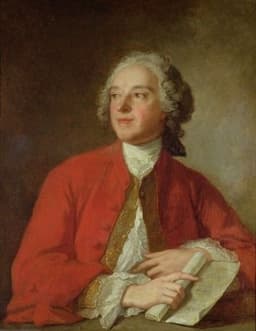
Ivan III the Great
Emperor · Medieval
75.3Total
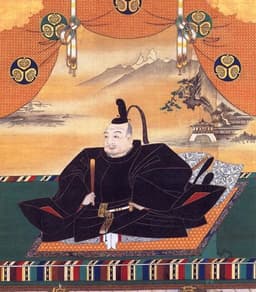
Tokugawa Ieyasu
General · Modern
81.8Total
Basic Information
Born
1440
1543
Died
1505
1616
Era
Medieval
Modern
Nationality
Muscovy
Japan
Occupation
Emperor
General
Civilization
Western
Eastern
Score Comparison
Military (10%)
76.0
78.0
Political (20%)
70.0
82.0
Influence (20%)
75.0
88.0
Legacy (20%)
80.0
75.0
Leadership (15%)
78.0
85.0
Strategy (15%)
67.2
82.0
TOTAL
75.3
81.8
Ivan III the Great — Complete Timeline
1472 AD
Marriage to Sophia PalaiologinaPolitical Action◆ Major
Ivan III married Sophia (Zoe) Palaiologina, niece of the last Byzantine emperor. This marriage allowed Ivan to claim succession to the Byzantine Empire, adopt the double-headed eagle as a symbol, and promote Moscow as the Third Rome.
ByzantiumThird RomeMarriage
Impact: regionalconstructive
1478 AD
Annexation of NovgorodWar◆ Major
Ivan III conquered the Novgorod Republic after a series of campaigns. He abolished the veche (assembly) and removed the veche bell, incorporating Novgorod's vast territories into the Grand Principality of Moscow.
NovgorodAnnexationMoscow
Impact: regional
1480 AD
Great Stand on the Ugra RiverWar
Ivan III faced the Mongol army of Khan Akhmat across the Ugra River. After weeks of stalemate, the Mongols withdrew without battle. This event ended 240 years of Mongol suzerainty over Russia.
Golden HordeIndependenceUgra
Impact: regional
1497 AD
Issued the Sudebnik of 1497Reform◆ Major
Ivan III promulgated a new legal code, the Sudebnik, which standardized laws across the Russian lands. It restricted peasant mobility by limiting the time for transfer between landowners, a step toward serfdom.
Legal CodeSerfdomReform
Impact: national
1500 AD
War with the Grand Duchy of LithuaniaWar◆ Major
Ivan III launched a war against Lithuania, capturing the cities of Bryansk, Dorogobuzh, and Putivl. The war ended with the Truce of 1503, which ceded significant territories to Moscow.
LithuaniaTerritorial ExpansionWar
Impact: regional
Tokugawa Ieyasu — Complete Timeline
1600 AD
Battle of SekigaharaWar
Tokugawa Ieyasu led the Eastern Army to victory over Ishida Mitsunari's Western Army at Sekigahara. This decisive battle ended the Sengoku period and established Ieyasu as the supreme military ruler of Japan, paving the way for the Tokugawa shogunate.
Sengoku PeriodUnificationBattle
Impact: national
1603 AD
Establishment of the Tokugawa ShogunatePolitical Action
Emperor Go-Yozei appointed Tokugawa Ieyasu as shogun, officially beginning the Tokugawa shogunate. Ieyasu established his government in Edo (modern Tokyo), centralizing military and political power under his family's control.
ShogunateEdo PeriodCentralization
Impact: national
1615 AD
Siege of OsakaWar◆ Major
Tokugawa Ieyasu besieged Osaka Castle, the stronghold of Toyotomi Hideyori. The castle fell, and Hideyori committed suicide. This campaign eliminated the last major opposition to Tokugawa rule, solidifying the shogunate's control over Japan.
Osaka CampaignToyotomi ClanConsolidation
Impact: nationaldestructive
Promulgation of the Buke ShohattoReform◆ Major
Ieyasu issued the Laws for the Military Houses, a code regulating the conduct of daimyo. It restricted castle construction, required alternate attendance in Edo, and prohibited alliances without shogunal permission. This law helped control the feudal lords.
Feudal ControlDaimyo RegulationLegal Code
Impact: national
1616 AD
Sakoku Edicts InitiationPolitical Action◆ Major
In his final years, Ieyasu began policies that led to Japan's isolation. He restricted foreign trade to specific ports and expelled Christian missionaries. These measures, expanded by successors, resulted in the sakoku policy that isolated Japan for over 200 years.
IsolationismForeign PolicyChristianity
Impact: national
Expert Analysis
Origins
Tokugawa Ieyasu (1543–1616) was born into the Matsudaira clan, a minor samurai family in Mikawa Province. His childhood was marked by conflict, as he was held hostage by the Oda and Imagawa clans, which taught him patience and strategic thinking. Ivan III (1440–1505), known as Ivan the Great, was born into the Rurik dynasty, Grand Prince of Moscow. He inherited a principality that was a vassal of the Mongol Golden Horde, but he possessed a strong will to centralize power and throw off the Mongol yoke.
Rise to Power
Ieyasu rose through alliances and military prowess. He allied with Oda Nobunaga and later Toyotomi Hideyoshi, expanding his domain. After Hideyoshi's death, he defeated rivals at the Battle of Sekigahara (1600), securing hegemony. Ivan III consolidated power by annexing neighboring Russian principalities, notably Novgorod (1478), and refused tribute to the Golden Horde, culminating in the Great Stand on the Ugra River (1480), ending Mongol rule.
Leadership & Governance
Ieyasu established the Tokugawa shogunate with a centralized feudal system. He issued the Buke Shohatto (laws for samurai) and controlled daimyo through sankin kotai (alternate attendance) and land redistribution. He initiated the Sakoku edicts to limit foreign influence. Ivan III centralized the Russian state, reduced the power of boyars, issued the Sudebnik of 1497 (a legal code), and adopted the title "Tsar." He married Sophia Palaiologina, linking Moscow to Byzantine heritage.
Triumph & Tragedy
Ieyasu's triumph was the Siege of Osaka (1615), which destroyed the Toyotomi clan, solidifying Tokugawa rule. His tragedy was the execution of his son and heir, Matsudaira Nobuyasu, forced by Oda Nobunaga. Ivan III's triumph was the annexation of Novgorod and ending Mongol dominance. His tragedy was the conflict with his son Ivan Ivanovich, leading to his death in a fit of rage, leaving a troubled succession.
Character & Destiny
Ieyasu was cautious, patient, and calculating. His philosophy of "the strong survive" guided his actions. He believed in order and stability, leading to a 250-year peace. Ivan III was ambitious, ruthless, and visionary. He saw himself as the defender of Orthodoxy and the heir to Byzantium. His destiny was to forge a unified Russian state, but his harshness created internal tensions.
Legacy
Ieyasu's legacy is the Tokugawa shogunate, which brought prolonged peace, economic growth, and cultural development (Edo period). However, his isolationist policies later hindered Japan. Ivan III's legacy is the centralized Russian state, the end of Mongol rule, and the foundation for the Russian Empire. He is celebrated as a national unifier, but his authoritarian methods set precedents for autocracy.
Conclusion
Tokugawa Ieyasu scores higher overall (82 vs 75.5) due to his superior military, political, and institutional scores. He achieved a longer-lasting peace and more stable governance. Ivan III was a transformative figure but left a more contested legacy. Ieyasu's ability to establish a system that endured for centuries edges him ahead.
Rankings
🥇
Tokugawa IeyasuLeader
Mil: 78.0Pol: 82.0Inf: 88.0
81.8
🥈
Ivan III the Great
Mil: 76.0Pol: 70.0Inf: 75.0
75.3
+6.5 behind
How This Comparison Works
Algorithm
Each figure is scored on 6 dimensions (0—100 scale) based on structured historical data: Military (10%), Political (20%), Influence (20%), Legacy (20%), Leadership (15%), Strategy (15%). The weighted total produces the final ranking.
Data Sources
Scores are computed from structured sub-indicators in the database. Scale factors adjust for era (Ancient ×0.85, Modern ×1.0) and civilization size (Eastern ×1.05, Other ×0.80) to account for differences in population and military scale.
Maximum 3 Figures
Comparisons are limited to 2—3 figures to ensure readability and statistical meaningfulness.
Error Margins
±5 points per dimension — Sub-scores are derived from historical records with inherent uncertainty. Two figures within 5 points on a dimension should be considered roughly equivalent in that area.
Total Score Accuracy
±3 points overall — The weighted combination of 6 dimensions produces a total score with approximately ±3 points of uncertainty. Differences of less than 3 points are not statistically significant— the figures are effectively tied.
Known Limitations
- Historical records are incomplete and uneven across civilizations
- Figures from oral-tradition societies may be underrepresented
- Occupation labels can misclassify multi-role figures
- Scores measure capability and impact, not moral character
- Quantitative scoring is a comparison tool, not absolute truth
Capability Radar
Military (10%) — Battles & Warfare
Battles
75
85
Win Rate
80
90
Expansion
85
75
Political (20%) — Governance & Reform
Reform
80
90
Diplomacy
85
85
Economy
70
88
Influence (20%) — Cultural & Global Reach
Cultural
70
85
Global
70
70
Legacy (20%) — Historical Impact
Historical
85
90
Longevity
80
95
Leadership (15%) — Power & Stability
Tenure
85
95
Stability
75
95
Strategy (15%) — Tactics & Innovation
Strategy
85
92
Tactics
70
88
Reform
65
80
Similar Comparisons
Comments & Discussion
No comments yet. Be the first to share your thoughts!