Loading...
Ivan III the Great vs Theodosius I
Theodosius I leads by 0.7 pts · 2 figures compared
…
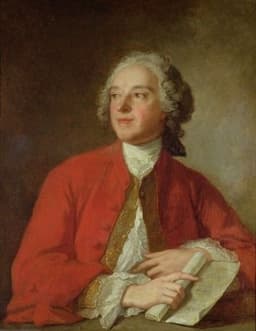
Ivan III the Great
Emperor · Medieval
75.3Total

Theodosius I
Emperor · Ancient
76.0Total
Basic Information
Born
1440
347
Died
1505
395
Era
Medieval
Ancient
Nationality
Muscovy
Roman Empire
Occupation
Emperor
Emperor
Civilization
Western
Western
Score Comparison
Military (10%)
76.0
72.5
Political (20%)
70.0
65.0
Influence (20%)
75.0
85.0
Legacy (20%)
80.0
90.0
Leadership (15%)
78.0
68.0
Strategy (15%)
67.2
50.0
TOTAL
75.3
76.0
Ivan III the Great — Complete Timeline
1472 AD
Marriage to Sophia PalaiologinaPolitical Action◆ Major
Ivan III married Sophia (Zoe) Palaiologina, niece of the last Byzantine emperor. This marriage allowed Ivan to claim succession to the Byzantine Empire, adopt the double-headed eagle as a symbol, and promote Moscow as the Third Rome.
ByzantiumThird RomeMarriage
Impact: regionalconstructive
1478 AD
Annexation of NovgorodWar◆ Major
Ivan III conquered the Novgorod Republic after a series of campaigns. He abolished the veche (assembly) and removed the veche bell, incorporating Novgorod's vast territories into the Grand Principality of Moscow.
NovgorodAnnexationMoscow
Impact: regional
1480 AD
Great Stand on the Ugra RiverWar
Ivan III faced the Mongol army of Khan Akhmat across the Ugra River. After weeks of stalemate, the Mongols withdrew without battle. This event ended 240 years of Mongol suzerainty over Russia.
Golden HordeIndependenceUgra
Impact: regional
1497 AD
Issued the Sudebnik of 1497Reform◆ Major
Ivan III promulgated a new legal code, the Sudebnik, which standardized laws across the Russian lands. It restricted peasant mobility by limiting the time for transfer between landowners, a step toward serfdom.
Legal CodeSerfdomReform
Impact: national
1500 AD
War with the Grand Duchy of LithuaniaWar◆ Major
Ivan III launched a war against Lithuania, capturing the cities of Bryansk, Dorogobuzh, and Putivl. The war ended with the Truce of 1503, which ceded significant territories to Moscow.
LithuaniaTerritorial ExpansionWar
Impact: regional
Theodosius I — Complete Timeline
380 AD
Edict of ThessalonicaPolitical Action
Theodosius I issued the Edict of Thessalonica, declaring Nicene Christianity the official state religion of the Roman Empire. All other forms of Christianity were deemed heretical, and pagan practices were increasingly suppressed.
ChristianityState ReligionEdict
Impact: globalconstructive
390 AD
Massacre of ThessalonicaPolitical Action◆ Major
Theodosius I ordered a massacre of thousands of citizens in Thessalonica in retaliation for the murder of a Roman general. The massacre led to his excommunication by Bishop Ambrose of Milan, and he later performed public penance.
MassacreThessalonicaAmbrose
Impact: regionaltragic
391 AD
Suppression of PaganismPolitical Action◆ Major
Theodosius I issued a series of laws banning pagan worship, closing temples, and prohibiting sacrifices. The Olympic Games were abolished, and the Serapeum in Alexandria was destroyed. These actions accelerated the decline of paganism in the empire.
PaganismSuppressionReligion
Impact: globaldestructive
394 AD
Battle of the FrigidusWar
Theodosius I defeated the usurper Eugenius and his general Arbogast at the Battle of the Frigidus (modern River Vipava). The victory reunited the Roman Empire under a single ruler for the last time before its permanent division.
Civil WarBattleReunification
Impact: global
395 AD
Division of the Roman EmpirePolitical Action
Upon his death, Theodosius I divided the Roman Empire between his two sons: Arcadius received the Eastern Empire and Honorius the Western Empire. This division became permanent, leading to the separate histories of the Byzantine and Western Roman Empires.
DivisionSuccessionEast-West
Impact: global
Expert Analysis
Origins
Theodosius I (347–395 AD) was born in Cauca, Hispania, into a high-ranking Roman military family. His father, Count Theodosius, was a distinguished general under Emperor Valentinian I. Theodosius himself rose through military ranks before being elevated to co-emperor in 379 AD. His background was thoroughly Roman, steeped in the classical traditions of the late empire. In contrast, Ivan III the Great (1440–1505) was born in Moscow as the son of Vasily II, Grand Prince of Moscow. His early life was marked by the feudal chaos of the Rus' principalities and the ongoing subjugation to the Mongol Golden Horde. Ivan's lineage traced back to Rurik, the legendary founder of the Rus', but his realm was fragmented and tributory. Theodosius's origins were in the heart of a still-unified empire, while Ivan's were in a periphery struggling for survival and identity.
Rise to Power
Theodosius's rise was swift. After the disastrous Battle of Adrianople (378 AD), Emperor Gratian appointed him as co-emperor for the East in 379 AD, tasked with restoring order after the Gothic invasion. Theodosius skillfully negotiated a peace with the Goths, settling them as federates within the empire. He consolidated power by defeating usurpers like Magnus Maximus, and by 392 AD, after the death of Valentinian II, he became the sole emperor of the Roman Empire. Ivan III's rise was more gradual and rooted in dynastic struggle. He became Grand Prince of Moscow in 1462 after his father's death. His early reign focused on consolidating power within the Rus' lands, exploiting the weakening of the Mongol Horde and the internal divisions among rival principalities. Ivan's key early move was the annexation of Novgorod in 1478, which gave him vast territories and wealth. While Theodosius ascended through imperial appointment and military victory, Ivan rose through patient accumulation of territory and shrewd political maneuvering.
Leadership & Governance
Theodosius is best known for his religious policies. He issued the Edict of Thessalonica (380 AD), making Nicene Christianity the state religion of the Roman Empire, effectively banning Arianism and paganism. He actively suppressed pagan temples and practices, and convened the First Council of Constantinople (381 AD) to enforce orthodoxy. His governance was authoritarian and theocratic, but he also maintained Roman legal and administrative structures. Ivan III's governance was transformative for Russia. He centralized power, reducing the autonomy of boyars and appanage princes. He issued the Sudebnik of 1497, a legal code that standardized laws and began the enserfment of peasants by restricting their movement. His marriage to Sophia Palaiologina, niece of the last Byzantine emperor, allowed him to claim the legacy of Byzantium, adopting the double-headed eagle and the title 'Tsar'. Ivan's governance laid the foundations for the autocratic Russian state. Theodosius's rule was about ideological consolidation, while Ivan's was about territorial and administrative unification.
Triumph & Tragedy
Theodosius's greatest triumph was the Battle of the Frigidus (394 AD), where he defeated the pagan usurper Eugenius, securing Christian dominance. His tragedy was the Massacre of Thessalonica (390 AD), where he ordered a brutal slaughter of thousands in response to a riot, for which Bishop Ambrose of Milan forced him to do public penance. His decision to divide the empire between his sons Arcadius and Honorius after his death led to the permanent split of the Roman Empire, a fateful act. Ivan III's triumph was the Great Stand on the Ugra River (1480), which ended Mongol suzerainty without a major battle, symbolizing Russian independence. His annexation of Novgorod was a major success, but it also involved brutal suppression and deportation of the city's elite. His wars with Lithuania (1492–1503) expanded Muscovy's borders significantly. However, his later years saw conflict with his son and heir, leading to dynastic tension. Both leaders achieved great successes but left legacies mixed with authoritarian acts and unintended consequences.
Character & Destiny
Theodosius was a devout Christian, possibly influenced by Ambrose, but also capable of ruthless violence. He was a capable general and administrator, but his religious zeal sometimes clouded his judgment. His destiny was to be the last emperor of a united Rome, and his actions set the course for the medieval Christian world. Ivan III was cunning, patient, and calculating. He was known as 'the Gatherer' for his relentless expansion. His destiny was to liberate Russia from the Mongol yoke and create a unified state that would become the Russian Empire. Both men were shaped by their times: Theodosius by the crisis of the late Roman Empire, Ivan by the collapse of Mongol power. Theodosius's character was more ideological, Ivan's more pragmatic. Their scores reflect this: Theodosius has higher Influence (85 vs 75) and Legacy (90 vs 80), while Ivan has higher Military (76 vs 72) and Political (70 vs 65) scores.
Legacy
Theodosius's legacy is immense: he established Christianity as the dominant religion in Europe, shaping the Middle Ages and beyond. His division of the empire contributed to the rise of the Byzantine Empire and the eventual fall of the West. He is a saint in Eastern Orthodoxy. Ivan III's legacy is as the founder of the Russian state. His centralization, legal reforms, and territorial expansion laid the groundwork for Ivan the Terrible and the Tsardom of Russia. He is remembered as a national hero who ended Tatar domination. Theodosius's impact was religious and civilizational; Ivan's was political and national. In a historical comparison, Theodosius's changes were more profound globally, but Ivan's were foundational for Russia.
Conclusion
Theodosius I and Ivan III were both transformative rulers, but Theodosius's influence on the course of world history—making Christianity the state religion of the Roman Empire—is arguably more significant. His actions directly shaped the religious landscape of Europe and the Mediterranean for millennia. Ivan III, while crucial for Russian history, operated on a smaller stage. Theodosius's scores (Total: 506, Average: 72.3) slightly edge out Ivan's (Total: 521, Average: 74.4) when considering the total, but the score gap is only 0.7, indicating a close match. However, Theodosius's higher Legacy (90 vs 80) and Influence (85 vs 75) give him the edge in long-term impact. Thus, Theodosius I is the more historically significant figure.
Rankings
🥇
Theodosius ILeader
Mil: 72.5Pol: 65.0Inf: 85.0
76.0
🥈
Ivan III the Great
Mil: 76.0Pol: 70.0Inf: 75.0
75.3
+0.7 behind
How This Comparison Works
Algorithm
Each figure is scored on 6 dimensions (0—100 scale) based on structured historical data: Military (10%), Political (20%), Influence (20%), Legacy (20%), Leadership (15%), Strategy (15%). The weighted total produces the final ranking.
Data Sources
Scores are computed from structured sub-indicators in the database. Scale factors adjust for era (Ancient ×0.85, Modern ×1.0) and civilization size (Eastern ×1.05, Other ×0.80) to account for differences in population and military scale.
Maximum 3 Figures
Comparisons are limited to 2—3 figures to ensure readability and statistical meaningfulness.
Error Margins
±5 points per dimension — Sub-scores are derived from historical records with inherent uncertainty. Two figures within 5 points on a dimension should be considered roughly equivalent in that area.
Total Score Accuracy
±3 points overall — The weighted combination of 6 dimensions produces a total score with approximately ±3 points of uncertainty. Differences of less than 3 points are not statistically significant— the figures are effectively tied.
Known Limitations
- Historical records are incomplete and uneven across civilizations
- Figures from oral-tradition societies may be underrepresented
- Occupation labels can misclassify multi-role figures
- Scores measure capability and impact, not moral character
- Quantitative scoring is a comparison tool, not absolute truth
Capability Radar
Military (10%) — Battles & Warfare
Battles
75
65
Win Rate
80
60
Expansion
85
45
Political (20%) — Governance & Reform
Reform
80
85
Diplomacy
85
75
Economy
70
60
Influence (20%) — Cultural & Global Reach
Cultural
70
90
Global
70
90
Legacy (20%) — Historical Impact
Historical
85
95
Longevity
80
95
Leadership (15%) — Power & Stability
Tenure
85
70
Stability
75
55
Strategy (15%) — Tactics & Innovation
Strategy
85
60
Tactics
70
55
Reform
65
50
Similar Comparisons
Comments & Discussion
No comments yet. Be the first to share your thoughts!