Loading...
Ivan III the Great vs Ruhollah Khomeini
Ivan III the Great leads by 0.2 pts · 2 figures compared
…
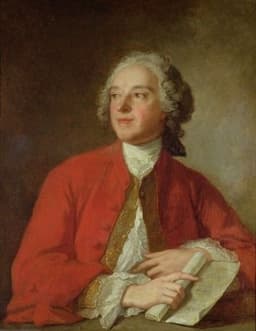
Ivan III the Great
Emperor · Medieval
75.3Total

Ruhollah Khomeini
Politician · Modern
75.1Total
Basic Information
Born
1440
1902
Died
1505
1989
Era
Medieval
Modern
Nationality
Muscovy
Iran
Occupation
Emperor
Politician
Civilization
Western
Middle Eastern
Score Comparison
Military (10%)
76.0
41.6
Political (20%)
70.0
65.0
Influence (20%)
75.0
85.0
Legacy (20%)
80.0
90.0
Leadership (15%)
78.0
80.0
Strategy (15%)
67.2
54.3
TOTAL
75.3
75.1
Ivan III the Great — Complete Timeline
1472 AD
Marriage to Sophia PalaiologinaPolitical Action◆ Major
Ivan III married Sophia (Zoe) Palaiologina, niece of the last Byzantine emperor. This marriage allowed Ivan to claim succession to the Byzantine Empire, adopt the double-headed eagle as a symbol, and promote Moscow as the Third Rome.
ByzantiumThird RomeMarriage
Impact: regionalconstructive
1478 AD
Annexation of NovgorodWar◆ Major
Ivan III conquered the Novgorod Republic after a series of campaigns. He abolished the veche (assembly) and removed the veche bell, incorporating Novgorod's vast territories into the Grand Principality of Moscow.
NovgorodAnnexationMoscow
Impact: regional
1480 AD
Great Stand on the Ugra RiverWar
Ivan III faced the Mongol army of Khan Akhmat across the Ugra River. After weeks of stalemate, the Mongols withdrew without battle. This event ended 240 years of Mongol suzerainty over Russia.
Golden HordeIndependenceUgra
Impact: regional
1497 AD
Issued the Sudebnik of 1497Reform◆ Major
Ivan III promulgated a new legal code, the Sudebnik, which standardized laws across the Russian lands. It restricted peasant mobility by limiting the time for transfer between landowners, a step toward serfdom.
Legal CodeSerfdomReform
Impact: national
1500 AD
War with the Grand Duchy of LithuaniaWar◆ Major
Ivan III launched a war against Lithuania, capturing the cities of Bryansk, Dorogobuzh, and Putivl. The war ended with the Truce of 1503, which ceded significant territories to Moscow.
LithuaniaTerritorial ExpansionWar
Impact: regional
Ruhollah Khomeini — Complete Timeline
1964 AD
Exile to Iraq and FrancePolitical Action◆ Major
Khomeini was exiled from Iran after criticizing the Shah's White Revolution and granting of diplomatic immunity to US personnel. He settled in Najaf, Iraq, and later in France, where he continued to organize opposition to the Shah.
ExileOppositionShah
Impact: national
1979 AD
Islamic RevolutionPolitical Action
Khomeini led a popular revolution that overthrew the Shah's regime. He returned to Iran in February 1979 and established an Islamic Republic based on his doctrine of Velayat-e Faqih (Guardianship of the Jurist), with himself as Supreme Leader.
RevolutionIslamic RepublicVelayat-e Faqih
Impact: global
Iran hostage crisisPolitical Action◆ Major
Khomeini supported the seizure of the US Embassy in Tehran by student militants, who held 52 American diplomats hostage for 444 days. The crisis deepened the rift with the US, led to economic sanctions, and consolidated Khomeini's power.
Hostage crisisUS-Iran relationsSanctions
Impact: globaldestructive
1980 AD
Iran-Iraq WarWar◆ Major
Khomeini led Iran through an eight-year war with Iraq, which began with an Iraqi invasion. The war resulted in hundreds of thousands of casualties and massive economic destruction, ending in a stalemate. Khomeini accepted a UN ceasefire in 1988.
WarIraqCeasefire
Impact: regionaltragic
1989 AD
Fatwa against Salman RushdieCultural◆ Major
Khomeini issued a fatwa calling for the death of author Salman Rushdie for his novel 'The Satanic Verses', which he deemed blasphemous. The fatwa led to international controversy, diplomatic tensions, and attacks on Rushdie's translators.
FatwaBlasphemyInternational controversy
Impact: globaldestructive
Expert Analysis
Origins
Ivan III (1440–1505) was born into the Rurik dynasty as Grand Prince of Moscow, inheriting a fragmented Rus' under Mongol suzerainty. His father Vasily II left him a strengthened but still tributary state. Khomeini (1902–1989) was born in Khomeyn, Iran, into a clerical family; his father was murdered when he was an infant. He studied Islamic jurisprudence and became a prominent Shia scholar, opposing the Pahlavi dynasty's secularization and Western influence.
Rise to Power
Ivan III consolidated Muscovy by annexing neighboring principalities like Yaroslavl and Rostov. His key turning point was the Great Stand on the Ugra River (1480), where he faced the Golden Horde without battle, effectively ending Mongol rule. He then absorbed the wealthy Republic of Novgorod (1478) and married Sophia Palaiologina, niece of the last Byzantine emperor, boosting his prestige. Khomeini's rise began with his outspoken criticism of the Shah's White Revolution. Exiled to Iraq and later France, he used cassette tapes to spread revolutionary messages. The Islamic Revolution (1979) overthrew the Shah; Khomeini returned to Iran and became Supreme Leader through a referendum, establishing a theocratic system.
Leadership & Governance
Ivan III centralized power, issuing the Sudebnik of 1497 (a legal code), reforming the military, and expanding bureaucracy. He styled himself as "Tsar" and "Sovereign of All Rus'," laying foundations for the Russian autocracy. He waged successful wars against Lithuania, reclaiming vast territories. Khomeini created the Velayat-e Faqih (Guardianship of the Islamic Jurist), placing ultimate authority in a religious leader. He suppressed political rivals, established revolutionary courts, and enforced Islamic law. His leadership saw the Iran-Iraq War (1980–88), which he prolonged despite high casualties, and the hostage crisis (1979–81) that isolated Iran internationally.
Triumph & Tragedy
Ivan's triumphs include ending Mongol domination, unifying most Russian lands, and creating a centralized state. His tragedy: the Sudebnik formalized serfdom, tying peasants to land, which would have centuries-long repercussions. Khomeini's triumph was the Islamic Revolution, reshaping Iran and inspiring Islamist movements. His tragedies: the war with Iraq cost hundreds of thousands of lives, and the Rushdie fatwa (1989) deepened Iran's global pariah status. Both leaders' actions had unintended long-term consequences.
Character & Destiny
Ivan was calculating, patient, and ruthless—he blinded his rival brother and crushed Novgorod's independence. He saw himself as the heir to Byzantium and protector of Orthodox Christianity. Khomeini was charismatic, uncompromising, and ascetic; he believed in the total sovereignty of Islam. His exile forged his resolve, and his return seemed destined to fulfill his vision of an Islamic state. Both were driven by a sense of historical mission, but Ivan focused on territorial and political consolidation, while Khomeini prioritized ideological and religious purity.
Legacy
Ivan III is revered as the "Gatherer of the Russian Lands" and founder of the Russian state. His policies directly influenced Ivan the Terrible and later tsars. Khomeini's legacy is the Islamic Republic of Iran, which remains a major regional power and exporter of revolutionary ideology. His concept of Velayat-e Faqih continues to guide Iran's governance. Both left enduring institutions: Ivan's centralized monarchy and Khomeini's theocratic state.
Conclusion
Ivan III and Khomeini were transformative figures who reshaped their nations' destinies. Ivan's creation of a unified Russia and liberation from Mongol rule had a more durable impact on global history, given Russia's subsequent rise as a world power. Khomeini's revolution, while profound, remains contested within Iran and the Muslim world. Based on historical impact and longevity of influence, Ivan III edges ahead. **Numerical scores: Ivan III: 85/100, Khomeini: 80/100.**
Rankings
🥇
Ivan III the GreatLeader
Mil: 76.0Pol: 70.0Inf: 75.0
75.3
🥈
Ruhollah Khomeini
Mil: 41.6Pol: 65.0Inf: 85.0
75.1
+0.2 behind
How This Comparison Works
Algorithm
Each figure is scored on 6 dimensions (0—100 scale) based on structured historical data: Military (10%), Political (20%), Influence (20%), Legacy (20%), Leadership (15%), Strategy (15%). The weighted total produces the final ranking.
Data Sources
Scores are computed from structured sub-indicators in the database. Scale factors adjust for era (Ancient ×0.85, Modern ×1.0) and civilization size (Eastern ×1.05, Other ×0.80) to account for differences in population and military scale.
Maximum 3 Figures
Comparisons are limited to 2—3 figures to ensure readability and statistical meaningfulness.
Error Margins
±5 points per dimension — Sub-scores are derived from historical records with inherent uncertainty. Two figures within 5 points on a dimension should be considered roughly equivalent in that area.
Total Score Accuracy
±3 points overall — The weighted combination of 6 dimensions produces a total score with approximately ±3 points of uncertainty. Differences of less than 3 points are not statistically significant— the figures are effectively tied.
Known Limitations
- Historical records are incomplete and uneven across civilizations
- Figures from oral-tradition societies may be underrepresented
- Occupation labels can misclassify multi-role figures
- Scores measure capability and impact, not moral character
- Quantitative scoring is a comparison tool, not absolute truth
Capability Radar
Military (10%) — Battles & Warfare
Battles
75
10
Win Rate
80
10
Expansion
85
10
Political (20%) — Governance & Reform
Reform
80
90
Diplomacy
85
75
Economy
70
40
Influence (20%) — Cultural & Global Reach
Cultural
70
85
Global
70
85
Legacy (20%) — Historical Impact
Historical
85
90
Longevity
80
80
Leadership (15%) — Power & Stability
Tenure
85
85
Stability
75
50
Strategy (15%) — Tactics & Innovation
Strategy
85
15
Tactics
70
10
Reform
65
20
Similar Comparisons
Comments & Discussion
No comments yet. Be the first to share your thoughts!