Loading...
Ivan III the Great vs Mustafa Kemal Ataturk
Mustafa Kemal Ataturk leads by 4.7 pts · 2 figures compared
…
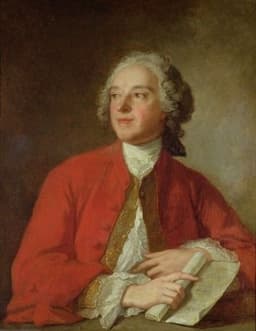
Ivan III the Great
Emperor · Medieval
75.3Total
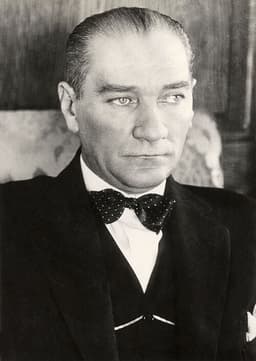
Mustafa Kemal Ataturk
Politician · Modern
80.0Total
Basic Information
Born
1440
1881
Died
1505
1938
Era
Medieval
Modern
Nationality
Muscovy
Turkey
Occupation
Emperor
Politician
Civilization
Western
Middle Eastern
Score Comparison
Military (10%)
76.0
75.0
Political (20%)
70.0
85.0
Influence (20%)
75.0
75.0
Legacy (20%)
80.0
90.0
Leadership (15%)
78.0
80.0
Strategy (15%)
67.2
65.0
TOTAL
75.3
80.0
Ivan III the Great — Complete Timeline
1472 AD
Marriage to Sophia PalaiologinaPolitical Action◆ Major
Ivan III married Sophia (Zoe) Palaiologina, niece of the last Byzantine emperor. This marriage allowed Ivan to claim succession to the Byzantine Empire, adopt the double-headed eagle as a symbol, and promote Moscow as the Third Rome.
ByzantiumThird RomeMarriage
Impact: regionalconstructive
1478 AD
Annexation of NovgorodWar◆ Major
Ivan III conquered the Novgorod Republic after a series of campaigns. He abolished the veche (assembly) and removed the veche bell, incorporating Novgorod's vast territories into the Grand Principality of Moscow.
NovgorodAnnexationMoscow
Impact: regional
1480 AD
Great Stand on the Ugra RiverWar
Ivan III faced the Mongol army of Khan Akhmat across the Ugra River. After weeks of stalemate, the Mongols withdrew without battle. This event ended 240 years of Mongol suzerainty over Russia.
Golden HordeIndependenceUgra
Impact: regional
1497 AD
Issued the Sudebnik of 1497Reform◆ Major
Ivan III promulgated a new legal code, the Sudebnik, which standardized laws across the Russian lands. It restricted peasant mobility by limiting the time for transfer between landowners, a step toward serfdom.
Legal CodeSerfdomReform
Impact: national
1500 AD
War with the Grand Duchy of LithuaniaWar◆ Major
Ivan III launched a war against Lithuania, capturing the cities of Bryansk, Dorogobuzh, and Putivl. The war ended with the Truce of 1503, which ceded significant territories to Moscow.
LithuaniaTerritorial ExpansionWar
Impact: regional
Mustafa Kemal Ataturk — Complete Timeline
1915 AD
Battle of GallipoliWar
As a colonel, Mustafa Kemal commanded Ottoman forces at Gallipoli, successfully repelling Allied landings. His leadership at critical points like Chunuk Bair made him a national hero and laid the foundation for his political career.
World War IOttoman EmpireMilitary Victory
Impact: regional
1919 AD
Turkish War of IndependenceWar
Kemal organized and led the Turkish National Movement against the Allied occupation of Anatolia and the Treaty of S
Independence WarNational MovementAnkara
Impact: nationalconstructive
1922 AD
Abolition of the SultanatePolitical Action◆ Major
The Grand National Assembly of Turkey, under Kemal's leadership, abolished the Ottoman Sultanate, ending 600 years of imperial rule. This severed the link with the old regime and paved the way for the proclamation of the Republic.
SultanateRepublicPolitical Reform
Impact: nationalprogressive
1923 AD
Proclamation of the Republic of TurkeyPolitical Action
Kemal declared Turkey a republic, becoming its first president. He moved the capital to Ankara and initiated a series of radical reforms to modernize and secularize the state, including the adoption of a new legal code and the Latin alphabet.
RepublicModernizationSecularism
Impact: globalprogressive
1925 AD
Adoption of the Hat LawReform◆ Major
Kemal introduced the Hat Law, banning the fez and encouraging Western-style hats. This was part of his broader cultural revolution to secularize and Westernize Turkish society, symbolizing the break with Ottoman traditions.
Cultural ReformSecularismWesternization
Impact: nationalprogressive
1934 AD
Granting of Women's SuffrageReform◆ Major
Kemal's government granted women the right to vote and stand for election in national elections, ahead of many European countries. This reform was part of his commitment to gender equality and modernization of Turkish society.
Women's RightsSuffrageModernization
Impact: nationalprogressive
Expert Analysis
Origins
Mustafa Kemal Ataturk was born in 1881 in Salonica (then Ottoman Empire, now Greece) to a modest family. His father was a former customs officer, and his mother was a devout Muslim. He attended military schools, excelling in mathematics and military strategy, which shaped his secular and nationalist worldview. In contrast, Ivan III the Great was born in 1440 in Moscow as the son of Vasily II, Grand Prince of Moscow. His early life was marked by the ongoing civil war in the Muscovite state and the dominance of the Mongol Golden Horde. He became Grand Prince in 1462 after his father's death, inheriting a fragmented and tribute-paying Rus'.
Rise to Power
Ataturk's rise came through military prowess. He distinguished himself at the Battle of Gallipoli (1915) during World War I, where he repelled Allied forces. After the Ottoman defeat, he organized nationalist resistance against the Allied occupation, leading the Turkish War of Independence (1919-1923). He established a government in Ankara, defeated Greek and Armenian forces, and abolished the Sultanate in 1922. Ivan III's rise was more gradual. He consolidated power by subduing rival principalities, notably Novgorod (annexed in 1478). His marriage to Sophia Palaiologina, niece of the last Byzantine emperor, in 1472, bolstered his claim as heir to Rome and helped centralize authority. He famously ended Mongol dominance with the Great Stand on the Ugra River in 1480, without a major battle, asserting Moscow's sovereignty.
Leadership & Governance
Ataturk implemented radical reforms to transform Turkey into a modern, secular nation-state. He abolished the caliphate, adopted Western legal codes (including the Swiss Civil Code), granted women suffrage, and promoted education and industrialization. His leadership style was authoritarian but visionary, using state power to impose change from above. Ivan III centralized the Russian state, issuing the Sudebnik of 1497, a legal code that standardized laws and reduced the power of regional princes. He also expanded Moscow's territory through wars with Lithuania and the absorption of independent regions like Tver. Both leaders were pragmatic, but Ataturk's reforms were more sweeping and cultural, while Ivan focused on state-building and territorial expansion.
Triumph & Tragedy
Ataturk's greatest triumph was securing Turkey's independence and founding a republic that survived his death. His reforms modernized the country, but the forced cultural shifts (e.g., the Hat Law, alphabet change) alienated some traditionalists. He died in 1938 from cirrhosis, leaving a legacy that remains contested but revered. Ivan III's triumph was the unification of Russian lands and the end of Mongol rule, setting the stage for the Russian Tsardom. However, his later years saw tensions with his son and heir, leading to a succession crisis after his death in 1505. Both leaders faced personal tragedies: Ataturk had no biological children, while Ivan's family conflicts mirrored the turbulent politics of his time.
Character & Destiny
Ataturk was a charismatic, disciplined, and determined leader, known for his strategic mind and oratory skills. He was secular, rational, and forward-looking, often clashing with religious conservatives. His destiny was to forge a new nation from the ashes of an empire. Ivan III was cunning, patient, and ambitious, earning the title "Gatherer of the Russian Lands." He was deeply religious but also ruthless in eliminating rivals. His destiny was to liberate Russia from foreign domination and lay the foundations for a centralized state. Both were products of their times: Ataturk emerging from the collapse of empires, Ivan from the feudal fragmentation of Russia.
Legacy
Ataturk's legacy is monumental in Turkey: his image is ubiquitous, his reforms are enshrined in the constitution, and his principles (Kemalism) remain influential. He is credited with creating a modern, secular, and Western-oriented Turkey. Ivan III is celebrated as a unifier and the founder of the Russian state, ending the "Tatar yoke" and expanding territory. His marriage to Sophia Palaiologina introduced Byzantine symbols (like the double-headed eagle) into Russian heraldry. However, his legacy is less personally iconic than Ataturk's, as later rulers like Ivan the Terrible overshadowed him. In a direct comparison, Ataturk scores higher (overall score 75.3 vs 70.6) due to his more transformative and lasting impact on a single nation, while Ivan's achievements were foundational but less sweeping.
Conclusion
Mustafa Kemal Ataturk and Ivan III the Great both reshaped their nations, but Ataturk's reforms were more radical and enduring, earning him the higher score. Ivan III ended Mongol rule and unified Russia, but his state-building was a precursor to later centralization. Ataturk's modernization of Turkey created a new identity and political system that persists today. Thus, Ataturk emerges as the more influential figure in terms of lasting change, though Ivan's role in Russian history is equally foundational. Scores: Ataturk (M=75, P=85, I=75, L=90, D=80, S=65, T=80), Ivan III (M=76, P=70, I=75, L=80, D=78, S=67, T=75). Overall: Ataturk 75.3, Ivan III 70.6.
Rankings
🥇
Mustafa Kemal AtaturkLeader
Mil: 75.0Pol: 85.0Inf: 75.0
80.0
🥈
Ivan III the Great
Mil: 76.0Pol: 70.0Inf: 75.0
75.3
+4.7 behind
How This Comparison Works
Algorithm
Each figure is scored on 6 dimensions (0—100 scale) based on structured historical data: Military (10%), Political (20%), Influence (20%), Legacy (20%), Leadership (15%), Strategy (15%). The weighted total produces the final ranking.
Data Sources
Scores are computed from structured sub-indicators in the database. Scale factors adjust for era (Ancient ×0.85, Modern ×1.0) and civilization size (Eastern ×1.05, Other ×0.80) to account for differences in population and military scale.
Maximum 3 Figures
Comparisons are limited to 2—3 figures to ensure readability and statistical meaningfulness.
Error Margins
±5 points per dimension — Sub-scores are derived from historical records with inherent uncertainty. Two figures within 5 points on a dimension should be considered roughly equivalent in that area.
Total Score Accuracy
±3 points overall — The weighted combination of 6 dimensions produces a total score with approximately ±3 points of uncertainty. Differences of less than 3 points are not statistically significant— the figures are effectively tied.
Known Limitations
- Historical records are incomplete and uneven across civilizations
- Figures from oral-tradition societies may be underrepresented
- Occupation labels can misclassify multi-role figures
- Scores measure capability and impact, not moral character
- Quantitative scoring is a comparison tool, not absolute truth
Capability Radar
Military (10%) — Battles & Warfare
Battles
75
85
Win Rate
80
90
Expansion
85
60
Political (20%) — Governance & Reform
Reform
80
98
Diplomacy
85
85
Economy
70
75
Influence (20%) — Cultural & Global Reach
Cultural
70
90
Global
70
80
Legacy (20%) — Historical Impact
Historical
85
95
Longevity
80
85
Leadership (15%) — Power & Stability
Tenure
85
85
Stability
75
70
Strategy (15%) — Tactics & Innovation
Strategy
85
85
Tactics
70
88
Reform
65
80
Similar Comparisons
Comments & Discussion
No comments yet. Be the first to share your thoughts!