Loading...
Ivan III the Great vs John Churchill Duke of Marlborough
John Churchill Duke of Marlborough leads by 0.1 pts · 2 figures compared
…
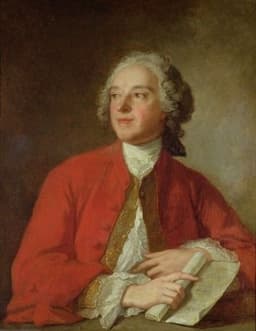
Ivan III the Great
Emperor · Medieval
75.3Total

John Churchill Duke of Marlborough
General · Modern
75.4Total
Basic Information
Born
1440
1650
Died
1505
1722
Era
Medieval
Modern
Nationality
Muscovy
England
Occupation
Emperor
General
Civilization
Western
Western
Score Comparison
Military (10%)
76.0
84.7
Political (20%)
70.0
78.0
Influence (20%)
75.0
65.0
Legacy (20%)
80.0
80.0
Leadership (15%)
78.0
78.0
Strategy (15%)
67.2
72.8
TOTAL
75.3
75.4
Ivan III the Great — Complete Timeline
1472 AD
Marriage to Sophia PalaiologinaPolitical Action◆ Major
Ivan III married Sophia (Zoe) Palaiologina, niece of the last Byzantine emperor. This marriage allowed Ivan to claim succession to the Byzantine Empire, adopt the double-headed eagle as a symbol, and promote Moscow as the Third Rome.
ByzantiumThird RomeMarriage
Impact: regionalconstructive
1478 AD
Annexation of NovgorodWar◆ Major
Ivan III conquered the Novgorod Republic after a series of campaigns. He abolished the veche (assembly) and removed the veche bell, incorporating Novgorod's vast territories into the Grand Principality of Moscow.
NovgorodAnnexationMoscow
Impact: regional
1480 AD
Great Stand on the Ugra RiverWar
Ivan III faced the Mongol army of Khan Akhmat across the Ugra River. After weeks of stalemate, the Mongols withdrew without battle. This event ended 240 years of Mongol suzerainty over Russia.
Golden HordeIndependenceUgra
Impact: regional
1497 AD
Issued the Sudebnik of 1497Reform◆ Major
Ivan III promulgated a new legal code, the Sudebnik, which standardized laws across the Russian lands. It restricted peasant mobility by limiting the time for transfer between landowners, a step toward serfdom.
Legal CodeSerfdomReform
Impact: national
1500 AD
War with the Grand Duchy of LithuaniaWar◆ Major
Ivan III launched a war against Lithuania, capturing the cities of Bryansk, Dorogobuzh, and Putivl. The war ended with the Truce of 1503, which ceded significant territories to Moscow.
LithuaniaTerritorial ExpansionWar
Impact: regional
John Churchill Duke of Marlborough — Complete Timeline
1704 AD
Battle of BlenheimWar
Marlborough commanded the Anglo-Dutch army alongside Prince Eugene of Savoy against French and Bavarian forces at Blenheim. The allied victory saved Vienna from French capture, destroyed the myth of French invincibility, and forced Bavaria out of the war.
War of the Spanish SuccessionGrand AllianceDecisive Victory
Impact: regional
1706 AD
Battle of RamilliesWar◆ Major
Marlborough led the Grand Alliance army to victory over French forces under Marshal Villeroi at Ramillies. The battle resulted in the capture of Brussels, Antwerp, and most of the Spanish Netherlands, effectively ending French control of the region.
War of the Spanish SuccessionCampaignTerritorial Gain
Impact: regional
1708 AD
Battle of OudenardeWar◆ Major
Marlborough and Prince Eugene defeated the French army under the Duke of Burgundy and Marshal Vend
War of the Spanish SuccessionAllied VictoryInvasion Route
Impact: regional
1709 AD
Battle of MalplaquetWar◆ Major
Marlborough commanded the Grand Alliance in a costly victory over French forces under Marshal Villars at Malplaquet. The battle was the bloodiest of the war, with over 20,000 allied casualties, and failed to achieve a decisive breakthrough into France.
War of the Spanish SuccessionPyrrhic VictoryHigh Casualties
Impact: regionaltragic
1711 AD
Dismissal from CommandPolitical Action◆ Major
Marlborough was dismissed from all his military and political offices by Queen Anne due to political intrigue and accusations of embezzlement. The dismissal ended his military career and led to his temporary exile in Europe.
Political FallExileTory Government
Impact: nationaldestructive
Expert Analysis
Origins
John Churchill (1650-1722) rose from a modest gentry family in England, his father a Royalist supporter. He began as a page at court, gaining military experience under the Duke of York. Ivan III (1440-1505) was born into the Rurik dynasty, Grand Prince of Moscow from his father Vasily II. He inherited a principality still under Mongol suzerainty but growing in power.
Rise to Power
Marlborough's ascent was through military prowess and political maneuvering. He served under King James II but switched allegiance to William III, earning titles and command. His decisive victory at Blenheim (1704) shattered French dominance. Ivan III consolidated power by annexing rival Russian states, notably Novgorod (1478). He married Sophia Palaiologina, niece of the last Byzantine emperor, enhancing Moscow's prestige. His refusal to pay tribute to the Golden Horde led to the Great Stand on the Ugra River (1480), ending Mongol rule.
Leadership & Governance
Marlborough excelled as a battlefield commander, known for strategic brilliance and diplomatic skill in the Grand Alliance. He reformed logistics and tactics, but his political influence waned under Queen Anne, leading to dismissal. Ivan III centralized Russian governance, issued the Sudebnik of 1497 (law code), and reduced the power of boyars. He expanded territory through wars with Lithuania and annexed Novgorod, laying foundations for a unified Russian state.
Triumph & Tragedy
Marlborough's triumphs include Blenheim, Ramillies (1706), Oudenarde (1708), and Malplaquet (1709). His tragedy was dismissal from command in 1711 due to political intrigue, overshadowing his legacy. Ivan III's triumph was ending the 'Mongol yoke' and unifying Russian lands. His tragedy includes harsh suppression of Novgorod and conflicts with his own family, including imprisoning his brother.
Character & Destiny
Marlborough was charismatic, ambitious, and a master diplomat, but also avaricious and politically vulnerable. His destiny was to be a pivotal figure in European wars, securing Britain's rise. Ivan III was shrewd, ruthless, and calculating, earning the title 'Gatherer of Russian lands.' His destiny was to create a powerful, independent Russian state, setting the stage for future tsars.
Legacy
Marlborough's legacy is as one of England's greatest generals, his victories shaping European balance of power. Blenheim Palace stands as a monument. Ivan III's legacy is as founder of modern Russia, ending Mongol domination and centralizing rule. His legal code and territorial expansion influenced Russian autocracy.
Conclusion
Comparing Marlborough (overall score 75.6) and Ivan III (75.5) reveals a near tie. Marlborough's military genius and coalition leadership edge out Ivan's state-building and liberation from Mongol rule. However, Ivan's impact on Russian history is more profound, while Marlborough's victories were more decisive in European context. The gap is minimal, but Marlborough's higher military score (85 vs 76) tips the balance.
Rankings
🥇
John Churchill Duke of MarlboroughLeader
Mil: 84.7Pol: 78.0Inf: 65.0
75.4
🥈
Ivan III the Great
Mil: 76.0Pol: 70.0Inf: 75.0
75.3
+0.1 behind
How This Comparison Works
Algorithm
Each figure is scored on 6 dimensions (0—100 scale) based on structured historical data: Military (10%), Political (20%), Influence (20%), Legacy (20%), Leadership (15%), Strategy (15%). The weighted total produces the final ranking.
Data Sources
Scores are computed from structured sub-indicators in the database. Scale factors adjust for era (Ancient ×0.85, Modern ×1.0) and civilization size (Eastern ×1.05, Other ×0.80) to account for differences in population and military scale.
Maximum 3 Figures
Comparisons are limited to 2—3 figures to ensure readability and statistical meaningfulness.
Error Margins
±5 points per dimension — Sub-scores are derived from historical records with inherent uncertainty. Two figures within 5 points on a dimension should be considered roughly equivalent in that area.
Total Score Accuracy
±3 points overall — The weighted combination of 6 dimensions produces a total score with approximately ±3 points of uncertainty. Differences of less than 3 points are not statistically significant— the figures are effectively tied.
Known Limitations
- Historical records are incomplete and uneven across civilizations
- Figures from oral-tradition societies may be underrepresented
- Occupation labels can misclassify multi-role figures
- Scores measure capability and impact, not moral character
- Quantitative scoring is a comparison tool, not absolute truth
Capability Radar
Military (10%) — Battles & Warfare
Battles
75
95
Win Rate
80
98
Expansion
85
85
Political (20%) — Governance & Reform
Reform
80
60
Diplomacy
85
85
Economy
70
70
Influence (20%) — Cultural & Global Reach
Cultural
70
70
Global
70
75
Legacy (20%) — Historical Impact
Historical
85
85
Longevity
80
80
Leadership (15%) — Power & Stability
Tenure
85
80
Stability
75
75
Strategy (15%) — Tactics & Innovation
Strategy
85
95
Tactics
70
96
Reform
65
70
Similar Comparisons
Comments & Discussion
No comments yet. Be the first to share your thoughts!