Loading...
Ivan Chernyakhovsky vs Julius Caesar
Julius Caesar leads by 28.4 pts · 2 figures compared
…
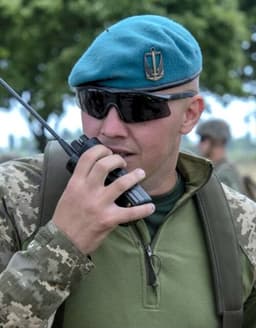
Ivan Chernyakhovsky
General · Modern
54.4Total

Julius Caesar
General · Ancient
82.8Total
Basic Information
Born
1906
-100
Died
1945
-44
Era
Modern
Ancient
Nationality
USSR
Roman Republic
Occupation
General
General
Civilization
Western
Western
Score Comparison
Military (10%)
78.0
88.0
Political (20%)
35.1
78.0
Influence (20%)
58.0
85.0
Legacy (20%)
50.0
82.0
Leadership (15%)
50.7
80.0
Strategy (15%)
67.2
85.0
TOTAL
54.4
82.8
Ivan Chernyakhovsky — Complete Timeline
1943 AD
Battle of KurskWar◆ Major
Chernyakhovsky commanded the 60th Army during the Battle of Kursk. His forces defended the northern face and later participated in the counteroffensive, liberating Kursk and advancing toward Ukraine.
World War IIKurskCounteroffensive
Impact: regional
1944 AD
Command of the 3rd Belorussian FrontWar◆ Major
Chernyakhovsky was appointed commander of the 3rd Belorussian Front at age 37, becoming the youngest front commander in the Soviet Army. He led the front in Operation Bagration and the liberation of Vilnius.
World War IIBelorussian FrontYoungest
Impact: regional
1945 AD
East Prussian OffensiveWar◆ Major
Chernyakhovsky commanded the 3rd Belorussian Front in the East Prussian Offensive. His forces advanced into East Prussia, capturing towns and encircling German forces in K
World War IIEast PrussiaOffensive
Impact: regional
Death in combat near MelzakWar◆ Major
Chernyakhovsky was killed by artillery shell fragments near Melzak (now Pieni
World War IIKilled in ActionEast Prussia
Impact: nationaltragic
Julius Caesar — Complete Timeline
58 BC
Gallic WarsWar◆ Major
Caesar, as proconsul of Gaul, launched a series of campaigns that conquered all of Gaul (modern France, Belgium, and parts of Switzerland). He fought numerous battles, including against the Helvetii, the Belgae, and the Gallic chieftain Vercingetorix. The wars brought immense wealth and a loyal army to Caesar.
Gallic WarsConquestRoman Expansion
Impact: regional
49 BC
Crossing the RubiconPolitical Action◆ Major
Caesar led Legio XIII across the Rubicon River into Italy, defying the Roman Senate's order to disband his army. This act triggered a civil war against Pompey and the Optimates, ultimately leading to Caesar's dictatorship and the end of the Roman Republic.
Roman Civil WarEnd of RepublicPower Struggle
Impact: global
48 BC
Battle of PharsalusWar◆ Major
Caesar's outnumbered army defeated the larger forces of Pompey the Great at Pharsalus in Greece. Caesar's tactical use of a reserve line to counter Pompey's cavalry charge proved decisive. Pompey fled to Egypt, where he was assassinated, leaving Caesar as the undisputed master of the Roman world.
Roman Civil WarBattleDecisive Victory
Impact: regional
44 BC
Appointment as Dictator for LifePolitical Action◆ Major
The Roman Senate appointed Caesar dictator perpetuo (dictator for life), granting him unprecedented personal power. This move concentrated military, legislative, and judicial authority in one person, effectively ending the Roman Republic's traditional system of checks and balances and alarming many senators.
DictatorshipEnd of RepublicPower Consolidation
Impact: regionaldestructive
Assassination on the Ides of MarchPolitical Action◆ Major
A group of Roman senators, led by Marcus Junius Brutus and Gaius Cassius Longinus, stabbed Caesar to death at a meeting of the Senate in the Theatre of Pompey. The assassination was intended to restore the Republic, but instead triggered another civil war that led to the rise of the Roman Empire.
AssassinationRoman PoliticsEnd of Republic
Impact: globaldestructive
Expert Analysis
ivan-chernyakhovsky-vs-julius-caesar
The Rubicon and the Vistula: Two Generals Who Reshaped History
On a January day in 1945, a shell fragment tore through the chest of General Ivan Chernyakhovsky near the small East Prussian town of Melzak. He was 38 years old, the youngest front commander in the Soviet Union, and he died in the mud of a war he had helped turn. Two thousand years earlier, on the Ides of March in 44 BCE, another general fell—Julius Caesar, stabbed twenty-three times in the Senate chamber of Rome. One death was a battlefield accident, the other a political assassination. Yet both men, in their disparate eras, embodied the same terrifying truth: that military genius, when unleashed without political mastery, becomes a force that consumes its creator. Why did Caesar’s ambition forge an empire, while Chernyakhovsky’s brilliance merely earned a footnote? The answer lies not just in their talents, but in the worlds they were born into.
Origins
Caesar came from the twilight of the Roman Republic, a time when senatorial oligarchy was rotting from within. Born into the patrician Julian clan, he was nonetheless a man of the streets, fluent in the language of debt, patronage, and popular favor. His uncle Marius had been a populist general, and Caesar learned early that in Rome, power flowed from the legions and the mob—not from the Senate’s marble benches. He was educated in rhetoric, philosophy, and the art of survival in a city where a wrong word could mean exile or death.
Chernyakhovsky, by contrast, emerged from the crucible of the Soviet experiment. Born in 1906 in a Ukrainian village, he was the son of a railway worker who died in the chaos of the Russian Civil War. He joined the Red Army at 18, a product of Stalin’s new order: a peasant boy who could rise through technical schools and military academies, provided he never questioned the Party. The Soviet system demanded obedience, not oratory. It forged commanders who were engineers of destruction, not architects of consent.
Rise to Power
Caesar’s path was a masterclass in strategic patience. He served as a military tribune in Asia, then as a quaestor in Spain, where he wept before a statue of Alexander the Great—ashamed that at 33, he had done nothing memorable. He climbed the cursus honorum through alliances: first with the populist Crassus, then with the aging general Pompey. In 59 BCE, as consul, he rammed through land reforms for veterans, securing their loyalty. Then he secured Gaul. Nine years of war (58–50 BCE) made him the richest and most feared man in the Republic. When the Senate ordered him to disband his army, he crossed the Rubicon River in 49 BCE—an act of treason that launched a civil war.
Chernyakhovsky’s rise was swifter and narrower. He commanded a tank battalion in the 1930s, survived Stalin’s purges, and by 1943, at age 37, led the 60th Army at the Battle of Kursk—the largest tank engagement in history. His forces held the northern face of the salient, then broke through German lines. For this, he was promoted to front commander, the youngest in Soviet history. In 1944, he orchestrated the liberation of Minsk and Vilnius, driving the Wehrmacht back at a pace that stunned even his superiors. His rise was pure military momentum, unsullied by political maneuvering—because in Stalin’s USSR, politics was a separate, lethal profession.
Leadership & Governance
Caesar governed as he fought: with audacity, generosity, and a ruthless eye for the long game. As dictator, he reformed the calendar, granted citizenship to Gauls, and launched public works to employ the poor. He pardoned his enemies—until he didn’t. His military genius lay in speed and logistics: at Alesia (52 BCE), he besieged a Gallic army while simultaneously building fortifications against a relief force, winning a double victory that defied conventional tactics. Yet his political wisdom was flawed. He centralized power, accepted the title “dictator for life,” and treated the Senate as a rubber stamp. “The die is cast,” he said at the Rubicon, but he never cast the die for a stable succession.
Chernyakhovsky was a different creature: a technician of war, not a statesman. At Kursk, his 60th Army demonstrated tactical flexibility, but his true gift was operational tempo—the ability to keep advancing even when supply lines stretched thin. He was known for his calm under fire and his willingness to visit front-line units, a rarity among Soviet generals. Yet his political score of 45.9 reflects a man who never held civil office, never gave a speech to a senate, never negotiated a peace. In the Soviet system, front commanders did what they were told. Chernyakhovsky’s brilliance was circumscribed by Stalin’s paranoia; he could win battles, but not define the war.
Triumph & Tragedy
Caesar’s greatest moment was his triumph: the conquest of Gaul, the defeat of Pompey at Pharsalus (48 BCE), and his return to Rome as undisputed master of the Mediterranean. He had achieved what no Roman had—supreme power without a king’s crown. His tragedy was that he failed to see that the Republic’s elite would never accept a monarch in republican robes. The Ides of March was a coup by men who feared his ambition but had no plan for what came after.
Chernyakhovsky’s triumph was the East Prussian Offensive of 1945. His 3rd Belorussian Front smashed into German territory, avenging years of Soviet suffering. But his tragedy came in the same campaign: a random artillery shell, fired perhaps by a German gunner who never knew his target. He was the highest-ranking Soviet officer killed in combat, a martyr to a war that would end three months later. His death was senseless, anonymous—the opposite of Caesar’s staged, symbolic murder.
Character & Destiny
Caesar was a gambler who calculated odds. He wrote his own commentaries, controlled his own narrative, and understood that in Rome, image was power. His vanity—the laurel wreath to hide his baldness, the purple toga—was inseparable from his genius. He believed in his own star, and that belief made him invincible until it made him careless.
Chernyakhovsky was a product of discipline. He rose because he was competent, not because he was charismatic. In the Soviet system, personality was dangerous; Stalin devoured the ambitious. Chernyakhovsky’s character was forged in obedience—he asked no questions, sought no glory beyond the front. This made him an ideal instrument of war, but a man without political instincts. When the shell came, there was no conspiracy, no betrayal—just the randomness of modern combat.
Legacy
Caesar’s legacy is the Roman Empire. His name became a title—Kaiser, Tsar—and his reforms outlived him. He is remembered as a tyrant and a visionary, a man who destroyed a republic and built a world. Every schoolchild knows the Ides of March.
Chernyakhovsky’s legacy is narrower. In Russia, he is a war hero; a statue stood in Vilnius until 1991, when it was moved to Voronezh. His name appears in military histories, but not in the popular imagination of the West. He was a brilliant commander in a war of annihilation, but his death robbed him of the chance to shape the peace. He remains a symbol of sacrifice, not transformation.
Conclusion
Standing by the Vistula or the Rubicon, one sees the same river: time, flowing toward an unknown sea. Caesar crossed his river in defiance of a dying republic; Chernyakhovsky crossed his in service of a totalitarian state. Both were masters of violence, but only one understood that war is never the end—only the beginning of politics. The general who dies in battle leaves his work unfinished; the general who dies in the Senate leaves his work to be fought over for millennia. In the end, Caesar’s tragedy was that he lived long enough to become a tyrant; Chernyakhovsky’s tragedy was that he died too soon to become anything else.
Rankings
🥇
Julius CaesarLeader
Mil: 88.0Pol: 78.0Inf: 85.0
82.8
🥈
Ivan Chernyakhovsky
Mil: 78.0Pol: 35.1Inf: 58.0
54.4
+28.4 behind
How This Comparison Works
Algorithm
Each figure is scored on 6 dimensions (0—100 scale) based on structured historical data: Military (10%), Political (20%), Influence (20%), Legacy (20%), Leadership (15%), Strategy (15%). The weighted total produces the final ranking.
Data Sources
Scores are computed from structured sub-indicators in the database. Scale factors adjust for era (Ancient ×0.85, Modern ×1.0) and civilization size (Eastern ×1.05, Other ×0.80) to account for differences in population and military scale.
Maximum 3 Figures
Comparisons are limited to 2—3 figures to ensure readability and statistical meaningfulness.
Error Margins
±5 points per dimension — Sub-scores are derived from historical records with inherent uncertainty. Two figures within 5 points on a dimension should be considered roughly equivalent in that area.
Total Score Accuracy
±3 points overall — The weighted combination of 6 dimensions produces a total score with approximately ±3 points of uncertainty. Differences of less than 3 points are not statistically significant— the figures are effectively tied.
Known Limitations
- Historical records are incomplete and uneven across civilizations
- Figures from oral-tradition societies may be underrepresented
- Occupation labels can misclassify multi-role figures
- Scores measure capability and impact, not moral character
- Quantitative scoring is a comparison tool, not absolute truth
Capability Radar
Military (10%) — Battles & Warfare
Battles
75
95
Win Rate
80
92
Expansion
70
97
Political (20%) — Governance & Reform
Reform
20
90
Diplomacy
25
85
Economy
15
82
Influence (20%) — Cultural & Global Reach
Cultural
35
88
Global
45
94
Legacy (20%) — Historical Impact
Historical
55
95
Longevity
40
96
Leadership (15%) — Power & Stability
Tenure
30
75
Stability
20
60
Strategy (15%) — Tactics & Innovation
Strategy
78
94
Tactics
82
96
Reform
60
88
Similar Comparisons
Comments & Discussion
No comments yet. Be the first to share your thoughts!