Loading...
Ii Naomasa vs Sun Chuanfang
Sun Chuanfang leads by 0.5 pts · 2 figures compared
…
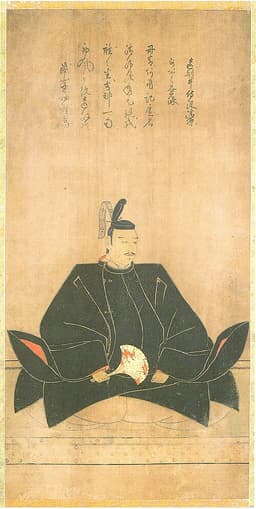
Ii Naomasa
General · Modern
53.9Total

Sun Chuanfang
General · Modern
54.4Total
Basic Information
Born
1561
1885
Died
1602
1935
Era
Modern
Modern
Nationality
Japan
China
Occupation
General
General
Civilization
Eastern
Eastern
Score Comparison
Military (10%)
70.0
67.5
Political (20%)
39.4
54.7
Influence (20%)
57.2
52.5
Legacy (20%)
50.0
43.3
Leadership (15%)
61.1
65.0
Strategy (15%)
50.0
57.5
TOTAL
53.9
54.4
Ii Naomasa — Complete Timeline
1570 AD
Battle of AnegawaWar
Ii Naomasa fought under Tokugawa Ieyasu at the Battle of Anegawa. He led a unit of red-armored troops, earning the nickname 'Red Devil' for his fierce fighting against the Azai and Asakura forces.
Sengoku PeriodBattleTokugawa
Impact: regionalconstructive
1584 AD
Battle of Komaki and NagakuteWar◆ Major
Ii Naomasa fought at the Battle of Komaki and Nagakute against Toyotomi Hideyoshi's forces. He commanded a unit of red-armored troops and engaged in skirmishes, further building his reputation.
Sengoku PeriodBattleKomaki
Impact: regional
1590 AD
Siege of OdawaraWar
Ii Naomasa participated in the Siege of Odawara under Toyotomi Hideyoshi. He commanded a contingent of Tokugawa forces during the siege, which ended with the surrender of the Hojo clan.
Sengoku PeriodSiegeOdawara
Impact: regional
1600 AD
Battle of SekigaharaWar
Ii Naomasa led the vanguard of Tokugawa Ieyasu's forces at Sekigahara. His red-armored troops charged the Western Army, and he was wounded in the battle but survived, contributing to the victory.
Sengoku PeriodBattleSekigahara
Impact: nationalconstructive
Sun Chuanfang — Complete Timeline
1923 AD
Control of the Lower YangtzePolitical Action◆ Major
Sun Chuanfang established control over the wealthy Lower Yangtze region, including Jiangsu, Zhejiang, Anhui, Fujian, and Jiangxi provinces. He became one of the most powerful warlords in southern China, commanding substantial revenues and military forces.
Warlord EraTerritorial ControlPower
Impact: regional
1924 AD
Formation of the Five Provinces AlliancePolitical Action
Sun Chuanfang formed the Five Provinces Alliance with other warlords to resist the expansion of the Fengtian clique. This alliance temporarily stabilized his position in the Lower Yangtze region.
Warlord EraAlliancePolitics
Impact: regional
1927 AD
Defeat by the National Revolutionary ArmyWar◆ Major
Sun Chuanfang's forces were decisively defeated by the National Revolutionary Army during the Northern Expedition. He lost control of the Lower Yangtze provinces and fled, ending his warlord rule.
Northern ExpeditionWarDefeat
Impact: nationaltragic
1935 AD
AssassinationPolitical Action
Sun Chuanfang was assassinated in Tianjin by a woman named Shi Jianqiao, who claimed revenge for her father's death during the warlord conflicts. His death marked the end of his influence in Chinese politics.
AssassinationWarlord EraDeath
tragic
Expert Analysis
Origins
Ii Naomasa was born in 1561 in Totomi Province, Japan, into a samurai family serving the Tokugawa clan. His father, Ii Naochika, was killed when Naomasa was young, and he was raised by relatives. He entered Tokugawa Ieyasu's service as a page and quickly distinguished himself in battle. Sun Chuanfang was born in 1885 in Licheng County, Shandong, China, into a scholarly family. He joined the Beiyang Army after studying at the Baoding Military Academy, rising through the ranks under the patronage of Feng Guozhang.
Rise to Power
Ii Naomasa rose to prominence through his service in Tokugawa Ieyasu's campaigns. He fought at the Battle of Anegawa (1570) as a young commander, leading a unit of red-armored troops and earning the nickname 'Red Devil' for his ferocity. His key turning point was the Battle of Sekigahara (1600), where he led the vanguard and was wounded in the opening charge. Sun Chuanfang rose by consolidating power in the Lower Yangtze region after the collapse of the Qing dynasty. By 1925, he controlled Jiangsu, Zhejiang, Anhui, Fujian, and Jiangxi, forming the Five Provinces Alliance to resist the Fengtian clique. His military score of 67.5 reflects his ability to seize and hold territory.
Leadership & Governance
Ii Naomasa's leadership style was aggressive and direct. He commanded his red-armored troops with discipline and was known for leading from the front. As a general under Tokugawa, he focused on military effectiveness rather than political administration. He governed the Ii domain (Hikone) with efficiency but did not implement major reforms. Sun Chuanfang's leadership was more political and administrative. He taxed the wealthy Yangtze provinces heavily to fund his army, achieving a political score of 54.7. However, his governance was unstable, relying on shifting alliances and coercion.
Triumph & Tragedy
Ii Naomasa's greatest triumph was his role at Sekigahara, where his charge helped secure Tokugawa's victory. He was rewarded with the Hikone domain (200,000 koku). His tragedy was his early death in 1602 from wounds sustained at Sekigahara, preventing him from further consolidating power. Sun Chuanfang's triumph was controlling the prosperous Lower Yangtze, making him one of the most powerful warlords in China. His tragedy was the crushing defeat by the National Revolutionary Army in 1927, losing all his territories. He was assassinated in 1935 by a woman avenging her father.
Character & Destiny
Ii Naomasa was known for his courage and loyalty to Tokugawa Ieyasu. His aggressive nature led him to take risks, such as leading the vanguard at Sekigahara, which cost him his life. Sun Chuanfang was shrewd and ruthless, but his reliance on personal alliances and lack of a unifying ideology made his position fragile. His political maneuvering could not withstand the organized force of the Nationalist army.
Legacy
Ii Naomasa is remembered as one of Tokugawa's Four Great Generals. His red armor became iconic, and his descendants remained daimyo until the Meiji Restoration. Sun Chuanfang's legacy is more obscure; he is seen as a typical warlord whose brief dominance was eclipsed by the Nationalist unification of China. His overall score of 54.4 vs Naomasa's 53.9 reflects a slightly higher military and political rating, but his influence and legacy are lower.
Conclusion
While Sun Chuanfang scored slightly higher overall, his impact was fleeting. Ii Naomasa's role in establishing the Tokugawa shogunate had lasting consequences for Japan's early modern period. Therefore, Ii Naomasa had greater historical impact.
Rankings
🥇
Sun ChuanfangLeader
Mil: 67.5Pol: 54.7Inf: 52.5
54.4
🥈
Ii Naomasa
Mil: 70.0Pol: 39.4Inf: 57.2
53.9
+0.5 behind
How This Comparison Works
Algorithm
Each figure is scored on 6 dimensions (0—100 scale) based on structured historical data: Military (10%), Political (20%), Influence (20%), Legacy (20%), Leadership (15%), Strategy (15%). The weighted total produces the final ranking.
Data Sources
Scores are computed from structured sub-indicators in the database. Scale factors adjust for era (Ancient ×0.85, Modern ×1.0) and civilization size (Eastern ×1.05, Other ×0.80) to account for differences in population and military scale.
Maximum 3 Figures
Comparisons are limited to 2—3 figures to ensure readability and statistical meaningfulness.
Error Margins
±5 points per dimension — Sub-scores are derived from historical records with inherent uncertainty. Two figures within 5 points on a dimension should be considered roughly equivalent in that area.
Total Score Accuracy
±3 points overall — The weighted combination of 6 dimensions produces a total score with approximately ±3 points of uncertainty. Differences of less than 3 points are not statistically significant— the figures are effectively tied.
Known Limitations
- Historical records are incomplete and uneven across civilizations
- Figures from oral-tradition societies may be underrepresented
- Occupation labels can misclassify multi-role figures
- Scores measure capability and impact, not moral character
- Quantitative scoring is a comparison tool, not absolute truth
Capability Radar
Military (10%) — Battles & Warfare
Battles
65
65
Win Rate
70
55
Expansion
40
60
Political (20%) — Governance & Reform
Reform
20
25
Diplomacy
30
45
Economy
25
40
Influence (20%) — Cultural & Global Reach
Cultural
45
20
Global
30
15
Legacy (20%) — Historical Impact
Historical
50
30
Longevity
40
20
Leadership (15%) — Power & Stability
Tenure
35
50
Stability
30
30
Strategy (15%) — Tactics & Innovation
Strategy
60
55
Tactics
75
60
Reform
30
30
Similar Comparisons
Comments & Discussion
No comments yet. Be the first to share your thoughts!