Loading...
Ii Naomasa vs Lucio Gutierrez
Ii Naomasa leads by 13.1 pts · 2 figures compared
…
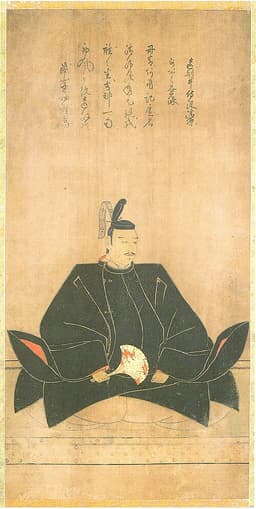
Ii Naomasa
General · Modern
53.9Total

Lucio Gutierrez
General · Modern
40.8Total
Basic Information
Born
1561
1957
Died
1602
—
Era
Modern
Modern
Nationality
Japan
Ecuador
Occupation
General
General
Civilization
Eastern
Western
Score Comparison
Military (10%)
70.0
22.6
Political (20%)
39.4
35.1
Influence (20%)
57.2
48.6
Legacy (20%)
50.0
39.2
Leadership (15%)
61.1
55.3
Strategy (15%)
50.0
30.3
TOTAL
53.9
40.8
Ii Naomasa — Complete Timeline
1570 AD
Battle of AnegawaWar
Ii Naomasa fought under Tokugawa Ieyasu at the Battle of Anegawa. He led a unit of red-armored troops, earning the nickname 'Red Devil' for his fierce fighting against the Azai and Asakura forces.
Sengoku PeriodBattleTokugawa
Impact: regionalconstructive
1584 AD
Battle of Komaki and NagakuteWar◆ Major
Ii Naomasa fought at the Battle of Komaki and Nagakute against Toyotomi Hideyoshi's forces. He commanded a unit of red-armored troops and engaged in skirmishes, further building his reputation.
Sengoku PeriodBattleKomaki
Impact: regional
1590 AD
Siege of OdawaraWar
Ii Naomasa participated in the Siege of Odawara under Toyotomi Hideyoshi. He commanded a contingent of Tokugawa forces during the siege, which ended with the surrender of the Hojo clan.
Sengoku PeriodSiegeOdawara
Impact: regional
1600 AD
Battle of SekigaharaWar
Ii Naomasa led the vanguard of Tokugawa Ieyasu's forces at Sekigahara. His red-armored troops charged the Western Army, and he was wounded in the battle but survived, contributing to the victory.
Sengoku PeriodBattleSekigahara
Impact: nationalconstructive
Lucio Gutierrez — Complete Timeline
2000 AD
Led the January 2000 coup against Jamil MahuadPolitical Action◆ Major
Colonel Lucio Gutierrez led a group of military officers in a coup that overthrew President Mahuad on January 21, 2000. The coup was supported by indigenous protesters, and Gutierrez briefly served on a three-member junta before ceding power to Vice President Noboa.
CoupMilitaryPolitical Instability
Impact: nationaldestructive
2002 AD
Elected President of EcuadorPolitical Action◆ Major
Gutierrez won the 2002 presidential election as a populist outsider, running on an anti-corruption platform. He took office on January 15, 2003, becoming the first former coup leader to be democratically elected president in Ecuador.
ElectionDemocracyPopulism
Impact: national
2005 AD
Ousted from office by CongressPolitical Action◆ Major
After shifting to a conservative economic policy and facing massive protests, Gutierrez was removed from office by Congress on April 20, 2005, on grounds of 'abandonment of office.' Vice President Alfredo Palacio succeeded him, ending Gutierrez's presidency.
ImpeachmentPolitical CrisisProtest
Impact: nationaldestructive
Expert Analysis
Origins
Ii Naomasa was born in 1561 in Tōtōmi Province, Japan, into a samurai family serving the Tokugawa clan. His father died when he was young, and he was raised by relatives. He entered Tokugawa Ieyasu's service as a page and quickly distinguished himself through martial prowess. His formative experiences included rigorous training in swordsmanship and battlefield tactics, typical of the Sengoku period.
Lucio Gutierrez was born on March 23, 1957, in Quito, Ecuador, into a middle-class family. He attended the Eloy Alfaro Military Academy, graduating as a sub-lieutenant in 1978. His early career was marked by conventional military service, but he developed a populist, anti-establishment worldview influenced by indigenous movements and leftist politics. His education included military engineering and later a degree in political science.
Rise to Power
Ii Naomasa rose through the ranks by demonstrating exceptional bravery and loyalty. His first major command came at the Battle of Anegawa (1570), where he led a unit of red-armored troops and earned the nickname 'Red Devil' for his ferocity. He solidified his reputation at the Battle of Komaki and Nagakute (1584) against Toyotomi Hideyoshi's forces. His decisive moment was at the Battle of Sekigahara (1600), where he led the vanguard of Tokugawa Ieyasu's army. Despite being wounded, his charge helped secure victory, making him one of Ieyasu's most trusted generals.
Lucio Gutierrez rose to prominence through a coup. On January 21, 2000, as a colonel, he led a group of military officers in overthrowing President Jamil Mahuad, supported by indigenous protesters. The coup placed him on a three-man junta for a few hours before power was transferred to Vice President Gustavo Noboa. This event made him a national figure. He then leveraged his populist image to win the 2002 presidential election, taking office on January 15, 2003, as an anti-corruption outsider.
Leadership & Governance
Ii Naomasa's leadership style was direct and aggressive. He commanded the 'Red Devils' (Ii no Akazonae), a corps of samurai known for their red-lacquered armor and fearless charges. He was a strict disciplinarian but also rewarded loyalty generously. As a daimyo, he governed his fief of Sawayama (later Hikone) with efficiency, implementing agricultural reforms and maintaining a strong military. His governance focused on martial readiness and stability, typical of Tokugawa's early shogunate.
Lucio Gutierrez's leadership was populist and erratic. He initially aligned with leftist and indigenous groups, but once in office, he shifted to conservative economic policies, privatizing state assets and supporting U.S. interests. This alienated his base. He governed through decrees and faced constant protests. His political score of 35.1 reflects his inability to maintain coalitions. He was ousted in 2005 after Congress declared him unfit, following massive demonstrations.
Triumph & Tragedy
Ii Naomasa's greatest triumph was his role at Sekigahara, where his vanguard attack was crucial to Tokugawa's victory. He was rewarded with a 180,000-koku domain. His tragedy came from his wounds: he died in 1602 from complications of a bullet wound sustained at Sekigahara, at age 41. He never saw the full consolidation of Tokugawa rule. His military score of 70.0 reflects his battlefield success, but his early death limited his strategic influence.
Lucio Gutierrez's triumph was leading the 2000 coup and winning the presidency, a rare feat for a military officer. His tragedy was his downfall: after only two years, he was removed amid corruption allegations and protests. He fled into exile and later faced legal issues. His total score of 40.8 is dragged down by his political and military scores, as his leadership failed to produce lasting change.
Character & Destiny
Ii Naomasa was defined by his courage and loyalty. His red armor symbolized his aggressive tactics, but he was also known for his strategic patience when needed. His character shaped his fate: his boldness at Sekigahara brought glory but also his fatal wound. Historians note his single-minded devotion to Tokugawa, which ensured his legacy as a loyal retainer.
Lucio Gutierrez was ambitious and populist, but indecisive and inconsistent. He failed to stick to a political ideology, which cost him support. His character led to his downfall: he alienated both left and right, and his authoritarian tendencies provoked Congress. He is often remembered as a failed president who squandered his popularity.
Legacy
Ii Naomasa's legacy endures in Japanese history as one of the Tokugawa 'Four Heavenly Kings.' His red-armored unit became iconic, and his descendants ruled Hikone domain until the Meiji Restoration. He is memorialized in festivals, films, and games. His influence score of 57.2 reflects his cultural impact, though his political legacy is minor.
Lucio Gutierrez's legacy is largely negative. He is remembered for the 2000 coup and his chaotic presidency. His policies were reversed after his ouster, and he failed to reduce corruption. His influence score of 48.6 is modest, mostly due to his role as a cautionary tale in Ecuadorian politics. No major institutions or reforms bear his name.
Conclusion
Ii Naomasa had a greater impact than Lucio Gutierrez. Despite a shorter career, Naomasa's contributions to the Tokugawa shogunate were decisive, and his military score of 70.0 far exceeds Gutierrez's 22.6. Naomasa's legacy is celebrated, while Gutierrez's is forgotten or reviled. The total score gap of 13.1 points underscores Naomasa's superiority. Gutierrez's political rise was a flash in the pan, whereas Naomasa's actions shaped Japan for centuries. Thus, Ii Naomasa is the more significant figure.
Rankings
🥇
Ii NaomasaLeader
Mil: 70.0Pol: 39.4Inf: 57.2
53.9
🥈
Lucio Gutierrez
Mil: 22.6Pol: 35.1Inf: 48.6
40.8
+13.1 behind
How This Comparison Works
Algorithm
Each figure is scored on 6 dimensions (0—100 scale) based on structured historical data: Military (10%), Political (20%), Influence (20%), Legacy (20%), Leadership (15%), Strategy (15%). The weighted total produces the final ranking.
Data Sources
Scores are computed from structured sub-indicators in the database. Scale factors adjust for era (Ancient ×0.85, Modern ×1.0) and civilization size (Eastern ×1.05, Other ×0.80) to account for differences in population and military scale.
Maximum 3 Figures
Comparisons are limited to 2—3 figures to ensure readability and statistical meaningfulness.
Error Margins
±5 points per dimension — Sub-scores are derived from historical records with inherent uncertainty. Two figures within 5 points on a dimension should be considered roughly equivalent in that area.
Total Score Accuracy
±3 points overall — The weighted combination of 6 dimensions produces a total score with approximately ±3 points of uncertainty. Differences of less than 3 points are not statistically significant— the figures are effectively tied.
Known Limitations
- Historical records are incomplete and uneven across civilizations
- Figures from oral-tradition societies may be underrepresented
- Occupation labels can misclassify multi-role figures
- Scores measure capability and impact, not moral character
- Quantitative scoring is a comparison tool, not absolute truth
Capability Radar
Military (10%) — Battles & Warfare
Battles
65
10
Win Rate
70
10
Expansion
40
5
Political (20%) — Governance & Reform
Reform
20
20
Diplomacy
30
25
Economy
25
15
Influence (20%) — Cultural & Global Reach
Cultural
45
10
Global
30
10
Legacy (20%) — Historical Impact
Historical
50
15
Longevity
40
10
Leadership (15%) — Power & Stability
Tenure
35
40
Stability
30
10
Strategy (15%) — Tactics & Innovation
Strategy
60
15
Tactics
75
15
Reform
30
10
Similar Comparisons
Comments & Discussion
No comments yet. Be the first to share your thoughts!