Loading...
Igor of Kiev vs Yagbeu Seyon
Yagbeu Seyon leads by 4.4 pts · 2 figures compared
…
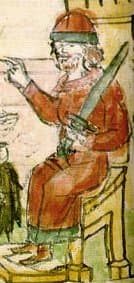
Igor of Kiev
Emperor · Medieval
39.0Total

Yagbeu Seyon
Emperor · Medieval
43.4Total
Basic Information
Born
877
1258
Died
945
1294
Era
Medieval
Medieval
Nationality
Kievan Rus
Ethiopia
Occupation
Emperor
Emperor
Civilization
Western
Other
Score Comparison
Military (10%)
50.0
21.2
Political (20%)
26.4
35.1
Influence (20%)
47.9
50.2
Legacy (20%)
39.2
41.7
Leadership (15%)
34.6
62.2
Strategy (15%)
30.3
36.8
TOTAL
39.0
43.4
Igor of Kiev — Complete Timeline
941 AD
Igor's Campaign Against ConstantinopleWar◆ Major
Igor launched a naval attack on Constantinople. The Byzantine fleet, using Greek fire, destroyed most of Igor's ships. The campaign failed, forcing Igor to retreat and later negotiate a less favorable treaty in 944.
Byzantine-Rus WarNaval DefeatGreek Fire
Impact: regionaldestructive
944 AD
Rus'-Byzantine Treaty of 944Political Action
Following his failed campaign, Igor signed a treaty with the Byzantine Empire. The treaty renewed trade relations but imposed restrictions on Rus merchants and required Igor to provide military assistance to Byzantium.
DiplomacyTradeByzantine Empire
Impact: regional
945 AD
Murder by the DrevliansPolitical Action
Igor attempted to collect excessive tribute from the Drevlians, an East Slavic tribe. The Drevlians rebelled, captured Igor, and killed him by tying him to bent trees that tore his body apart. His death triggered Olga's revenge.
AssassinationRevoltTribute
Impact: nationaltragic
Yagbeu Seyon — Complete Timeline
1280 AD
Supported the Ethiopian Orthodox ChurchCultural◆ Major
Yagbeu Seyon granted land and privileges to the Ethiopian Orthodox Church, strengthening its institutional power. His patronage helped consolidate the Solomonic dynasty's religious legitimacy and fostered the church's role in governance.
Church patronageSolomonic consolidationReligious policy
Impact: regionalconstructive
Expert Analysis
Origins
Igor of Kiev (born c. 877, died 945) was a member of the Rurik dynasty, the ruling family of Kievan Rus. He succeeded his father Rurik, the legendary founder of the dynasty, as Prince of Kiev. Little is known about his early life, but he inherited a realm that was still consolidating power over East Slavic tribes. Igor's upbringing was likely centered on military training and governance, typical for a medieval ruler. In contrast, Yagbeu Seyon (born c. 1270, died 1294) was an Emperor of Ethiopia from the Solomonic dynasty, claiming descent from Menelik I, son of Solomon and Sheba. His early life was steeped in the traditions of the Ethiopian Orthodox Church and the imperial court. He ascended to the throne in 1285, inheriting a kingdom that was expanding its influence in the Horn of Africa. While Igor's background was shaped by Viking and Slavic warrior culture, Yagbeu Seyon's was defined by Christian monarchy and ties to the church.
Rise to Power
Igor became Prince of Kiev around 912 after the death of his predecessor, Oleg, who had expanded the realm. Igor's rise was not marked by a dramatic struggle; he inherited a stable state. However, his authority was tested by the Drevlians, a tribe that resisted paying tribute. Igor's response—demanding more tribute—led to his downfall. Yagbeu Seyon came to power in 1285, likely through succession, as the Solomonic dynasty had restored the imperial line. His reign focused on consolidating power by aligning with the church. He granted lands and privileges to the Ethiopian Orthodox Church, securing its loyalty and his own legitimacy. This strategy differed sharply from Igor's reliance on military force and tribute extraction.
Leadership & Governance
Igor's leadership style was aggressive and extractive. He ruled through tribute collection, often demanding excessive amounts, as seen with the Drevlians. His governance lacked institutional support; he depended on personal authority and military might. The Rus'-Byzantine Treaty of 944, signed after his failed campaign against Constantinople, shows his willingness to negotiate but also his limitations. Yagbeu Seyon, by contrast, ruled through institutional patronage. By supporting the church, he strengthened a centralized religious authority that could legitimize his rule and unify the realm. His political score of 35.1 reflects moderate skill, but his leadership score of 62.2 indicates effective governance through alliance-building. Igor's leadership score of 34.6 reflects his inability to manage tribal relations.
Triumph & Tragedy
Igor's greatest success was the Treaty of 944, which renewed trade with Byzantium, though on less favorable terms. His tragedy was his death: the Drevlians rebelled against his excessive tribute demands, captured him, and killed him by tying him to two bent trees that tore him apart. This event highlighted his failure in governance. Yagbeu Seyon's triumph was his patronage of the Ethiopian Orthodox Church, which helped consolidate the Solomonic dynasty and foster religious unity. His tragedy is less documented, but his reign faced challenges from regional nobles and external threats. His influence score of 50.2 and legacy score of 41.7 indicate a lasting impact, while Igor's legacy score of 39.2 is lower, tainted by his murder.
Character & Destiny
Igor's character was marked by greed and poor judgment. He ignored the Drevlians' capacity for resistance, leading to his demise. Historians often view him as a cautionary tale about unchecked power. Yagbeu Seyon appears more prudent, using religious patronage to secure his throne. His character aligned with the Solomonic ideal of a ruler who supports the church. Igor's total score of 39.0 reflects his failures, while Yagbeu Seyon's 43.4 shows a more effective, if less dramatic, reign.
Legacy
Igor's legacy is primarily negative: he is remembered as the prince who was murdered for his greed. His reign contributed to the instability that followed, though his treaty with Byzantium set precedents for trade. Yagbeu Seyon's legacy is more positive: his support for the church helped establish the Solomonic dynasty's religious foundation, which lasted for centuries. Ethiopian chronicles remember him as a pious emperor. While Igor's military score of 50.0 is higher than Yagbeu Seyon's 21.2, the latter's political and leadership scores give him a higher overall impact.
Conclusion
Yagbeu Seyon had greater impact than Igor of Kiev. His patronage of the Ethiopian Orthodox Church created enduring institutional strength, while Igor's rule left a legacy of instability and cautionary tales. With a total score of 43.4 versus Igor's 39.0, Yagbeu Seyon's governance through alliance-building proved more effective than Igor's extractive tribute system. In the long term, Yagbeu Seyon's contributions to Ethiopian religious and political unity outweigh Igor's fleeting military campaigns.
Rankings
🥇
Yagbeu SeyonLeader
Mil: 21.2Pol: 35.1Inf: 50.2
43.4
🥈
Igor of Kiev
Mil: 50.0Pol: 26.4Inf: 47.9
39.0
+4.4 behind
How This Comparison Works
Algorithm
Each figure is scored on 6 dimensions (0—100 scale) based on structured historical data: Military (10%), Political (20%), Influence (20%), Legacy (20%), Leadership (15%), Strategy (15%). The weighted total produces the final ranking.
Data Sources
Scores are computed from structured sub-indicators in the database. Scale factors adjust for era (Ancient ×0.85, Modern ×1.0) and civilization size (Eastern ×1.05, Other ×0.80) to account for differences in population and military scale.
Maximum 3 Figures
Comparisons are limited to 2—3 figures to ensure readability and statistical meaningfulness.
Error Margins
±5 points per dimension — Sub-scores are derived from historical records with inherent uncertainty. Two figures within 5 points on a dimension should be considered roughly equivalent in that area.
Total Score Accuracy
±3 points overall — The weighted combination of 6 dimensions produces a total score with approximately ±3 points of uncertainty. Differences of less than 3 points are not statistically significant— the figures are effectively tied.
Known Limitations
- Historical records are incomplete and uneven across civilizations
- Figures from oral-tradition societies may be underrepresented
- Occupation labels can misclassify multi-role figures
- Scores measure capability and impact, not moral character
- Quantitative scoring is a comparison tool, not absolute truth
Capability Radar
Military (10%) — Battles & Warfare
Battles
20
10
Win Rate
15
10
Expansion
25
10
Political (20%) — Governance & Reform
Reform
10
30
Diplomacy
25
30
Economy
15
30
Influence (20%) — Cultural & Global Reach
Cultural
15
30
Global
10
10
Legacy (20%) — Historical Impact
Historical
20
30
Longevity
15
20
Leadership (15%) — Power & Stability
Tenure
30
40
Stability
10
40
Strategy (15%) — Tactics & Innovation
Strategy
15
10
Tactics
20
10
Reform
5
10
Similar Comparisons
Comments & Discussion
No comments yet. Be the first to share your thoughts!