Loading...
Igor of Kiev vs Napoleon Bonaparte
Napoleon Bonaparte leads by 31.9 pts · 2 figures compared
…
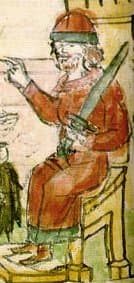
Igor of Kiev
Emperor · Medieval
39.0Total

Napoleon Bonaparte
General · Modern
70.9Total
Basic Information
Born
877
1769
Died
945
1821
Era
Medieval
Modern
Nationality
Kievan Rus
France
Occupation
Emperor
General
Civilization
Western
Western
Score Comparison
Military (10%)
50.0
94.0
Political (20%)
26.4
72.0
Influence (20%)
47.9
40.0
Legacy (20%)
39.2
80.0
Leadership (15%)
34.6
78.0
Strategy (15%)
30.3
90.0
TOTAL
39.0
70.9
Igor of Kiev — Complete Timeline
941 AD
Igor's Campaign Against ConstantinopleWar◆ Major
Igor launched a naval attack on Constantinople. The Byzantine fleet, using Greek fire, destroyed most of Igor's ships. The campaign failed, forcing Igor to retreat and later negotiate a less favorable treaty in 944.
Byzantine-Rus WarNaval DefeatGreek Fire
Impact: regionaldestructive
944 AD
Rus'-Byzantine Treaty of 944Political Action
Following his failed campaign, Igor signed a treaty with the Byzantine Empire. The treaty renewed trade relations but imposed restrictions on Rus merchants and required Igor to provide military assistance to Byzantium.
DiplomacyTradeByzantine Empire
Impact: regional
945 AD
Murder by the DrevliansPolitical Action
Igor attempted to collect excessive tribute from the Drevlians, an East Slavic tribe. The Drevlians rebelled, captured Igor, and killed him by tying him to bent trees that tore his body apart. His death triggered Olga's revenge.
AssassinationRevoltTribute
Impact: nationaltragic
Napoleon Bonaparte — Complete Timeline
1799 AD
Coup of 18 BrumaireOther◆ Major
Napoleon Bonaparte, with support from his brother Lucien and key political figures, overthrew the Directory in a bloodless coup. He established the Consulate with himself as First Consul, effectively becoming the ruler of France. This event ended the French Revolution's most unstable period.
French RevolutionCoupRise to Power
Impact: regional
1804 AD
Promulgation of the Napoleonic CodeOther◆ Major
Napoleon enacted the Civil Code of the French, known as the Napoleonic Code, a comprehensive set of laws that replaced the fragmented feudal legal systems. The code established legal equality, protected property rights, and secularized law. It became the basis for legal systems in many European and world countries.
Legal ReformNapoleonic CodeCivil Law
Impact: globalconstructive
1805 AD
Battle of AusterlitzWar◆ Major
Napoleon's Grande Arm
Napoleonic WarsBattleDecisive Victory
Impact: global
1812 AD
Invasion of RussiaWar◆ Major
Napoleon led the Grande Arm
Napoleonic WarsInvasionDisaster
Impact: globaldestructive
1815 AD
Battle of WaterlooWar◆ Major
Napoleon's French army was defeated by the combined forces of the Duke of Wellington's Anglo-Allied army and Gebhard Leberecht von Bl
Napoleonic WarsBattleFinal Defeat
Impact: globaldestructive
Expert Analysis
igor-of-kiev-vs-napoleon-bonaparte
# The Conqueror and the Collector: Napoleon and Igor of Kiev
On a June morning in 1815, Napoleon Bonaparte watched his Imperial Guard march up the muddy slope of Mont-Saint-Jean, the fate of Europe balanced on a few thousand bayonets. Nine centuries earlier and a thousand miles to the east, another ruler—Igor of Kiev—had watched his fleet burn on the waters of the Bosporus, Greek fire turning his dreams of Constantinople to ash. Both men reached for greatness; both fell short. But the distances between them—in ambition, in achievement, in the very texture of their lives—are measured not merely in years but in the transformation of civilization itself.
Origins
Napoleon Bonaparte was born in 1769 on the island of Corsica, a Mediterranean backwater that had just become French. His family was minor nobility, poor enough to feel every slight, proud enough to nurse every grievance. The young Napoleon devoured history and military science, a provincial outsider in a kingdom still ruled by birthright. The French Revolution, which erupted when he was twenty, shattered the old world and opened a path for talent. He was, in every sense, a child of modernity—of meritocracy, of nationalism, of the belief that a man could forge his own destiny.
Igor of Kiev emerged from a world where such ideas were unimaginable. Born around 877, he was a Varangian prince, a descendant of the semi-legendary Rurik who had brought Scandinavian warriors to rule over Slavic tribes. His Kievan Rus was a fragile confederation of tribute and terror, held together by the sword and the river trade routes that linked the Baltic to the Black Sea. There was no revolution here, no ladder of opportunity—only the brutal logic of dynastic succession and the endless demand for silver, slaves, and submission.
Rise to Power
Napoleon rose on the smoke of battlefields. At twenty-four, he drove the British from Toulon. At twenty-six, he crushed a royalist uprising in Paris with a "whiff of grapeshot." By thirty, he was commanding armies in Italy, turning defeat into victory with a speed that astonished Europe. His rise was meteoric, but it was also earned—a masterclass in exploiting chaos.
Igor's ascent was quieter, more precarious. He became Prince of Kiev in 912 after the death of his predecessor, Oleg, who had expanded the realm through cunning and force. Igor inherited a state that was less a kingdom than a protection racket: he collected tribute from subject tribes, traded furs and slaves for Byzantine luxury goods, and spent his winters "poludie"—riding through the forests with his druzhina, demanding payment in honey, wax, and furs. His power was personal, face-to-face, and always at risk.
Leadership & Governance
Napoleon governed like a force of nature. He centralized the French state, created the Bank of France, and—most enduringly—instituted the Napoleonic Code, a legal framework that enshrined equality before the law, property rights, and secular administration. He appointed prefects, built roads, reformed education. He was a whirlwind of order imposed on chaos, and his reforms spread across Europe like wildfire.
Igor governed like a chieftain. There was no code, no bureaucracy, no vision of a transformed society. His job was to maintain the flow of tribute and keep the tribes from rebellion. When he faced the Byzantine Empire, he did not seek to reform it but to plunder it. In 941, he launched a naval campaign against Constantinople, only to see his fleet destroyed by Greek fire—a terrifying weapon that turned the sea itself into an inferno. Three years later, in 944, he signed a treaty that renewed trade relations but imposed humiliating terms on the Rus. It was survival, not glory.
Triumph & Tragedy
Napoleon's greatest moment was Austerlitz in 1805, where he destroyed the combined armies of Austria and Russia in a single day of tactical brilliance. His worst was the invasion of Russia in 1812, where he lost half a million men to winter, hunger, and the scorched earth. He returned to Paris a diminished man, and within three years he was exiled to Elba, then to St. Helena, where he died in 1821 at fifty-one.
Igor's tragedy was smaller but more intimate. In 945, he rode to collect tribute from the Drevlians, a Slavic tribe already squeezed dry. His men took what they could, then Igor—perhaps greedy, perhaps uncertain of his authority—returned with a smaller force to demand more. The Drevlians did not negotiate. They bent down two birch trees, tied Igor's legs to them, and let the trees spring back, tearing him apart. His death was not a battle but a murder, not a grand defeat but a squalid miscalculation.
Character & Destiny
Napoleon was driven by an insatiable hunger for glory. "Impossible is a word to be found only in the dictionary of fools," he once said. He believed he could bend the world to his will, and for a decade he nearly did. But his ambition outran his judgment. He could not stop, could not consolidate, could not accept that even genius has limits.
Igor was driven by a simpler need: to hold what he had. He was cautious, even timid—his campaigns lacked the audacity of Oleg or the ferocity of later princes. He died because he did not understand that power in a tribute-based system is a negotiation, not a command. The Drevlians did not kill him because he was strong; they killed him because he was weak enough to come back, and stupid enough to think they would not notice.
Legacy
Napoleon's legacy is written across Europe. The Napoleonic Code remains the foundation of civil law in dozens of countries. He redrew borders, toppled thrones, and unleashed the forces of nationalism that would shape the next two centuries. Even his defeat at Waterloo became legend—a cautionary tale about overreach, yes, but also a monument to what one man could achieve.
Igor's legacy is thinner. He is remembered as the father of Sviatoslav, the great warrior prince who would expand Kievan Rus to its greatest extent, and as the husband of Olga, who avenged his death with a savagery that became legend. But Igor himself was a placeholder, a bridge between the founding of the Rus and its golden age. His name survives in the chronicles, but it is not celebrated.
Conclusion
Napoleon and Igor both reached for Constantinople; both failed. But Napoleon's failure was epic, a tragedy on a continental scale, while Igor's was merely grim—a cautionary tale about greed and poor judgment. The difference is not just in talent but in the worlds they inhabited. Napoleon lived in an age of revolutions, where a Corsican outsider could become emperor of Europe. Igor lived in an age of tribes and tribute, where a prince's power was measured in the fear he inspired and the gold he could extract. One man tried to remake the world; the other simply tried to hold it together. In the end, both were broken by forces larger than themselves—but only one of them left a world transformed.
Rankings
🥇
Napoleon BonaparteLeader
Mil: 94.0Pol: 72.0Inf: 40.0
70.9
🥈
Igor of Kiev
Mil: 50.0Pol: 26.4Inf: 47.9
39.0
+31.9 behind
How This Comparison Works
Algorithm
Each figure is scored on 6 dimensions (0—100 scale) based on structured historical data: Military (10%), Political (20%), Influence (20%), Legacy (20%), Leadership (15%), Strategy (15%). The weighted total produces the final ranking.
Data Sources
Scores are computed from structured sub-indicators in the database. Scale factors adjust for era (Ancient ×0.85, Modern ×1.0) and civilization size (Eastern ×1.05, Other ×0.80) to account for differences in population and military scale.
Maximum 3 Figures
Comparisons are limited to 2—3 figures to ensure readability and statistical meaningfulness.
Error Margins
±5 points per dimension — Sub-scores are derived from historical records with inherent uncertainty. Two figures within 5 points on a dimension should be considered roughly equivalent in that area.
Total Score Accuracy
±3 points overall — The weighted combination of 6 dimensions produces a total score with approximately ±3 points of uncertainty. Differences of less than 3 points are not statistically significant— the figures are effectively tied.
Known Limitations
- Historical records are incomplete and uneven across civilizations
- Figures from oral-tradition societies may be underrepresented
- Occupation labels can misclassify multi-role figures
- Scores measure capability and impact, not moral character
- Quantitative scoring is a comparison tool, not absolute truth
Capability Radar
Military (10%) — Battles & Warfare
Battles
20
95
Win Rate
15
90
Expansion
25
95
Political (20%) — Governance & Reform
Reform
10
95
Diplomacy
25
80
Economy
15
85
Influence (20%) — Cultural & Global Reach
Cultural
15
85
Global
10
90
Legacy (20%) — Historical Impact
Historical
20
95
Longevity
15
90
Leadership (15%) — Power & Stability
Tenure
30
85
Stability
10
70
Strategy (15%) — Tactics & Innovation
Strategy
15
95
Tactics
20
98
Reform
5
92
Similar Comparisons
Comments & Discussion
VarangianVanguard6/17/2026
Napoleon reinvented war itself; Igor just recycled Viking raids on a bigger scale. Watch any documentary on Austerlitz and you see operational genius—the crushing of an army through maneuver and timing. Watch Igor's 941 campaign against Constantinople and you see a desperate slog with leaky boats against Greek fire. Napoleon lost at Waterloo because his soliders failed; Igor lost because his entire fleet of 1,000 ships got torched by a single Byzantine invention. No contest.
东罗马眼热6/17/2026
拿破仑至少知道什么时候该停,伊戈尔根本不懂止损的艺术。拿破伦在1814年退位时保住了皇位象征和尊严,而伊戈尔在941年惨败后还敢二次远征,结果被罗马人用“希腊火”烧得灰头土脸。更要命的是,他回来后被德列夫利安人活活撕成两半——这种结局简直是对领袖智慧的嘲弄。拿破仑的失败是伟大悲剧,伊戈尔不过是无知的莽夫。
LogisticsLeo6/17/2026
Let's talk about something boring but decisive: supply chains. Napoleon built the most efficient military logistics system Europe had ever seen—his depots, his system of living off the land, his corps organization allowed him to field 600,000 men for the Russian campaign. Igor? He dragged his Slav and Varangian rabble through the Dnieper rapids on single-masted boats, relying on plunder and hope. When the Byzantines denied him food and set his ships ablaze, his 'army' starved and scattered. The
中世纪计量学6/17/2026
数据说话:拿破仑的征服面积约100万平方公里,统治逾4000万人口;伊戈尔的罗斯公国最多不过控制80万平方公里,人口更是粗放估算在200万上下。别忘了,拿破仑时代欧洲已有详细人口普查和马匹登记——伊戈尔对自家疆域都糊里糊涂。所谓“伊戈尔对君士坦丁堡的威胁”,不过是一次3000艘船、4万人的抢掠,连攻城战都没打起来。拿两次作战规模对比,就像拿核弹比弓箭。
ByzantineBias6/17/2026
Enough romanticizing the Barbarian King—Igor was a desperate failure who couldn't even conquer a revolted tribe. After losing his fleet at Constantinople, he signed a humiliating trade treaty that reopened nothing but commercial crumbs. Meanwhile, his own tax-collecting greed got him murdered by the Drevlians who literally bent two birch trees to tear him apart. Napoleon lost twice and still died Emperor of Elba and a legend. Igor died nailed to trees by peasants. Compare the biographies, not ju