Loading...
Iancu de Hunedoara vs Li Keyong
Iancu de Hunedoara leads by 11.6 pts · 2 figures compared
…

Iancu de Hunedoara
General · Medieval
65.2Total
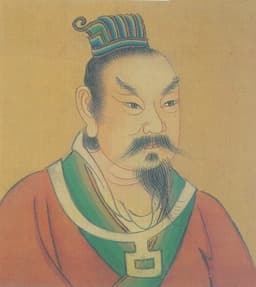
Li Keyong
General · Medieval
53.6Total
Basic Information
Born
1406
856
Died
1456
908
Era
Medieval
Medieval
Nationality
Hungary
China
Occupation
General
General
Civilization
Western
Eastern
Score Comparison
Military (10%)
78.5
76.0
Political (20%)
68.0
39.4
Influence (20%)
59.0
51.0
Legacy (20%)
54.0
44.2
Leadership (15%)
72.0
65.0
Strategy (15%)
80.6
65.4
TOTAL
65.2
53.6
Iancu de Hunedoara — Complete Timeline
1444 AD
Battle of VarnaWar◆ Major
John Hunyadi commanded the Christian coalition forces at the Battle of Varna against the Ottomans. The battle ended in a decisive Ottoman victory, with King W
CrusadeDefeatVarna
Impact: regionaltragic
1448 AD
Second Battle of KosovoWar◆ Major
John Hunyadi led a Hungarian army against the Ottomans at the Second Battle of Kosovo. The battle resulted in a Hungarian defeat, with Hunyadi barely escaping capture.
Ottoman WarsDefeat
Impact: regionaltragic
1456 AD
Siege of BelgradeWar
John Hunyadi successfully defended Belgrade against a massive Ottoman army led by Sultan Mehmed II. The victory halted Ottoman expansion into Hungary and was a major Christian triumph.
SiegeVictoryOttoman Defeat
Impact: regionalconstructive
Death from PlagueOther◆ Major
John Hunyadi died of plague shortly after the Siege of Belgrade. His death removed a key leader from the anti-Ottoman struggle in the Balkans.
DeathPlague
Impact: regionaltragic
Li Keyong — Complete Timeline
883 AD
Became Prince of JinPolitical Action◆ Major
Li Keyong was appointed Prince of Jin by the Tang court for his role in suppressing the Huang Chao rebellion. He established a power base in Shanxi and became a major warlord during the late Tang period.
AppointmentWarlordTang Dynasty
Impact: regionalconstructive
901 AD
Defeated by Zhu Wen at the Battle of the Yellow RiverWar◆ Major
Li Keyong was defeated by the forces of Zhu Wen (later Emperor Taizu of Later Liang) at the Yellow River. This defeat weakened his position and allowed Zhu Wen to dominate the Central Plains.
BattleDefeatZhu Wen
Impact: regionaldestructive
908 AD
Death from illnessOther◆ Major
Li Keyong died of illness. His son Li Cunxu succeeded him and later founded the Later Tang dynasty, fulfilling Li Keyong's ambition to restore Tang rule.
DeathSuccessionLater Tang
Impact: regionaltragic
Expert Analysis
Origins
Iancu de Hunedoara (John Hunyadi) was born around 1406 in Hunedoara, Kingdom of Hungary, into a noble family of Romanian origin. His father, Voyk, was a knight, and his mother, Elizabeth, was of Hungarian nobility. Hunyadi received military training in the court of Sigismund of Luxembourg, learning combat and strategy. His early career included service as a page and later as a soldier in the border wars against the Ottomans, shaping his lifelong dedication to defending Christendom.
Li Keyong was born in 856 in the Shatuo Turk confederation, part of the Tang dynasty's northern frontier. His father, Li Guochang, was a Shatuo chieftain who served the Tang court. Li Keyong grew up among nomadic warriors, excelling in horseback archery. He was known as 'Li Keyong the One-Eyed' due to a battle injury. His early years were marked by the Huang Chao rebellion, which devastated the Tang empire and provided opportunities for military leaders.
Rise to Power
Hunyadi rose through military service, becoming Ban of Szörény in 1439. His first major victory was at the Siege of Smederevo in 1439, but his reputation soared after the 1441 defeat of Ottoman forces near Hermannstadt. In 1443, he led the Long Campaign into the Balkans, capturing Niš and Sofia. Appointed Regent of Hungary in 1446, he consolidated power while the young king Ladislaus V was absent. His turning point came with the 1456 Siege of Belgrade, where he commanded the defense against Mehmed II's army of 100,000, using improvised fortifications and a mobile defense.
Li Keyong's rise began in 878 when he joined the Tang campaign against Huang Chao. For his role in recapturing Chang'an in 883, he was appointed Prince of Jin and given control of Shanxi province. He built a power base in Taiyuan, leveraging his Shatuo cavalry. In 884, he defeated Huang Chao's remnants, but his rivalry with Zhu Wen (later Emperor Taizu of Liang) intensified. After the Tang collapse in 907, Li Keyong refused to recognize Zhu Wen's Later Liang dynasty and continued to fight for the restoration of Tang.
Leadership & Governance
Hunyadi ruled Hungary as regent with authoritarian efficiency. He reformed the military, creating a standing army of mercenaries (the Black Army) and improving fortress defenses. He funded campaigns through taxes and church support, but his governance was strained by noble opposition. His leadership style was hands-on; he personally led cavalry charges, as at Varna (1444) where his impatience caused a disastrous defeat. At Belgrade, he coordinated artillery, river flotillas, and infantry to break the Ottoman siege. His political score of 68.0 reflects his ability to maintain power despite internal conflicts.
Li Keyong governed as a warlord, ruling Shanxi with feudal authority. His military score of 76.0 reflects his prowess in mobile warfare, using hit-and-run tactics. Politically, he scored only 39.4, as he failed to unite other Tang loyalists or effectively counter Zhu Wen's propaganda. He maintained traditional tribal structures, which limited administrative efficiency. His son Li Cunxu later built on his legacy, but Li Keyong's governance was reactive, focusing on military campaigns rather than state-building.
Triumph & Tragedy
Hunyadi's greatest triumph was the 1456 Siege of Belgrade, where his victory halted Ottoman expansion for 70 years. He scored 78.5 in military, reflecting his tactical brilliance. His tragedy was the 1444 Battle of Varna, where he ignored warnings and attacked prematurely, leading to a Christian defeat and his near-death. He also lost the 1448 Second Battle of Kosovo, failing to secure the Balkans. His death from plague in 1456, just weeks after Belgrade, deprived Europe of his leadership.
Li Keyong's triumph was suppressing the Huang Chao rebellion, earning him the title Prince of Jin and a strategic territory. His key event was the 884 victory at Zhongmou, where he defeated the rebel remnants. His tragedy was the 901 Battle of the Yellow River, where Zhu Wen defeated him, crippling his forces. He died in 908 of illness, never realizing his goal of restoring Tang. His son later founded the Later Tang dynasty, but Li Keyong's own ambitions were unfulfilled.
Character & Destiny
Hunyadi was decisive and aggressive, often leading from the front. His military strategy score of 80.6 indicates a methodical planner, but his hot temper at Varna showed impulsiveness. He was deeply religious, funding churches and seeking papal support. His character shaped his destiny: his courage won Belgrade but his rashness cost Varna. He died of plague, a mundane end for a crusader.
Li Keyong was resilient and charismatic, maintaining loyalty among his Shatuo warriors despite defeats. His nickname 'One-Eyed' reflected his toughness. He was politically naive, trusting Tang promises while Zhu Wen outmaneuvered him. His strategy score of 65.4 shows competence but not brilliance. His death allowed his son to succeed, but his own legacy was overshadowed by his rival.
Legacy
Hunyadi's legacy is as a defender of Europe. The Siege of Belgrade is commemorated by the noon bell ordered by Pope Callixtus III. His military reforms influenced later Hungarian kings. He scored 54.0 in legacy, reflecting his regional impact. His son Matthias Corvinus became a great king, but Hunyadi's direct achievements were defensive. In Romania and Hungary, he is a national hero.
Li Keyong's legacy is as a founder of the Later Tang dynasty (through his son). He scored 44.2 in legacy, lower due to his failure to restore Tang himself. His Shatuo legacy influenced Chinese military history, and his tomb in Taiyuan is a cultural site. However, he is less known than his rival Zhu Wen.
Conclusion
Iancu de Hunedoara had greater impact with a total score of 65.2 compared to Li Keyong's 53.6. Hunyadi's defense of Belgrade altered the course of European history, while Li Keyong's failure to defeat Zhu Wen led to the Five Dynasties period. Hunyadi's military score of 78.5 and strategy of 80.6 exceed Li Keyong's 76.0 and 65.4. Although both were skilled generals, Hunyadi's strategic victory at Belgrade was decisive, whereas Li Keyong's defeat at the Yellow River was a setback from which he never recovered. Thus, Hunyadi's legacy is more significant in global history.
Rankings
🥇
Iancu de HunedoaraLeader
Mil: 78.5Pol: 68.0Inf: 59.0
65.2
🥈
Li Keyong
Mil: 76.0Pol: 39.4Inf: 51.0
53.6
+11.6 behind
How This Comparison Works
Algorithm
Each figure is scored on 6 dimensions (0—100 scale) based on structured historical data: Military (10%), Political (20%), Influence (20%), Legacy (20%), Leadership (15%), Strategy (15%). The weighted total produces the final ranking.
Data Sources
Scores are computed from structured sub-indicators in the database. Scale factors adjust for era (Ancient ×0.85, Modern ×1.0) and civilization size (Eastern ×1.05, Other ×0.80) to account for differences in population and military scale.
Maximum 3 Figures
Comparisons are limited to 2—3 figures to ensure readability and statistical meaningfulness.
Error Margins
±5 points per dimension — Sub-scores are derived from historical records with inherent uncertainty. Two figures within 5 points on a dimension should be considered roughly equivalent in that area.
Total Score Accuracy
±3 points overall — The weighted combination of 6 dimensions produces a total score with approximately ±3 points of uncertainty. Differences of less than 3 points are not statistically significant— the figures are effectively tied.
Known Limitations
- Historical records are incomplete and uneven across civilizations
- Figures from oral-tradition societies may be underrepresented
- Occupation labels can misclassify multi-role figures
- Scores measure capability and impact, not moral character
- Quantitative scoring is a comparison tool, not absolute truth
Capability Radar
Military (10%) — Battles & Warfare
Battles
85
75
Win Rate
80
70
Expansion
70
65
Political (20%) — Governance & Reform
Reform
60
35
Diplomacy
75
55
Economy
60
30
Influence (20%) — Cultural & Global Reach
Cultural
60
45
Global
65
30
Legacy (20%) — Historical Impact
Historical
75
55
Longevity
70
40
Leadership (15%) — Power & Stability
Tenure
65
60
Stability
55
40
Strategy (15%) — Tactics & Innovation
Strategy
90
68
Tactics
85
72
Reform
75
40
Similar Comparisons
Comments & Discussion
No comments yet. Be the first to share your thoughts!