Loading...
Analysis will be generated on first visit.
Scores and timeline are available below. The page will refresh automatically when ready.
Ian Khama vs Napoleon Bonaparte
Napoleon Bonaparte leads by 13.0 pts · 2 figures compared
…

Ian Khama
General · Modern
69.4Total
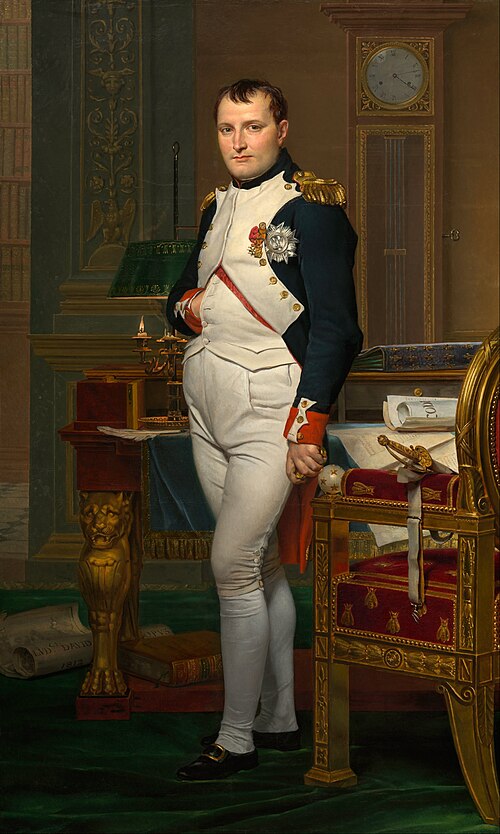
Napoleon Bonaparte
General · Modern
82.4Total
Basic Information
Born
1953
1769
Died
—
1821
Era
Modern
Modern
Nationality
Botswana
France
Occupation
General
General
Civilization
Western
Western
Score Comparison
Military (10%)
59.7
94.0
Political (20%)
72.0
75.0
Influence (20%)
72.8
82.0
Legacy (20%)
65.3
78.0
Leadership (15%)
87.2
80.0
Strategy (15%)
55.6
93.0
TOTAL
69.4
82.4
Rankings
🥇
Napoleon BonaparteLeader
Mil: 94.0Pol: 75.0Inf: 82.0
82.4
🥈
Ian Khama
Mil: 59.7Pol: 72.0Inf: 72.8
69.4
+13.0 behind
How This Comparison Works
Algorithm
Each figure is scored on 6 dimensions (0—100 scale) based on structured historical data: Military (10%), Political (20%), Influence (20%), Legacy (20%), Leadership (15%), Strategy (15%). The weighted total produces the final ranking.
Data Sources
Scores are computed from structured sub-indicators in the database. Scale factors adjust for era (Ancient ×0.85, Modern ×1.0) and civilization size (Eastern ×1.05, Other ×0.80) to account for differences in population and military scale.
Maximum 3 Figures
Comparisons are limited to 2—3 figures to ensure readability and statistical meaningfulness.
Error Margins
±5 points per dimension — Sub-scores are derived from historical records with inherent uncertainty. Two figures within 5 points on a dimension should be considered roughly equivalent in that area.
Total Score Accuracy
±3 points overall — The weighted combination of 6 dimensions produces a total score with approximately ±3 points of uncertainty. Differences of less than 3 points are not statistically significant— the figures are effectively tied.
Known Limitations
- Historical records are incomplete and uneven across civilizations
- Figures from oral-tradition societies may be underrepresented
- Occupation labels can misclassify multi-role figures
- Scores measure capability and impact, not moral character
- Quantitative scoring is a comparison tool, not absolute truth
Capability Radar
Military (10%) — Battles & Warfare
Battles
51
95
Win Rate
51
90
Expansion
55
95
Political (20%) — Governance & Reform
Reform
60
95
Diplomacy
55
80
Economy
60
85
Influence (20%) — Cultural & Global Reach
Cultural
40
85
Global
40
90
Legacy (20%) — Historical Impact
Historical
45
95
Longevity
30
90
Leadership (15%) — Power & Stability
Tenure
65
85
Stability
70
70
Strategy (15%) — Tactics & Innovation
Strategy
61
95
Tactics
65
98
Reform
68
92
Analysis will be generated on first visit.
Scores and timeline are available below. The page will refresh automatically when ready.
Ian Khama — Complete Timeline
2008 AD
Became President of BotswanaPolitical Action◆ Major
Ian Khama succeeded Festus Mogae as President of Botswana. He continued the country's tradition of stable, democratic governance and economic growth, but his leadership style was noted for being more authoritarian and centralizing than his predecessors.
PresidencySuccessionDemocracy
Impact: national
2009 AD
Implemented Anti-Poaching PoliciesPolitical Action◆ Major
Khama, a known conservationist, strengthened anti-poaching laws and deployed the Botswana Defence Force to protect wildlife. His 'shoot-to-kill' policy against poachers reduced elephant poaching but drew criticism from human rights groups.
ConservationAnti-PoachingWildlife
Impact: regionalconstructive
2012 AD
Banned Opposition Politicians from Entering Certain AreasPolitical Action
Khama's government banned opposition leaders from entering some rural areas, citing security concerns. This move was seen as an attempt to suppress political dissent and was criticized by civil society groups as undemocratic.
Political RepressionOppositionDemocracy
Impact: nationaldestructive
2018 AD
Stepped Down as PresidentPolitical Action◆ Major
Khama voluntarily stepped down after serving two terms, respecting Botswana's constitutional term limits. He handed power to his vice president, Mokgweetsi Masisi, but later became a vocal critic of Masisi's government, leading to a political rift.
Term LimitsSuccessionDemocracy
Impact: national
Similar Comparisons
Comments & Discussion
No comments yet. Be the first to share your thoughts!