Loading...
Hyegong of Silla vs Titus
Titus leads by 27.1 pts · 2 figures compared
…
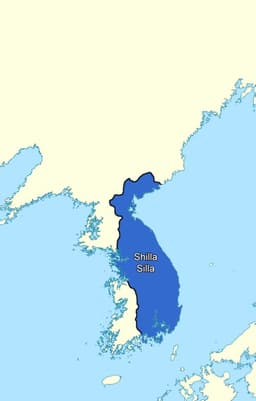
Hyegong of Silla
Emperor · Ancient
34.4Total

Titus
Emperor · Ancient
61.5Total
Basic Information
Born
-758
39
Died
—
81
Era
Ancient
Ancient
Nationality
Korea
Roman Empire
Occupation
Emperor
Emperor
Civilization
Eastern
Western
Score Comparison
Military (10%)
10.2
76.0
Political (20%)
26.4
68.0
Influence (20%)
44.0
60.0
Legacy (20%)
35.0
52.0
Leadership (15%)
34.6
65.7
Strategy (15%)
45.0
58.0
TOTAL
34.4
61.5
Hyegong of Silla — Complete Timeline
780 AD
Assassination of Hyegong of SillaPolitical Action◆ Major
King Hyegong was killed in a coup led by Kim Yang-sang and other nobles. The assassination ended the middle Silla period and resulted in the collapse of the direct royal line, leading to a period of instability and the rise of the succeeding king Wonseong.
CoupAssassinationSilla
Impact: nationaldestructive
Titus — Complete Timeline
70 AD
Siege of Jerusalem (Titus)War
Titus, commanding four legions, besieged Jerusalem during the First Jewish-Roman War. After a five-month siege, he captured the city and destroyed the Second Temple, a pivotal event in Jewish history.
Jewish WarSiegeTemple Destruction
Impact: regionaldestructive
79 AD
Accession as EmperorPolitical Action◆ Major
Upon Vespasian's death, Titus became emperor, the first biological son to succeed his father in Roman history. He was popular for his generosity and efforts to aid disaster victims.
SuccessionFlavian DynastyImperial Rule
Impact: global
Eruption of Mount VesuviusOther◆ Major
Mount Vesuvius erupted, burying Pompeii and Herculaneum. Titus visited the area and provided relief funds, but the disaster killed thousands and destroyed entire cities.
Natural DisasterVesuviusPompeii
Impact: regionaltragic
80 AD
Completion of the ColosseumCultural◆ Major
Titus completed the Flavian Amphitheatre (Colosseum) and held inaugural games lasting 100 days, including gladiatorial contests and animal hunts. The Colosseum became a symbol of Roman engineering.
ArchitecturePublic WorksEntertainment
Impact: globalconstructive
Fire in Rome (Titus)Other
A fire broke out in Rome, destroying the Temple of Jupiter Optimus Maximus and other buildings. Titus personally directed relief efforts and compensated victims.
FireRomeDisaster Relief
tragic
Expert Analysis
Origins
Hyegong of Silla (born 758, reigned 765–780) was the son of King Gyeongdeok. He ascended the throne at age 7, with his mother Queen Dowager Gyeongsu acting as regent. The Silla kingdom was in decline, with powerful aristocratic families vying for control. Hyegong received a Confucian education but lacked the political acumen to navigate the treacherous court.
Titus Flavius Vespasianus (born 39 AD) was the eldest son of Emperor Vespasian. He grew up in the imperial court and received military training. His father's rise to power during the Year of the Four Emperors (69 AD) set the stage for Titus's own career. He served as a military tribune in Britain and Germany, gaining experience.
Rise to Power
Hyegong became king at age 7 following his father's death. The regency of his mother was challenged by aristocratic factions, notably Kim Yang-sang. In 768, a rebellion by Kim Dae-gong was suppressed, but it exposed the fragility of Hyegong's rule. He attempted to centralize power by promoting officials from non-aristocratic backgrounds, alienating the nobility. His reign saw constant power struggles, culminating in the coup of 780.
Titus rose to prominence through military achievement. In 67 AD, he was appointed legate of Legio XV Apollinaris and served under his father in the First Jewish-Roman War. After Vespasian became emperor in 69 AD, Titus was given command of the war. He besieged Jerusalem in 70 AD, capturing the city after five months and destroying the Second Temple. This victory made him a hero in Rome. He became co-ruler with his father in 71 AD, holding tribunician power and sharing the consulship. Upon Vespasian's death in 79 AD, Titus succeeded him peacefully.
Leadership & Governance
Hyegong's leadership was characterized by weakness and indecision. He attempted reforms, such as appointing commoners to high office, but faced fierce opposition. In 775, he executed several nobles for conspiracy, further alienating the elite. He relied on Buddhist clergy for support, but this did not stabilize his rule. His governance score of 26.4 reflects his inability to control the state.
Titus was known for his efficient and benevolent rule. He completed the Colosseum (Flavian Amphitheatre) in 80 AD, hosting 100 days of games. During the eruption of Mount Vesuvius in 79 AD, he visited the devastated areas and provided relief. He also directed recovery efforts after a major fire in Rome in 80 AD. His political score of 68.0 indicates effective administration, though his reign was short (two years).
Triumph & Tragedy
Hyegong's greatest 'triumph' was surviving multiple revolts until 780, but he ultimately failed. His assassination in 780 ended the middle Silla period, leading to chaos. He scored low in military (10.2) and leadership (34.6). His tragedy was being a puppet king unable to control his destiny.
Titus's greatest triumph was the capture of Jerusalem, a pivotal event that ended the First Jewish-Roman War and destroyed the Second Temple. His military score of 76.0 reflects this success. He also completed the Colosseum, a lasting symbol of Rome. His tragedies include the Vesuvius eruption and the fire of Rome, natural and accidental disasters that killed thousands. Despite his relief efforts, these events marred his reign. He died of fever in 81 AD at age 41.
Character & Destiny
Hyegong was described as weak-willed and overly influenced by his mother and Buddhist monks. He lacked the decisiveness to crush his enemies. His character led to his downfall; he was assassinated by Kim Yang-sang, who became King Seondeok. Hyegong's destiny was to be a scapegoat for Silla's decline.
Titus was known as 'the delight of mankind' for his generosity and charisma. He was decisive in war but merciful in peace. His brief reign was marked by competence. His early death prevented long-term impact, but he set a standard for Roman emperors. His character ensured a smooth succession and popular memory.
Legacy
Hyegong's legacy is negative: his assassination marked the end of Silla's golden age. The kingdom fragmented, leading to the Later Three Kingdoms period. He is remembered as a failed king. His total score of 34.4 reflects minimal lasting impact.
Titus's legacy is monumental. The Colosseum stands as a symbol of Rome. His military conquest reshaped the Middle East. He is remembered as a good emperor. His total score of 61.5 reflects significant influence. The Flavian dynasty continued with his brother Domitian, but Titus's reputation outshines them.
Conclusion
Titus had greater impact by any measure. His military achievements (76.0 vs 10.2), political skill (68.0 vs 26.4), and legacy (52.0 vs 35.0) dwarf Hyegong's. Hyegong was a victim of circumstances, while Titus shaped events. The score gap of 27.1 points is decisive. Titus's construction of the Colosseum and conquest of Jerusalem changed the ancient world; Hyegong's failure ended a dynasty. Thus, Titus is the more significant historical figure.
Rankings
🥇
TitusLeader
Mil: 76.0Pol: 68.0Inf: 60.0
61.5
🥈
Hyegong of Silla
Mil: 10.2Pol: 26.4Inf: 44.0
34.4
+27.1 behind
How This Comparison Works
Algorithm
Each figure is scored on 6 dimensions (0—100 scale) based on structured historical data: Military (10%), Political (20%), Influence (20%), Legacy (20%), Leadership (15%), Strategy (15%). The weighted total produces the final ranking.
Data Sources
Scores are computed from structured sub-indicators in the database. Scale factors adjust for era (Ancient ×0.85, Modern ×1.0) and civilization size (Eastern ×1.05, Other ×0.80) to account for differences in population and military scale.
Maximum 3 Figures
Comparisons are limited to 2—3 figures to ensure readability and statistical meaningfulness.
Error Margins
±5 points per dimension — Sub-scores are derived from historical records with inherent uncertainty. Two figures within 5 points on a dimension should be considered roughly equivalent in that area.
Total Score Accuracy
±3 points overall — The weighted combination of 6 dimensions produces a total score with approximately ±3 points of uncertainty. Differences of less than 3 points are not statistically significant— the figures are effectively tied.
Known Limitations
- Historical records are incomplete and uneven across civilizations
- Figures from oral-tradition societies may be underrepresented
- Occupation labels can misclassify multi-role figures
- Scores measure capability and impact, not moral character
- Quantitative scoring is a comparison tool, not absolute truth
Capability Radar
Military (10%) — Battles & Warfare
Battles
5
70
Win Rate
5
85
Expansion
5
75
Political (20%) — Governance & Reform
Reform
20
50
Diplomacy
20
65
Economy
20
60
Influence (20%) — Cultural & Global Reach
Cultural
15
65
Global
5
55
Legacy (20%) — Historical Impact
Historical
20
70
Longevity
10
60
Leadership (15%) — Power & Stability
Tenure
30
30
Stability
10
55
Strategy (15%) — Tactics & Innovation
Strategy
5
80
Tactics
5
75
Reform
5
40
Similar Comparisons
Comments & Discussion
No comments yet. Be the first to share your thoughts!