Loading...
Hussein al-Khalidi vs Mahamadou Issoufou
Mahamadou Issoufou leads by 5.3 pts · 2 figures compared
…

Hussein al-Khalidi
Politician · Modern
46.8Total
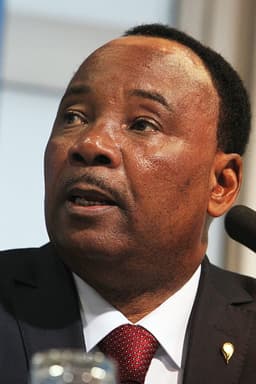
Mahamadou Issoufou
Politician · Modern
52.1Total
Basic Information
Born
1895
1952
Died
1966
—
Era
Modern
Modern
Nationality
Jordan
Niger
Occupation
Politician
Politician
Civilization
Middle Eastern
Other
Score Comparison
Military (10%)
32.2
42.3
Political (20%)
45.1
68.0
Influence (20%)
49.4
51.8
Legacy (20%)
40.0
41.7
Leadership (15%)
67.0
66.0
Strategy (15%)
44.0
43.7
TOTAL
46.8
52.1
Hussein al-Khalidi — Complete Timeline
1938 AD
Mayor of JerusalemPolitical Action◆ Major
Hussein al-Khalidi served as Mayor of Jerusalem under the British Mandate. He managed the city during a period of Arab-Jewish tensions.
MayorJerusalemMandate
1945 AD
Role in Arab LeaguePolitical Action
Khalidi was a founding member of the Arab League. He represented Jordan in early Arab diplomatic efforts.
Arab LeagueDiplomacyJordan
Impact: regionalconstructive
1957 AD
Prime Minister of JordanPolitical Action
Khalidi became Prime Minister of Jordan for a brief term. He served during the aftermath of the Nabulsi crisis and helped stabilize the government.
Prime MinisterJordanStabilization
Impact: national
Mahamadou Issoufou — Complete Timeline
2011 AD
Elected President of NigerPolitical Action◆ Major
Mahamadou Issoufou won the Nigerien presidential election in a runoff, defeating former prime minister Seini Oumarou. His victory marked a transition to civilian rule after a 2010 military coup.
ElectionDemocracyCivilian Rule
Impact: nationalconstructive
2015 AD
Led Fight Against Boko HaramWar◆ Major
Issoufou committed Nigerien troops to the Multinational Joint Task Force against Boko Haram in the Lake Chad region. Niger faced repeated attacks, and the campaign strained resources but contained the insurgency.
Boko HaramCounterterrorismMilitary
Impact: regional
2016 AD
Re-elected President of NigerPolitical Action◆ Major
Issoufou won a second term with 92% of the vote in an election boycotted by the main opposition. The result was criticized internationally as lacking credibility, though Issoufou remained in power.
ElectionControversySecond Term
Impact: national
2021 AD
Stepped Down After Two TermsPolitical Action
Issoufou voluntarily stepped down after completing two terms, handing power to elected successor Mohamed Bazoum. This was a rare peaceful transfer of power in Niger's history, strengthening democratic norms.
DemocracyPeaceful TransitionLegacy
Impact: nationalconstructive
Expert Analysis
Origins
Hussein al-Khalidi was born in 1895 in Jerusalem, then part of the Ottoman Empire, into a prominent Palestinian family. His father was a religious leader. He studied medicine at the American University of Beirut and later at the University of Istanbul, graduating as a physician. He practiced medicine in Jerusalem and became involved in Arab nationalist politics.
Mahamadou Issoufou was born in 1952 in Dandaji, Niger, into a Hausa family. His father was a farmer. He studied mining engineering at the École des Mines de Paris and later at the University of Paris. He worked as an engineer and became active in the labor movement, eventually becoming secretary-general of the Nigerien Mineworkers' Union.
Rise to Power
Hussein al-Khalidi's political rise began in the 1930s as a member of the Arab Higher Committee. He was appointed Mayor of Jerusalem in 1934, a position he held until 1937. During his tenure, he managed the city amid increasing Arab-Jewish tensions, including the 1936 Arab revolt. He was exiled by the British in 1937 but returned to politics after World War II. In 1957, he became Prime Minister of Jordan for a brief term (April 15 to October 24, 1957), appointed by King Hussein to stabilize the government after the Nabulsi crisis.
Mahamadou Issoufou rose through Nigerien politics as a key opposition figure. He was a founding member of the Nigerien Party for Democracy and Socialism (PNDS) in 1990. He served as Prime Minister from 1993 to 1994 under President Mahamane Ousmane. After a military coup in 1996, he was imprisoned but later released. He ran for president multiple times, finally winning in 2011 in a runoff election against former prime minister Seini Oumarou, marking a transition to civilian rule.
Leadership & Governance
Hussein al-Khalidi's leadership was characterized by his role as a stabilizing force during turbulent periods. As Mayor of Jerusalem, he focused on municipal services and maintaining order. As Prime Minister, he oversaw a caretaker government that restored constitutional rule after the Nabulsi crisis. His governance was constrained by the monarchy and regional tensions. He scored 67.0 in leadership and 45.1 in political scores, reflecting his limited executive power.
Mahamadou Issoufou's governance focused on economic development, infrastructure, and security. He pursued reforms in mining contracts, increased foreign investment, and led Niger's fight against Boko Haram. His second term (2016-2021) saw a controversial election boycott by the opposition, and he was criticized for democratic backsliding. However, he voluntarily stepped down after two terms, a rare peaceful transfer of power in West Africa. His political score of 68.0 reflects his electoral success, but his legacy score of 41.7 indicates mixed results.
Triumph & Tragedy
Hussein al-Khalidi's greatest success was his role in the establishment of the Arab League as a founding member in 1945, representing Jordan. He also helped stabilize Jordan's government during a crisis. His failures include his inability to prevent the loss of Palestinian rights in Jerusalem and his brief, largely symbolic prime ministership. He scored 40.0 in legacy, indicating limited lasting impact.
Mahamadou Issoufou's triumph was his peaceful exit from power in 2021, handing over to his elected successor Mohamed Bazoum. This was a milestone for Niger and the region. He also committed Nigerien troops to the Multinational Joint Task Force against Boko Haram, though the insurgency persisted. His failure includes the flawed 2016 election, with a 92% vote share in a boycotted vote, damaging his democratic credentials. His military score of 42.3 reflects modest achievements in security.
Character & Destiny
Hussein al-Khalidi was a pragmatist and technocrat, influenced by his medical background. He navigated the complex politics of mandatory Palestine and Jordan with caution, but his destiny was tied to the declining influence of the Palestinian elite. He died in 1976 in Amman, relatively forgotten.
Mahamadou Issoufou was a disciplined socialist and engineer, known for his calm demeanor and strategic patience. He outmaneuvered opponents and built alliances, but his character also led to a concentration of power. His destiny was to be a transitional figure who demonstrated that African leaders can leave office voluntarily. He scored 66.0 in leadership, similar to al-Khalidi's 67.0.
Legacy
Hussein al-Khalidi's legacy is primarily as a symbol of the lost Palestinian political class. He is remembered in Jordan and Palestine but not widely known internationally. His total score is 46.8, lower than Issoufou's 52.1.
Mahamadou Issoufou's legacy is more significant: he established a precedent for peaceful transfers of power in Niger, which is rare in the Sahel. His economic reforms and anti-corruption efforts had mixed results, but his influence score of 51.8 reflects his role in regional diplomacy. He remains a respected elder statesman.
Conclusion
Mahamadou Issoufou had a greater impact than Hussein al-Khalidi. Issoufou's voluntary exit from power set a standard for democratic governance in a volatile region, while al-Khalidi's career was largely reactive and constrained by colonial and monarchical structures. With a total score of 52.1 against 46.8, Issoufou's influence and political achievements outweigh al-Khalidi's primarily symbolic role. Issoufou's legacy of peaceful transition is a concrete, positive change, whereas al-Khalidi's legacy is more about what was lost. Therefore, Issoufou is the more impactful figure.
Rankings
🥇
Mahamadou IssoufouLeader
Mil: 42.3Pol: 68.0Inf: 51.8
52.1
🥈
Hussein al-Khalidi
Mil: 32.2Pol: 45.1Inf: 49.4
46.8
+5.3 behind
How This Comparison Works
Algorithm
Each figure is scored on 6 dimensions (0—100 scale) based on structured historical data: Military (10%), Political (20%), Influence (20%), Legacy (20%), Leadership (15%), Strategy (15%). The weighted total produces the final ranking.
Data Sources
Scores are computed from structured sub-indicators in the database. Scale factors adjust for era (Ancient ×0.85, Modern ×1.0) and civilization size (Eastern ×1.05, Other ×0.80) to account for differences in population and military scale.
Maximum 3 Figures
Comparisons are limited to 2—3 figures to ensure readability and statistical meaningfulness.
Error Margins
±5 points per dimension — Sub-scores are derived from historical records with inherent uncertainty. Two figures within 5 points on a dimension should be considered roughly equivalent in that area.
Total Score Accuracy
±3 points overall — The weighted combination of 6 dimensions produces a total score with approximately ±3 points of uncertainty. Differences of less than 3 points are not statistically significant— the figures are effectively tied.
Known Limitations
- Historical records are incomplete and uneven across civilizations
- Figures from oral-tradition societies may be underrepresented
- Occupation labels can misclassify multi-role figures
- Scores measure capability and impact, not moral character
- Quantitative scoring is a comparison tool, not absolute truth
Capability Radar
Military (10%) — Battles & Warfare
Battles
21
23
Win Rate
24
23
Expansion
27
27
Political (20%) — Governance & Reform
Reform
35
55
Diplomacy
45
60
Economy
30
50
Influence (20%) — Cultural & Global Reach
Cultural
20
20
Global
15
20
Legacy (20%) — Historical Impact
Historical
25
30
Longevity
15
20
Leadership (15%) — Power & Stability
Tenure
40
60
Stability
30
55
Strategy (15%) — Tactics & Innovation
Strategy
30
31
Tactics
35
33
Reform
35
37
Similar Comparisons
Comments & Discussion
No comments yet. Be the first to share your thoughts!