Loading...
This comparison has not been analyzed yet.
One-time AI generation (~1 minute). Scores and timeline are already available below.
Huni vs Otho
Huni leads by 2.3 pts · 2 figures compared
…
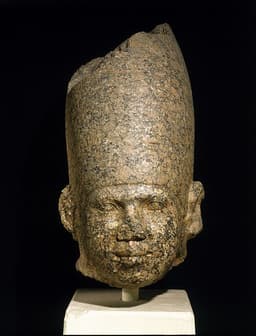
Huni
Emperor · Ancient
41.8Total
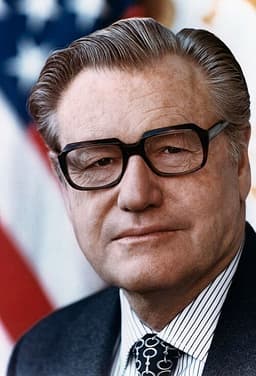
Otho
Emperor · Ancient
39.5Total
Basic Information
Born
-2620
32
Died
-2600
69
Era
Ancient
Ancient
Nationality
Old Kingdom Egypt
Roman Empire
Occupation
Emperor
Emperor
Civilization
Middle Eastern
Western
Score Comparison
Military (10%)
38.4
35.0
Political (20%)
26.4
30.8
Influence (20%)
45.5
42.4
Legacy (20%)
40.0
33.3
Leadership (15%)
48.4
55.3
Strategy (15%)
53.5
41.7
TOTAL
41.8
39.5
Huni — Complete Timeline
2615 BC
Establishment of the cult of the sun god RaCultural
Huni may have promoted the cult of Ra, as evidenced by the sun temple at Meidum and the use of the sun symbol in his name. This religious shift laid the groundwork for the solar temples of the Fifth Dynasty.
ReligionSun CultRa
Impact: national
2610 BC
Construction of the Meidum PyramidOther◆ Major
Huni is credited with building the Meidum Pyramid, originally a step pyramid later converted into a true pyramid. The pyramid's outer casing collapsed in antiquity, leaving a distinctive three-step core. It represents a transitional phase in pyramid construction from step to true pyramids.
Pyramid ConstructionMeidumArchitecture
Impact: nationalconstructive
Otho — Complete Timeline
69 AD
Battle of BedriacumWar◆ Major
Otho's forces were defeated by the army of Vitellius at the First Battle of Bedriacum in northern Italy. Despite having a numerical advantage, Otho's troops were routed. This defeat led Otho to commit suicide to prevent further civil war.
Civil WarBattleSuicide
Impact: nationaltragic
Proclamation as EmperorPolitical Action◆ Major
Otho was proclaimed emperor by the Praetorian Guard after orchestrating the assassination of Galba. He was a former governor of Lusitania and had been a supporter of Nero. His reign began the second phase of the Year of the Four Emperors.
Year of the Four EmperorsPraetorian GuardCoup
Impact: national
Suicide of OthoPolitical Action◆ Major
After his defeat at Bedriacum, Otho committed suicide by stabbing himself. He chose death to spare Rome further bloodshed, a decision praised by some historians. His reign lasted only three months, ending the second phase of the Year of the Four Emperors.
SuicideYear of the Four EmperorsCivil War
Impact: nationaltragic
This comparison has not been analyzed yet.
One-time AI generation (~1 minute). Scores and timeline are already available below.
Rankings
🥇
HuniLeader
Mil: 38.4Pol: 26.4Inf: 45.5
41.8
🥈
Otho
Mil: 35.0Pol: 30.8Inf: 42.4
39.5
+2.3 behind
How This Comparison Works
Algorithm
Each figure is scored on 6 dimensions (0—100 scale) based on structured historical data: Military (10%), Political (20%), Influence (20%), Legacy (20%), Leadership (15%), Strategy (15%). The weighted total produces the final ranking.
Data Sources
Scores are computed from structured sub-indicators in the database. Scale factors adjust for era (Ancient ×0.85, Modern ×1.0) and civilization size (Eastern ×1.05, Other ×0.80) to account for differences in population and military scale.
Maximum 3 Figures
Comparisons are limited to 2—3 figures to ensure readability and statistical meaningfulness.
Error Margins
±5 points per dimension — Sub-scores are derived from historical records with inherent uncertainty. Two figures within 5 points on a dimension should be considered roughly equivalent in that area.
Total Score Accuracy
±3 points overall — The weighted combination of 6 dimensions produces a total score with approximately ±3 points of uncertainty. Differences of less than 3 points are not statistically significant— the figures are effectively tied.
Known Limitations
- Historical records are incomplete and uneven across civilizations
- Figures from oral-tradition societies may be underrepresented
- Occupation labels can misclassify multi-role figures
- Scores measure capability and impact, not moral character
- Quantitative scoring is a comparison tool, not absolute truth
Capability Radar
Military (10%) — Battles & Warfare
Battles
39
10
Win Rate
43
10
Expansion
42
0
Political (20%) — Governance & Reform
Reform
20
0
Diplomacy
20
20
Economy
20
5
Influence (20%) — Cultural & Global Reach
Cultural
20
5
Global
10
5
Legacy (20%) — Historical Impact
Historical
30
15
Longevity
20
5
Leadership (15%) — Power & Stability
Tenure
30
5
Stability
30
5
Strategy (15%) — Tactics & Innovation
Strategy
46
10
Tactics
53
15
Reform
54
0
Similar Comparisons
Comments & Discussion
No comments yet. Be the first to share your thoughts!