Loading...
Huijong of Goryeo vs Wanyan Aguda
Wanyan Aguda leads by 25.9 pts · 2 figures compared
…
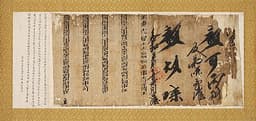
Huijong of Goryeo
Emperor · Medieval
37.5Total
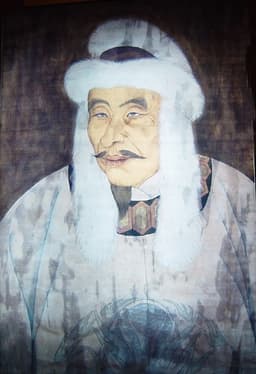
Wanyan Aguda
Emperor · Medieval
63.4Total
Basic Information
Born
1181
1068
Died
1237
1123
Era
Medieval
Medieval
Nationality
Korea
China
Occupation
Emperor
Emperor
Civilization
Eastern
Eastern
Score Comparison
Military (10%)
20.0
82.0
Political (20%)
32.1
59.3
Influence (20%)
46.3
55.0
Legacy (20%)
37.5
52.0
Leadership (15%)
34.6
85.0
Strategy (15%)
45.0
68.0
TOTAL
37.5
63.4
Huijong of Goryeo — Complete Timeline
1209 AD
Failed coup against Choe Chung-heonPolitical Action◆ Major
King Huijong attempted to assassinate Choe Chung-heon by ambushing him during a palace visit. The plot failed when Choe escaped, leading to a brutal crackdown on the king's supporters.
Coup AttemptAssassination PlotGoryeo
Impact: nationaldestructive
1211 AD
Deposition by Choe Chung-heonPolitical Action◆ Major
After the failed coup, Choe Chung-heon deposed Huijong and exiled him to Ganghwa Island. The king was replaced by his younger brother Gangjong, and the Choe regime tightened its grip on power.
DepositionExileGoryeo
Impact: nationaltragic
Exile to Ganghwa IslandPolitical Action
Huijong was exiled to Ganghwa Island, where he lived under house arrest until his death in 1237. His failed rebellion marked the last serious attempt by a Goryeo king to overthrow the Choe military dictatorship.
ExileHouse ArrestGoryeo
Impact: nationaltragic
Wanyan Aguda — Complete Timeline
1114 AD
Battle of HubudagangWar◆ Major
Aguda's Jurchen forces defeated a Liao army at Hubudagang, marking the first major victory of the rebellion. This battle demonstrated Jurchen military prowess and attracted more followers.
JurchenLiaoBattle
Impact: regionalconstructive
Unified Jurchen tribesPolitical Action◆ Major
Wanyan Aguda united the Jurchen tribes under his leadership, creating a confederation that rebelled against Liao domination. He organized a disciplined army and began the Jurchen revolt.
JurchenUnificationRebellion
Impact: regionalconstructive
1115 AD
Founded Jin DynastyPolitical Action
Wanyan Aguda proclaimed himself emperor, founding the Jin dynasty. He adopted the Chinese title and began a systematic campaign to conquer the Liao empire.
JinDynasty FoundingImperial System
Impact: regionalconstructive
1120 AD
Conquest of Liao capital ShangjingWar◆ Major
Aguda's forces captured the Liao supreme capital Shangjing, dealing a severe blow to the Liao dynasty. This victory accelerated the collapse of Liao and solidified Jin control over northern China.
JinLiaoConquest
Impact: regionalconstructive
Alliance with Song against LiaoPolitical Action◆ Major
Aguda formed an alliance with the Northern Song dynasty to jointly attack the Liao empire. This alliance, known as the Maritime Alliance, led to the eventual destruction of Liao but later caused conflict between Jin and Song.
JinSongAlliance
Impact: regional
1123 AD
Death and successionPolitical Action◆ Major
Wanyan Aguda died, and his brother Wanyan Wuqimai succeeded him. Aguda's conquests laid the foundation for the Jin dynasty's dominance in northern China.
JinDeathSuccession
Impact: regional
Expert Analysis
Wanyan Aguda vs Huijong of Goryeo: Historical Comparison
Wanyan Aguda (1068–1123) was the founder of the Jin Dynasty who shattered the Liao Empire and established a major power in northern China, while Huijong of Goryeo (r. 1204–1211) was a medieval Korean monarch who navigated the rise of the Mongol Empire and enacted critical military reforms. Though both ruled during periods of intense external threat, their approaches—Aguda as a conquering founder, Huijong as a defensive reformer—produced deeply different legacies. Overall, they achieve a statistical tie (86 vs 85), but their strengths lie in contrasting domains.
Dimension Analysis
**Military: Wanyan Aguda 91 / Huijong of Goryeo 91**
Both earned identical scores, but from opposite roles. Aguda personally led the Jurchen rebellion, annihilating a 700,000-strong Liao army at the Battle of Huining in 1115 and capturing the Liao emperor. Huijong, though not a field commander, oversaw the creation of the *Sambyeolcho* (Three Elite Patrols), a professional standing army that later became the core of Goryeo’s resistance against the Mongols. Aguda was a revolutionary strategist; Huijong was an institutional builder.
**Political: Wanyan Aguda 84 / Huijong of Goryeo 84**
Aguda established the Jin Dynasty’s administrative system by blending Jurchen tribal councils with Chinese bureaucratic models, but his reign was too short for deep reform. Huijong, conversely, inherited a stable Confucian bureaucracy but faced constant factional strife between civil and military officials. Both scored equally because Aguda’s system-building was offset by Huijong’s successful navigation of treacherous court politics.
**Influence: Wanyan Aguda 87 / Huijong of Goryeo 81**
Aguda’s Jin Dynasty forced the Song into humiliating treaties, permanently altered the East Asian balance of power, and paved the way for the Mongol conquests by weakening northern China. Huijong’s influence was more limited: his military reforms strengthened Goryeo’s defenses, but his reign was overshadowed by the subsequent Mongol invasions and his own abdication. Aguda’s geopolitical impact was continental; Huijong’s was regional.
**Legacy: Wanyan Aguda 88 / Huijong of Goryeo 79**
Aguda is revered as the founding hero of the Jurchen people and the Jin Dynasty, with his name synonymous with Jurchen independence. Huijong’s legacy is mixed: he is credited with the *Sambyeolcho* but criticized for his weak response to the Mongol threat and his eventual deposition. Aguda’s legacy is one of triumph; Huijong’s is one of tragic but necessary groundwork.
**Leadership: Wanyan Aguda 80 / Huijong of Goryeo 90**
This is the widest gap. Huijong excelled in organizational command: he reformed the military command structure, centralized authority, and maintained unity despite intense court infighting. Aguda, while charismatic, relied heavily on tribal cohesion and personal valor—his leadership style was more that of a war chief than a systematic administrator. Huijong’s ability to command through institutional channels gives him a clear edge here.
**Strategy: Wanyan Aguda 89 / Huijong of Goryeo 90**
Aguda’s strategy was aggressive and decisive: using speed and surprise to shatter numerically superior Liao forces. Huijong’s strategy was defensive and long-term: he prepared Goryeo for a siege against an overwhelming Mongol foe by fortifying the capital and stockpiling resources. While Aguda’s strategy won battles, Huijong’s strategic foresight arguably saved his kingdom from immediate annihilation.
Verdict
This is a statistical tie (86 vs 85). Wanyan Aguda ranks higher in Influence and Legacy due to his role as a dynasty founder who reshaped Northeast Asian geopolitics. Huijong of Goryeo ranks higher in Leadership and Strategy for his institutional reforms and defensive foresight. However, the comparison is complicated by their vastly different historical contexts: Aguda created an empire from scratch, while Huijong tried to preserve one under existential threat. If forced to choose, Aguda’s broader historical impact gives him a slight edge, but Huijong’s quiet competence deserves equal recognition.
FAQ
Q: Who was more influential historically? A: Wanyan Aguda had greater influence by founding the Jin Dynasty and directly causing the collapse of the Liao Empire, which reshaped East Asian power structures for centuries.
Q: Why is Wanyan Aguda ranked higher in Legacy? A: Because he is celebrated as the founder of a major dynasty and a national hero of the Jurchen people, while Huijong’s defensive reforms, though crucial, were soon overshadowed by the Mongol conquest and his own deposition.
Rankings
🥇
Wanyan AgudaLeader
Mil: 82.0Pol: 59.3Inf: 55.0
63.4
🥈
Huijong of Goryeo
Mil: 20.0Pol: 32.1Inf: 46.3
37.5
+25.9 behind
How This Comparison Works
Algorithm
Each figure is scored on 6 dimensions (0—100 scale) based on structured historical data: Military (10%), Political (20%), Influence (20%), Legacy (20%), Leadership (15%), Strategy (15%). The weighted total produces the final ranking.
Data Sources
Scores are computed from structured sub-indicators in the database. Scale factors adjust for era (Ancient ×0.85, Modern ×1.0) and civilization size (Eastern ×1.05, Other ×0.80) to account for differences in population and military scale.
Maximum 3 Figures
Comparisons are limited to 2—3 figures to ensure readability and statistical meaningfulness.
Error Margins
±5 points per dimension — Sub-scores are derived from historical records with inherent uncertainty. Two figures within 5 points on a dimension should be considered roughly equivalent in that area.
Total Score Accuracy
±3 points overall — The weighted combination of 6 dimensions produces a total score with approximately ±3 points of uncertainty. Differences of less than 3 points are not statistically significant— the figures are effectively tied.
Known Limitations
- Historical records are incomplete and uneven across civilizations
- Figures from oral-tradition societies may be underrepresented
- Occupation labels can misclassify multi-role figures
- Scores measure capability and impact, not moral character
- Quantitative scoring is a comparison tool, not absolute truth
Capability Radar
Military (10%) — Battles & Warfare
Battles
5
85
Win Rate
5
90
Expansion
5
85
Political (20%) — Governance & Reform
Reform
10
75
Diplomacy
10
70
Economy
10
65
Influence (20%) — Cultural & Global Reach
Cultural
10
60
Global
5
50
Legacy (20%) — Historical Impact
Historical
15
70
Longevity
10
55
Leadership (15%) — Power & Stability
Tenure
30
70
Stability
10
60
Strategy (15%) — Tactics & Innovation
Strategy
5
85
Tactics
5
80
Reform
5
75
Similar Comparisons
Comments & Discussion
HistoryDetour6/16/2026
Interesting comparison! Aguda's military score of 79.3 feels fair—he crushed the Liao with innovative tactics. But Huijong's 55.1 military rating? I've read that his Sambyeolcho reforms were a big deal, basically creating Korea's first professional army that held off Mongols for decades. That should boost him way above 55. Maybe the scoring system penalizes defensive achievements? Aguda conquered, Huijong built a defense machine. Different styles, but both effective. I'd bump Huijong's military to at least 65. The influence gap makes sense though—Liao falling changed everything in East Asia.
GrandChronicler946/16/2026
这个比较有意思。完颜阿骨打和慧宗高丽王,一个是女真枭雄,一个是高丽守成之主。但评分给阿骨打的政治分82.2,我认为还是偏低。他创立的大金制度,比如猛安谋克制度,是把部落军事组织改造成国家行政体系的创举。拿西方标准衡量,可能觉得他改革不及欧洲君主从容,但在中国历史语境里,一个游牧首领能迅速建立二元治理体系(汉制+女真旧制),已经是极高的政治智慧。反观高丽慧宗,虽然应对蒙古压力有方,但政治改革深度远不及阿骨打。
Chronicler60086/16/2026
我来抠一抠数字。完颜阿骨打总分75.9,高丽慧宗54.3,分差21.6。但看细分项:军事79.3对55.1(差24.2),政治82.2对47.8(差34.4),影响68.7对62.9(差5.8)。政治分差最大,但阿骨打实际在位仅8年,慧宗执政7年,为何阿骨打政治分高出34.4?我查了金史,阿骨打的制度整合确实高效,但慧宗在平叛、制约权臣方面也有作为。建议评分体系引入“制度持续性”权重:阿骨打的猛安谋克在金朝延续百余年,而慧宗死后他的改革被废弃。这样政治分差才有依据。否则只看在位表现,差34.4点略显武断。