Loading...
Hugh of Italy vs Ivan I Kalita
Ivan I Kalita leads by 8.8 pts · 2 figures compared
…

Hugh of Italy
Emperor · Medieval
43.8Total
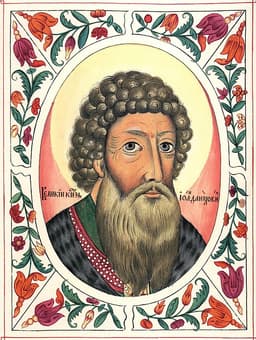
Ivan I Kalita
Emperor · Medieval
52.6Total
Basic Information
Born
880
1288
Died
947
1341
Era
Medieval
Medieval
Nationality
Italy
Muscovy
Occupation
Emperor
Emperor
Civilization
Western
Western
Score Comparison
Military (10%)
35.0
25.9
Political (20%)
37.9
72.0
Influence (20%)
48.6
51.8
Legacy (20%)
38.3
48.3
Leadership (15%)
58.8
68.0
Strategy (15%)
41.0
39.6
TOTAL
43.8
52.6
Hugh of Italy — Complete Timeline
926 AD
Crowned King of ItalyPolitical Action◆ Major
Hugh was crowned King of Italy in Pavia, succeeding Rudolf II. His reign was marked by efforts to centralize power and resist Magyar raids, but he faced constant opposition from the Italian nobility and the Papacy.
CoronationItalyKingship
Impact: regional
932 AD
Marriage to MaroziaPolitical Action◆ Major
Hugh of Italy married Marozia, the powerful Roman senator and mother of Pope John XI. This marriage aimed to strengthen his control over Rome and the Papacy, but it provoked opposition from Roman nobles and led to his downfall.
Marriage AllianceRomePapal Politics
Impact: regional
933 AD
Conflict with Pope John XIPolitical Action
Hugh attempted to control the Papacy by deposing Pope John XI, his stepson, but failed due to Roman opposition. This conflict weakened his influence in Rome and contributed to the instability of his reign.
Papal ConflictRomePower Struggle
Impact: regionaldestructive
945 AD
Defeat by Berengar of IvreaWar◆ Major
Hugh was defeated by Berengar of Ivrea (later Berengar II) near the Po River. This military loss forced Hugh to flee to Provence, where he died shortly after, ending his rule over Italy and paving the way for Berengar's rise.
Civil WarItalyDefeat
Impact: regionaltragic
Ivan I Kalita — Complete Timeline
1325 AD
Appointed as Grand Prince of MoscowPolitical Action◆ Major
Ivan I became Grand Prince of Moscow after his brother Yuri's death. He secured the title by cooperating with the Mongol Golden Horde, using his position to collect tribute from other Russian principalities on behalf of the Khan.
MoscowGolden HordeTribute
Impact: regional
1326 AD
Moved the Metropolitan See to MoscowPolitical Action◆ Major
Ivan I persuaded Metropolitan Peter to move his residence from Vladimir to Moscow. This made Moscow the ecclesiastical center of the Russian Orthodox Church, greatly enhancing its political and religious authority.
MoscowOrthodox ChurchMetropolitan
Impact: regionalconstructive
1327 AD
Suppressed the Tver UprisingWar◆ Major
When Tver rebelled against Mongol tax collectors, Ivan I led a Mongol-Muscovite army to crush the uprising. The destruction of Tver eliminated Moscow's main rival for supremacy in northeastern Russia.
TverGolden HordeUprising
Impact: regionaldestructive
1328 AD
Acquired the title of Grand Prince of VladimirPolitical Action◆ Major
Ivan I obtained the yarlyk (patent) for the Grand Principality of Vladimir from the Mongol Khan Uzbek. This made Moscow the primary collector of tribute for the Horde and the most powerful Russian principality.
MoscowGolden HordeVladimir
Impact: regional
Expert Analysis
Origins
Hugh of Italy (c. 880–947) was born into the Bosonid dynasty, a noble family from Provence. His father was Theobald of Arles, and his mother was Bertha of Lotharingia. Hugh grew up in a region fragmented by feudal conflicts and external threats like Magyar raids. He inherited the title of Count of Arles and later became King of Italy through a combination of inheritance and political maneuvering. His early life was marked by the instability of post-Carolingian Italy, where local magnates and the papacy vied for control.
Ivan I Kalita (c. 1288–1340) was born into the Rurikid dynasty, the ruling family of Moscow. His father was Daniel of Moscow, the youngest son of Alexander Nevsky. Ivan grew up in a period when the Mongol Golden Horde dominated the Russian principalities. He inherited a small but strategically located Moscow, which had been gradually expanding under his father and older brother Yuri. Ivan's early life was shaped by the necessity of cooperating with the Mongols to preserve and enhance his family's position.
Rise to Power
Hugh of Italy rose to prominence by leveraging his family connections and military support. In 926, he was crowned King of Italy in Pavia after the abdication of Rudolf II. To secure his rule, Hugh married Marozia, the powerful Roman senator who controlled the papacy through her son, Pope John XI. This marriage gave Hugh influence over Rome, but it also entangled him in the web of Roman noble factions. His rise was rapid but built on shifting alliances.
Ivan I Kalita rose to power through meticulous cooperation with the Mongols. After his brother Yuri's death in 1325, Ivan became Grand Prince of Moscow. He traveled to Sarai, the Mongol capital, and secured the yarlyk (patent) for the Grand Principality of Vladimir from Khan Uzbek. This made Moscow the primary collector of tribute for the Horde. Ivan's key turning point was the Tver Uprising of 1327, when he led a Mongol-Muscovite army to crush the rebellion, destroying his rival Tver and earning the Khan's trust. By 1328, Ivan was the undisputed leader among Russian princes, scoring 72.0 in political skill compared to Hugh's 37.9.
Leadership & Governance
Hugh of Italy's leadership style was autocratic and opportunistic. He centralized power by appointing loyal followers to key positions and using his marriage to Marozia to control the papacy. However, his governance was reactive; he faced constant revolts from Italian nobles like Berengar of Ivrea. Hugh attempted to resist Magyar raids but failed to build a stable military structure. His score of 58.8 in leadership reflects his ability to hold power temporarily, but his governance lacked long-term vision.
Ivan I Kalita's governance was pragmatic and strategic. He ruled Moscow with a focus on economic growth and consolidation. Ivan collected tribute for the Mongols, which allowed him to accumulate wealth and extend his influence. He used this wealth to purchase villages and territories, expanding Moscow's domain. His most significant governance move was persuading Metropolitan Peter to move the Russian Orthodox Church's seat from Vladimir to Moscow, making Moscow the spiritual capital. Ivan's leadership score of 68.0 reflects his effective administration and ability to build institutions.
Triumph & Tragedy
Hugh of Italy's greatest triumph was becoming King of Italy and briefly dominating Roman politics through his marriage to Marozia. He also successfully repelled some Magyar raids. However, his greatest failure was his defeat by Berengar of Ivrea in 945 near the Po River, which forced him to flee to Provence, where he died shortly after. His attempt to depose Pope John XI, his stepson, also failed, alienating Roman support. Hugh's military score of 35.0 and strategy of 41.0 highlight his inability to secure his realm against internal rivals.
Ivan I Kalita's greatest triumph was making Moscow the dominant Russian principality. By suppressing the Tver Uprising, he eliminated a major rival and secured the Mongol yarlyk. He also moved the Metropolitan See to Moscow, cementing its religious importance. His greatest failure was his total subservience to the Mongols; he crushed Russian resistance and enforced tribute collection, which later contributed to Muscovy's oppressive tax system. Ivan's political score of 72.0 and leadership of 68.0 reflect his success in building power, but his military score of 25.9 shows he relied on Mongol force rather than independent strength.
Character & Destiny
Hugh of Italy was ambitious and ruthless, but his character was marked by overreliance on alliances and marriages. He married Marozia for political gain but failed to secure lasting loyalty from Roman nobles. His decision to depose Pope John XI backfired, showing a lack of diplomatic finesse. Hugh's destiny was to be a transitional figure in Italy's fragmented medieval politics, unable to build a lasting dynasty.
Ivan I Kalita was cautious, calculating, and patient. He was known as "Kalita" (moneybags) for his wealth accumulation. His character was defined by pragmatism; he avoided direct confrontation with the Mongols and instead used their authority to eliminate rivals. Ivan's destiny was to lay the foundation for Moscow's rise as the center of Russian power. His decisions shaped Russia's future, but his legacy of collaboration with the Mongols remains controversial.
Legacy
Hugh of Italy's legacy is minimal. He is remembered as a minor king of Italy whose reign was marked by instability. His marriage to Marozia is a footnote in the history of the papacy. Hugh's influence score of 48.6 and legacy of 38.3 reflect his limited long-term impact. He did not establish a dynasty or leave lasting institutions.
Ivan I Kalita's legacy is profound. He transformed Moscow from a small principality into the nucleus of a unified Russian state. His policies of tribute collection and territorial expansion set the stage for later rulers like Dmitri Donskoi and Ivan III. The move of the Metropolitan See made Moscow the religious heart of Russia, a status it retained until the 18th century. Ivan's influence score of 51.8 and legacy of 48.3 indicate a moderate but significant impact, far greater than Hugh's.
Conclusion
Ivan I Kalita had a greater impact on history than Hugh of Italy. Ivan's score of 52.6 compared to Hugh's 43.8 reflects his superior political acumen and lasting influence. While Hugh's reign was ephemeral and ended in defeat, Ivan's strategic choices created the foundation for the Russian state. Hugh's legacy is confined to a brief period of Italian medieval politics, whereas Ivan's actions shaped the trajectory of Eastern Europe. Ivan I Kalita emerges as the more consequential figure.
Rankings
🥇
Ivan I KalitaLeader
Mil: 25.9Pol: 72.0Inf: 51.8
52.6
🥈
Hugh of Italy
Mil: 35.0Pol: 37.9Inf: 48.6
43.8
+8.8 behind
How This Comparison Works
Algorithm
Each figure is scored on 6 dimensions (0—100 scale) based on structured historical data: Military (10%), Political (20%), Influence (20%), Legacy (20%), Leadership (15%), Strategy (15%). The weighted total produces the final ranking.
Data Sources
Scores are computed from structured sub-indicators in the database. Scale factors adjust for era (Ancient ×0.85, Modern ×1.0) and civilization size (Eastern ×1.05, Other ×0.80) to account for differences in population and military scale.
Maximum 3 Figures
Comparisons are limited to 2—3 figures to ensure readability and statistical meaningfulness.
Error Margins
±5 points per dimension — Sub-scores are derived from historical records with inherent uncertainty. Two figures within 5 points on a dimension should be considered roughly equivalent in that area.
Total Score Accuracy
±3 points overall — The weighted combination of 6 dimensions produces a total score with approximately ±3 points of uncertainty. Differences of less than 3 points are not statistically significant— the figures are effectively tied.
Known Limitations
- Historical records are incomplete and uneven across civilizations
- Figures from oral-tradition societies may be underrepresented
- Occupation labels can misclassify multi-role figures
- Scores measure capability and impact, not moral character
- Quantitative scoring is a comparison tool, not absolute truth
Capability Radar
Military (10%) — Battles & Warfare
Battles
25
10
Win Rate
30
10
Expansion
25
20
Political (20%) — Governance & Reform
Reform
30
55
Diplomacy
40
70
Economy
30
75
Influence (20%) — Cultural & Global Reach
Cultural
15
30
Global
5
20
Legacy (20%) — Historical Impact
Historical
20
50
Longevity
10
40
Leadership (15%) — Power & Stability
Tenure
55
60
Stability
20
65
Strategy (15%) — Tactics & Innovation
Strategy
20
15
Tactics
20
5
Reform
10
5
Similar Comparisons
Comments & Discussion
No comments yet. Be the first to share your thoughts!