Loading...
This comparison has not been analyzed yet.
One-time AI generation (~1 minute). Scores and timeline are already available below.
Hudson Austin vs Takijiro Onishi
Takijiro Onishi leads by 9.0 pts · 2 figures compared
…

Hudson Austin
General · Modern
36.8Total
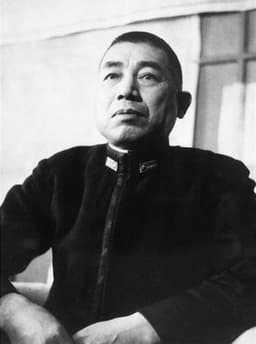
Takijiro Onishi
General · Modern
45.8Total
Basic Information
Born
1938
1891
Died
—
1945
Era
Modern
Modern
Nationality
Grenada
Japan
Occupation
General
General
Civilization
Other
Eastern
Score Comparison
Military (10%)
10.2
50.0
Political (20%)
27.9
27.9
Influence (20%)
47.1
58.3
Legacy (20%)
36.7
50.0
Leadership (15%)
40.9
33.5
Strategy (15%)
45.0
45.0
TOTAL
36.8
45.8
Hudson Austin — Complete Timeline
1979 AD
Grenada Coup d'État of 1979Political Action◆ Major
Hudson Austin was a key figure in the New Jewel Movement's bloodless coup that overthrew Prime Minister Eric Gairy. The coup established the People's Revolutionary Government (PRG) under Maurice Bishop, with Austin as a senior military commander.
CoupNew Jewel MovementGrenada
Impact: nationaldestructive
1983 AD
United States Invasion of GrenadaWar◆ Major
The U.S.-led invasion of Grenada, Operation Urgent Fury, began on October 25, 1983. Hudson Austin's junta was quickly defeated. Austin was captured by U.S. forces and later handed over to Grenadian authorities.
InvasionGrenadaU.S. Military
Impact: regionaldestructive
Grenada People's Revolutionary Government Armed ForcesPolitical Action◆ Major
After the internal split in the PRG and the execution of Maurice Bishop in October 1983, General Hudson Austin seized power and formed a military junta, the Revolutionary Military Council. He announced a 24-hour curfew and declared martial law.
Military JuntaGrenadaPower Seizure
Impact: nationaldestructive
1986 AD
Trial and Imprisonment for the Murder of Maurice BishopPolitical Action◆ Major
Hudson Austin was tried and convicted for the murder of Prime Minister Maurice Bishop and others during the 1983 coup. He was sentenced to death, later commuted to life imprisonment. He served over 20 years before being released in 2008.
TrialImprisonmentJustice
Impact: nationaltragic
Takijiro Onishi — Complete Timeline
1944 AD
Organized the First Kamikaze UnitsWar
Onishi organized the first official kamikaze special attack units, the Shimpu Tokubetsu Kogekitai, in the Philippines. He ordered volunteer pilots to crash their aircraft into US ships, initiating a new tactic of suicide attacks that would continue for the rest of the war.
KamikazeWorld War IISuicide Attacks
Impact: globaldestructive
Commanded the First Air Fleet in the PhilippinesWar◆ Major
Onishi was appointed commander of the First Air Fleet in the Philippines. Facing overwhelming US air superiority and lacking trained pilots, he implemented the kamikaze strategy as a desperate measure to inflict damage on the US fleet.
Philippines CampaignWorld War IIAir Command
Impact: regional
1945 AD
Committed Suicide after Japan's SurrenderOther◆ Major
Onishi committed suicide by seppuku (ritual disembowelment) on August 16, 1945, the day after Japan's surrender. He left a note apologizing to the families of kamikaze pilots and urging young Japanese to work for peace.
SuicideWorld War IISeppuku
Impact: nationaltragic
This comparison has not been analyzed yet.
One-time AI generation (~1 minute). Scores and timeline are already available below.
Rankings
🥇
Takijiro OnishiLeader
Mil: 50.0Pol: 27.9Inf: 58.3
45.8
🥈
Hudson Austin
Mil: 10.2Pol: 27.9Inf: 47.1
36.8
+9.0 behind
How This Comparison Works
Algorithm
Each figure is scored on 6 dimensions (0—100 scale) based on structured historical data: Military (10%), Political (20%), Influence (20%), Legacy (20%), Leadership (15%), Strategy (15%). The weighted total produces the final ranking.
Data Sources
Scores are computed from structured sub-indicators in the database. Scale factors adjust for era (Ancient ×0.85, Modern ×1.0) and civilization size (Eastern ×1.05, Other ×0.80) to account for differences in population and military scale.
Maximum 3 Figures
Comparisons are limited to 2—3 figures to ensure readability and statistical meaningfulness.
Error Margins
±5 points per dimension — Sub-scores are derived from historical records with inherent uncertainty. Two figures within 5 points on a dimension should be considered roughly equivalent in that area.
Total Score Accuracy
±3 points overall — The weighted combination of 6 dimensions produces a total score with approximately ±3 points of uncertainty. Differences of less than 3 points are not statistically significant— the figures are effectively tied.
Known Limitations
- Historical records are incomplete and uneven across civilizations
- Figures from oral-tradition societies may be underrepresented
- Occupation labels can misclassify multi-role figures
- Scores measure capability and impact, not moral character
- Quantitative scoring is a comparison tool, not absolute truth
Capability Radar
Military (10%) — Battles & Warfare
Battles
5
15
Win Rate
5
10
Expansion
5
10
Political (20%) — Governance & Reform
Reform
5
10
Diplomacy
5
15
Economy
5
10
Influence (20%) — Cultural & Global Reach
Cultural
5
45
Global
5
45
Legacy (20%) — Historical Impact
Historical
5
50
Longevity
5
40
Leadership (15%) — Power & Stability
Tenure
5
20
Stability
5
5
Strategy (15%) — Tactics & Innovation
Strategy
5
25
Tactics
5
20
Reform
5
40
Similar Comparisons
Comments & Discussion
No comments yet. Be the first to share your thoughts!