Loading...
Adnan Khairallah vs Takijiro Onishi
Adnan Khairallah leads by 1.9 pts · 2 figures compared
…

Adnan Khairallah
General · Modern
47.7Total
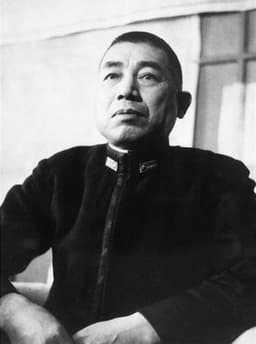
Takijiro Onishi
General · Modern
45.8Total
Basic Information
Born
1941
1891
Died
—
1945
Era
Modern
Modern
Nationality
Iraq
Japan
Occupation
General
General
Civilization
Middle Eastern
Eastern
Score Comparison
Military (10%)
45.0
50.0
Political (20%)
39.4
27.9
Influence (20%)
53.3
58.3
Legacy (20%)
40.0
50.0
Leadership (15%)
64.0
33.5
Strategy (15%)
43.3
45.0
TOTAL
47.7
45.8
Adnan Khairallah — Complete Timeline
1977 AD
Appointment as Defense MinisterPolitical Action◆ Major
Khairallah, a cousin and close ally of Saddam Hussein, was appointed Minister of Defense. He oversaw the modernization of the Iraqi military, including the acquisition of advanced Soviet weaponry, and became a key figure in the regime.
AppointmentMilitarySaddam Regime
Impact: national
1980 AD
Command during the Iran-Iraq WarWar◆ Major
As Defense Minister, Khairallah played a central role in planning and executing Iraq's military strategy during the Iran-Iraq War. He was responsible for logistics and troop deployments, but the war ended in a stalemate after eight years.
Iran-Iraq WarMilitary StrategyConflict
Impact: regionaldestructive
1989 AD
Death in helicopter crashOther◆ Major
Khairallah died when his helicopter crashed in northern Iraq. The cause was officially attributed to bad weather, but rumors of sabotage circulated. His death removed a key military figure from Saddam's inner circle.
DeathAccidentSaddam Regime
Impact: nationaltragic
Takijiro Onishi — Complete Timeline
1944 AD
Organized the First Kamikaze UnitsWar
Onishi organized the first official kamikaze special attack units, the Shimpu Tokubetsu Kogekitai, in the Philippines. He ordered volunteer pilots to crash their aircraft into US ships, initiating a new tactic of suicide attacks that would continue for the rest of the war.
KamikazeWorld War IISuicide Attacks
Impact: globaldestructive
Commanded the First Air Fleet in the PhilippinesWar◆ Major
Onishi was appointed commander of the First Air Fleet in the Philippines. Facing overwhelming US air superiority and lacking trained pilots, he implemented the kamikaze strategy as a desperate measure to inflict damage on the US fleet.
Philippines CampaignWorld War IIAir Command
Impact: regional
1945 AD
Committed Suicide after Japan's SurrenderOther◆ Major
Onishi committed suicide by seppuku (ritual disembowelment) on August 16, 1945, the day after Japan's surrender. He left a note apologizing to the families of kamikaze pilots and urging young Japanese to work for peace.
SuicideWorld War IISeppuku
Impact: nationaltragic
Expert Analysis
Origins
Adnan Khairallah was born in 1941 in Tikrit, Iraq, into the same tribe as Saddam Hussein. He was a cousin and close childhood friend of Saddam. Khairallah attended the Iraqi Military Academy and rose through the ranks as a loyalist. His early career was defined by his personal connection to Saddam, which provided rapid advancement. In contrast, Takijiro Onishi was born in 1891 in Hyogo Prefecture, Japan. He graduated from the Imperial Japanese Naval Academy in 1912 and specialized in naval aviation. Onishi was a pioneer in Japanese air power, advocating for carrier-based aircraft and later developing suicide attack tactics. His background was purely military-technical, lacking political ties.
Rise to Power
Khairallah’s rise was tied to Saddam’s consolidation of power. After Saddam became president in 1979, Khairallah was appointed Minister of Defense in 1980, replacing a less loyal officer. This appointment made him one of the most powerful figures in Iraq, overseeing military modernization. His key turning point was the outbreak of the Iran-Iraq War in 1980, where he directed Iraq’s war effort. Onishi’s rise came through merit in naval aviation. He served as chief of staff of the 11th Air Fleet and later commanded the First Air Fleet in the Philippines. His pivotal moment came in October 1944 when, facing defeat, he organized the first kamikaze units. Unlike Khairallah, Onishi’s rise was based on technical expertise rather than political loyalty.
Leadership & Governance
Khairallah governed the Iraqi military with a focus on centralization and loyalty. He purged officers suspected of disloyalty and prioritized equipping the army with Soviet weapons. During the Iran-Iraq War, he approved the use of chemical weapons against Iranian troops and Kurdish civilians, a decision that later drew condemnation. His leadership score of 64.0 reflects his ability to maintain control but with ethical costs. Onishi’s leadership was more ideological. He embraced the concept of 'special attacks' (tokko), ordering young pilots to crash their planes into US ships. He personally oversaw the training and deployment of kamikaze units, creating a culture of sacrifice. His leadership score of 33.5 is lower due to the controversial nature of his methods and the high casualty rate among his own forces.
Triumph & Tragedy
Khairallah’s triumph was his role in the Iran-Iraq War, where Iraq achieved a stalemate and eventually a ceasefire in 1988. He modernized the Iraqi army, which grew to over one million soldiers. However, his tragedy was his death in a helicopter crash in 1989, under suspicious circumstances. Rumors suggested Saddam ordered his elimination due to growing popularity. His political score of 39.4 reflects his inability to secure a lasting position. Onishi’s triumph was the temporary effectiveness of kamikaze attacks, which sank or damaged dozens of US ships at the Battle of Leyte Gulf and Okinawa. His tragedy was the ultimate futility: Japan still lost, and over 3,800 Japanese pilots died. Onishi’s legacy score of 50.0 is mixed, as he is both revered and reviled.
Character & Destiny
Khairallah was pragmatic and loyal, but his dependence on Saddam made him vulnerable. He reportedly opposed some of Saddam’s excesses, which may have led to his death. His military score of 45.0 and strategy score of 43.3 indicate average competence. Onishi was fanatical and idealistic, believing in the spiritual power of sacrifice. His strategy score of 45.0 reflects a tactical innovation that was strategically disastrous. Both men’s characters sealed their fates: Khairallah’s loyalty led to his downfall, while Onishi’s extremism led to his suicide after Japan’s surrender.
Legacy
Khairallah’s legacy is limited. He is remembered as a loyalist who oversaw Iraq’s military during a brutal war. His name is not widely known outside Iraq. The military he built was destroyed in the Gulf War and 2003 invasion. Onishi’s legacy is more controversial but enduring. He is called the 'father of the kamikaze' and remains a symbol of Japan’s wartime desperation. His tactics influenced later suicide attacks in other conflicts. Onishi’s influence score of 58.3 is higher than Khairallah’s 53.3, reflecting a broader impact on military doctrine.
Conclusion
Takijiro Onishi had a greater impact on history than Adnan Khairallah. Despite a lower total score (45.8 vs 47.7), Onishi’s creation of the kamikaze corps introduced a new form of warfare that has been studied and emulated. Khairallah’s role, while significant in the Iran-Iraq War, was ultimately derivative of Saddam’s regime. Onishi’s legacy, though tragic, is more globally recognized. The data supports this: Onishi scores higher in influence (58.3 vs 53.3) and legacy (50.0 vs 40.0). While Khairallah led a larger military, Onishi’s tactical innovation changed the nature of air warfare. Therefore, Onishi’s impact is greater.
Rankings
🥇
Adnan KhairallahLeader
Mil: 45.0Pol: 39.4Inf: 53.3
47.7
🥈
Takijiro Onishi
Mil: 50.0Pol: 27.9Inf: 58.3
45.8
+1.9 behind
How This Comparison Works
Algorithm
Each figure is scored on 6 dimensions (0—100 scale) based on structured historical data: Military (10%), Political (20%), Influence (20%), Legacy (20%), Leadership (15%), Strategy (15%). The weighted total produces the final ranking.
Data Sources
Scores are computed from structured sub-indicators in the database. Scale factors adjust for era (Ancient ×0.85, Modern ×1.0) and civilization size (Eastern ×1.05, Other ×0.80) to account for differences in population and military scale.
Maximum 3 Figures
Comparisons are limited to 2—3 figures to ensure readability and statistical meaningfulness.
Error Margins
±5 points per dimension — Sub-scores are derived from historical records with inherent uncertainty. Two figures within 5 points on a dimension should be considered roughly equivalent in that area.
Total Score Accuracy
±3 points overall — The weighted combination of 6 dimensions produces a total score with approximately ±3 points of uncertainty. Differences of less than 3 points are not statistically significant— the figures are effectively tied.
Known Limitations
- Historical records are incomplete and uneven across civilizations
- Figures from oral-tradition societies may be underrepresented
- Occupation labels can misclassify multi-role figures
- Scores measure capability and impact, not moral character
- Quantitative scoring is a comparison tool, not absolute truth
Capability Radar
Military (10%) — Battles & Warfare
Battles
25
15
Win Rate
30
10
Expansion
20
10
Political (20%) — Governance & Reform
Reform
30
10
Diplomacy
25
15
Economy
20
10
Influence (20%) — Cultural & Global Reach
Cultural
15
45
Global
15
45
Legacy (20%) — Historical Impact
Historical
20
50
Longevity
10
40
Leadership (15%) — Power & Stability
Tenure
60
20
Stability
15
5
Strategy (15%) — Tactics & Innovation
Strategy
35
25
Tactics
30
20
Reform
40
40
Similar Comparisons
Comments & Discussion
No comments yet. Be the first to share your thoughts!